


How to Choose and Display Occult Art: Symbolism, Placement, Framing, and Building a Dark Gallery Wall

Occult art does more than match a dark color palette. A print may contain religious inversion, witch imagery, folklore, surrealism, ritual symbolism, or a deliberately uncomfortable emotional tone. Choosing it well means considering what the image communicates, where it will be seen, and how it relates to the rest of the room.
A strong display does not require every wall to become a crowded cabinet of curiosities. One carefully placed work can create more presence than a dozen images competing for attention.
Start With the Subject, Not the Wall Color
Black, gold, red, bone, and muted earth tones are common in Gothic and occult décor, but color alone does not determine meaning. Begin with the subject:
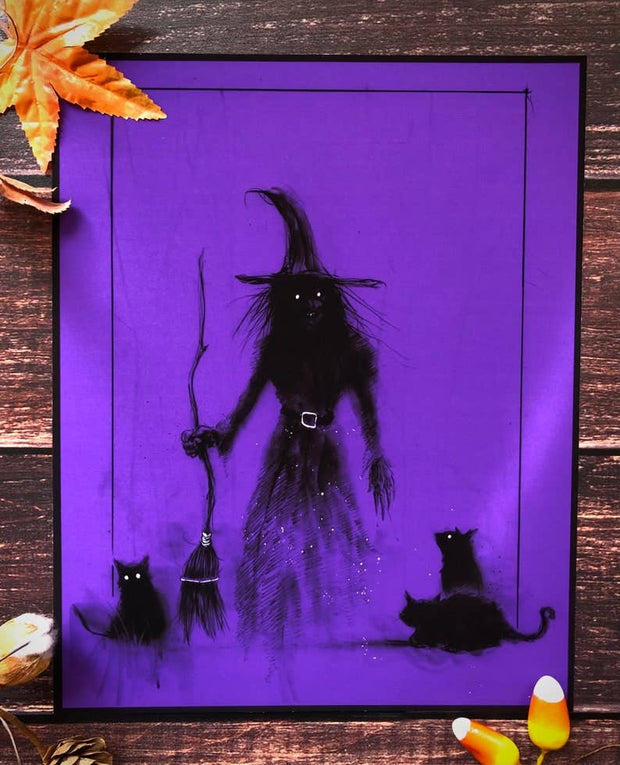
- Witch and coven imagery may emphasize power, persecution, folklore, secrecy, or collective identity.
- Devils and Baphomet figures can communicate rebellion, inversion, balance, philosophy, transgression, or theatrical darkness depending on the artwork.
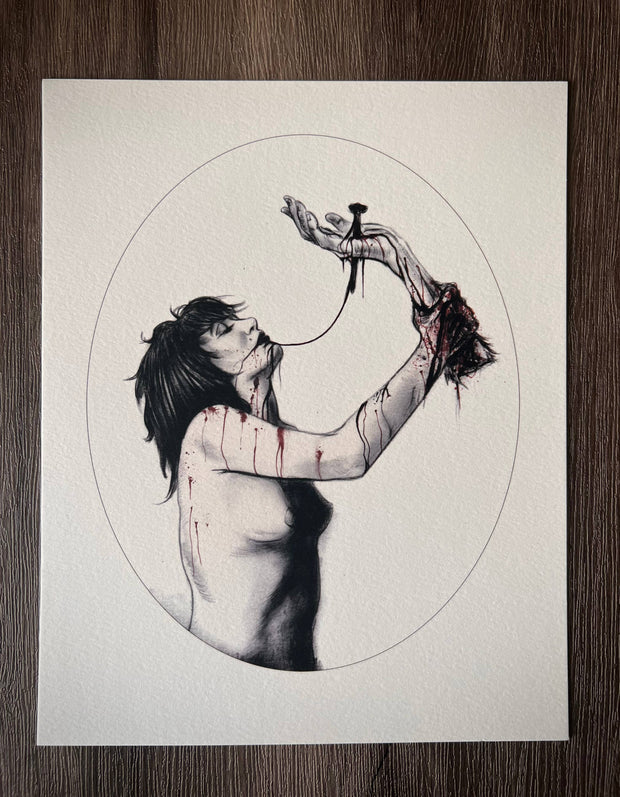
- Religious imagery may be devotional, critical, deconstructed, blasphemous, or emotionally ambiguous.
- Animal familiars can evoke companionship, omen, folklore, or the boundary between domestic and wild life.
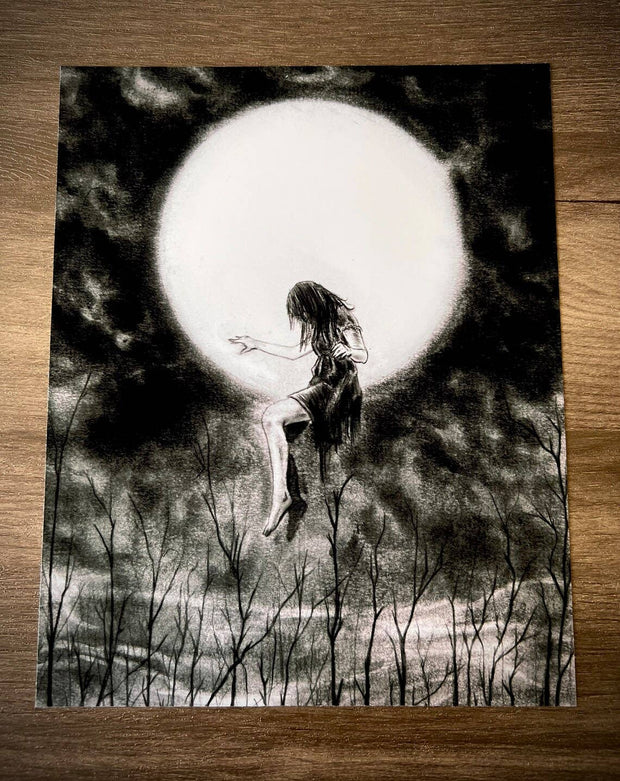
- Dark surrealism often works through mood and psychological tension rather than a fixed symbolic vocabulary.
- Vintage Halloween imagery may lean toward seasonal nostalgia, folk horror, or playful theatricality.
Ask what you want the work to do. Should it unsettle, invite reflection, establish identity, provide a ritual focus, or simply create a visual atmosphere?
Altar Art and General Décor Are Not the Same
Art placed behind an altar becomes part of the visual structure of practice. It may frame a deity image, establish a symbolic direction, or set the emotional tone of a working space. Because it sits near candles, incense, oils, and repeated handling, altar art also needs more protection from heat and residue.
General room décor has greater freedom. A work can be provocative, humorous, sensual, or purely aesthetic without carrying ritual authority. Not every moon, pentacle, skull, or witch figure must be treated as sacred.
Keeping that distinction clear prevents accidental overstatement. A buyer can appreciate a witch familiar print for its composition and atmosphere without claiming that it represents a specific historical tradition.
Choosing a Focal Work
A focal work is the image the eye finds first. It is usually larger, more detailed, higher contrast, or placed in the most prominent location. Build the rest of the display around it.
For a single dramatic print, leave open wall space around the frame. This breathing room separates the image from shelves, door trim, furniture, and neighboring objects. In a small room, a strong vertical print can add height; a horizontal work can visually widen a wall.
Before hanging, make a paper template matching the frame size and tape it temporarily to the wall. Live with the placement for a day. Check it while seated, standing, and walking into the room.
Building a Dark Gallery Wall
A gallery wall works when the pieces have a relationship, even when their frames and subjects differ. Choose one organizing principle:
- A shared color family
- A repeated subject such as witches, devils, animals, or celestial imagery
- A consistent frame finish
- A symmetrical grid
- An intentionally irregular salon arrangement
- A central work surrounded by smaller supporting images
Lay the arrangement on the floor first. Keep the space between frames relatively consistent. Extremely tight spacing can make the wall feel accidental; excessive gaps can make related pieces look disconnected.
Mixing imagery can create a richer narrative. A deconstruction of deities print beside a psychologically charged dark print can move the display beyond simple “witchy décor” and toward questions about authority, belief, identity, and the body.
Framing Prints Properly
Frames do more than decorate. They protect paper from bending, surface contact, dust, and handling. Use an acid-free mat or archival spacer so the printed surface does not press directly against the glazing.
For valuable or irreplaceable prints, choose archival backing and ultraviolet-filtering glazing. Avoid cardboard that contains acids, adhesive tape placed directly on the artwork, and inexpensive pressure-sensitive mounts that cannot be reversed.
A mat can create visual separation and allow a smaller print to occupy a larger frame. Black mats intensify contrast; warm white or cream can soften a dark image and reveal fine detail. Metallic, carved, or architectural frames can reinforce Gothic imagery, but a plain black frame may be stronger when the artwork is already complex.
Light, Moisture, and Heat
Paper is vulnerable to prolonged ultraviolet exposure. Avoid direct sunlight, especially in windows that receive strong afternoon light. Humidity can encourage waviness, staining, and mold. Bathrooms, damp basements, and walls directly above radiators are poor locations for unsealed paper art.
Keep framed work away from open candle flames, incense smoke, and charcoal burners. Soot and resinous smoke can settle on glazing and frames. When artwork hangs near an altar, provide distance and ventilation, and clean the exterior of the frame regularly.
Displaying Provocative Imagery Thoughtfully
Occult art can be confrontational by design. A blasphemous, explicitly Satanic, erotic, or violent image may be perfect for a private studio and inappropriate for a shared entryway. Placement is not censorship; it is context.
Consider who uses the room, whether children or customers enter it, and whether the image will be mistaken for a claim you do not intend to make. In a retail or professional setting, descriptions help distinguish artistic subject matter from literal endorsement.
Combining Art With Objects
Art can anchor a shelf of statues, books, crystals, or ritual tools, but avoid blocking the lower portion of the image. Repeat one shape or texture from the print in the surrounding objects. Curved horns might be echoed by a crescent form; architectural lines might be repeated by a Gothic frame or guardian statue.
Do not place heavy objects where they could fall against glazing. Maintain safe clearance around candles and incense. Browse Home Décor and Guardian & Symbolic Statues for objects that can support a display without overwhelming it.
Buying Art Because It Matters to You
Trend-driven rooms date quickly when every object was chosen only because it fit an online aesthetic. A stronger collection develops through specific attraction: an image that challenges you, makes you laugh, recalls a story, represents a philosophy, or creates an atmosphere you want to inhabit.
Supporting independent artists also matters. Read the product information, learn who made the work when that information is available, and avoid treating an artist’s imagery as anonymous decoration.
Create a Wall With a Point of View
Occult art is most effective when the display reflects an actual point of view. Choose the subject first, decide whether the piece is ritual or decorative, protect the paper, and give the image enough space to work.
Start with one print, frame it properly, and let the room develop around it. The goal is not to prove how dark or esoteric the space is. The goal is to create a setting in which the imagery can be seen, understood, and lived with.
Tools for this practice
Explore the products selected for this guide. Review each listing for what is included and how to use it.
Shop this guide · 3 items Collapse


Keep exploring the shop
You made it to the end of the guide. Keep exploring through related products, major departments, or the full catalog.


Leave a comment