


How to Choose Your First Tarot Deck: A Beginner’s Guide

Choosing your first tarot deck can feel more complicated than learning your first card spread. There are traditional decks, heavily themed decks, shadow-work decks, rune-inspired decks, minimalist decks, oracle cards, ritual cards, and boxed sets that may all appear beside one another. Beautiful artwork matters, but it is only one part of choosing a deck you can actually study, shuffle, understand, and use consistently.
The best first tarot deck is not necessarily the most famous, the darkest, the most ornate, or the deck someone else insists is “more powerful.” It is the deck whose structure, imagery, guidebook, physical size, and symbolic language give you a workable path into the cards.
This guide explains how to choose your first tarot deck, how tarot differs from oracle cards and specialty ritual decks, what to inspect before buying, and how to begin learning without trying to memorize all 78 cards at once.
Important distinction: Tarot can be used for divination, spiritual practice, creative reflection, and structured self-examination. Claims that cards can predict events with certainty are matters of belief rather than scientifically established fact. Tarot should not replace qualified medical, legal, mental-health, or financial advice.
What Makes a Deck a Tarot Deck?
A standard tarot deck contains 78 cards divided into two major sections:
- The Major Arcana: 22 cards representing large themes, transitions, archetypes, and turning points.
- The Minor Arcana: 56 cards arranged into four suits, generally including numbered cards and court cards.
The exact suit names, court titles, artwork, and interpretations can vary. Many modern decks are influenced by the Rider-Waite-Smith system, while others follow or adapt structures associated with Tarot de Marseille, Thoth tarot, or a creator’s own symbolic framework.
That structure matters because it creates a repeatable language. Even when two tarot decks look completely different, they may still share enough underlying organization that knowledge gained from one can help you read another.
Not every card deck with occult imagery is tarot. Oracle decks may contain any number of cards and follow rules created specifically for that deck. Ritual decks may organize exercises, invocations, prompts, or spiritual lessons rather than Major and Minor Arcana. Before buying, check the card count and the system described by the publisher.
For a fuller comparison, read Tarot Cards vs. Oracle Cards: What’s the Difference & Which to Use.
What Is the Best Tarot Deck for a Beginner?
The best beginner tarot deck usually has three qualities:
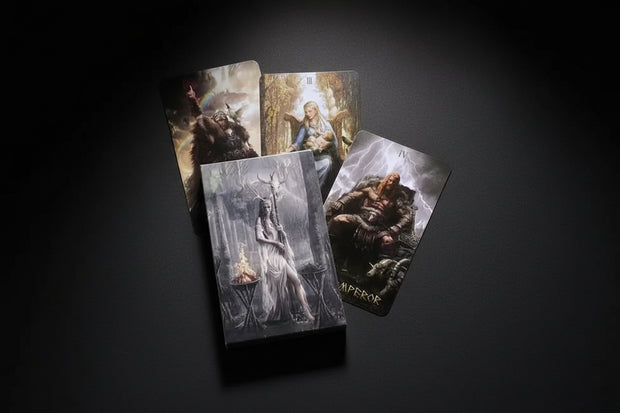
A useful next step is comparing real deck artwork and companion-book details. The first tarot deck selection brings together different illustration styles and formats; there is no single deck every beginner must own.
- Its card meanings are visible in the artwork.
- Its guidebook explains the deck’s system clearly.
- You are interested enough in its imagery to keep studying it.
A deck can be artistically impressive but difficult to learn if many cards use nearly identical scenes, if the Minor Arcana contains only suit symbols, or if the creator has radically reassigned traditional meanings without explaining the changes. A more visually explicit deck gives a new reader something to interpret before reaching for a book.
There is no single deck that every beginner must own. A traditional learning deck may provide more books and reference material, while a well-designed themed deck may hold your attention more effectively. The right choice balances accessibility with genuine interest.
1. Decide Whether You Want Tarot, Oracle, or a Specialty Deck
This is the most important first decision because the decks serve different learning goals.
Choose Tarot If You Want a Structured System
Tarot is a strong choice when you want to learn a system that can transfer across many decks. The 78-card structure creates recurring relationships between numbers, suits, court cards, and Major Arcana themes.
A tarot deck may suit you if you enjoy:
- Studying symbols and patterns over time
- Using spreads with defined card positions
- Comparing multiple interpretations
- Building a long-term divination practice
- Working with a system that has extensive published material
Choose Oracle Cards If You Want a More Flexible Entry Point
Oracle decks are not bound to the tarot structure. A creator may build a deck around plants, ancestors, grief, deities, affirmations, animals, crystals, or almost any other subject. Card meanings are normally specific to that deck.
Oracle cards can feel approachable because the cards often carry direct titles or messages. The tradeoff is that knowledge from one oracle deck may not transfer neatly to another.
For example, the Green Witch’s Oracle is organized around nature-based guidance rather than the standard 78-card tarot framework. The Anguish as Alchemy Oracle Deck is designed around shadow work and grief-centered reflection. Both may be useful tools, but they should not be mistaken for conventional tarot decks.
Choose a Specialty Ritual Deck for a Defined Practice
Some decks are built around rituals, exercises, or a particular spiritual philosophy. These can be powerful within their intended purpose but may not teach tarot card structure.
The Devil’s Deck, for example, is a 30-card ritual system with a guidebook. It may appeal to someone seeking structured Satanic ritual and introspection, but it is not a substitute for learning a traditional 78-card tarot system.
2. Learn Which Tarot System the Deck Uses
Before buying a tarot deck, look for the system named in the description or guidebook.
Rider-Waite-Smith–Influenced Decks
The Rider-Waite-Smith system is often recommended to beginners because its Minor Arcana uses illustrated scenes rather than displaying only suit symbols. Many modern tarot books, courses, spreads, and card-meaning references use this framework.
A deck does not need to reproduce the original artwork to follow the system. It may change the people, setting, mythology, palette, or cultural lens while keeping recognizable card relationships.
Tarot de Marseille
Marseille-style decks generally use a different visual and interpretive tradition. Numbered Minor Arcana cards may display arranged suit symbols rather than narrative scenes. These decks can be read effectively, but a beginner may benefit from a guide specifically written for that system.
Thoth-Influenced Tarot
Thoth tarot uses a dense network of ceremonial, astrological, Qabalistic, and elemental correspondences. Some beginners connect strongly with it, while others find it easier after first learning basic tarot structure.
Independent or Hybrid Systems
Some decks combine tarot with runes, regional mythology, shadow-work frameworks, or original correspondences. A hybrid deck can be an excellent choice when the guidebook clearly explains what has changed.
The Runic Tarot Cards combine tarot architecture with Elder Futhark symbolism. That can be compelling for a reader who genuinely wants to study both systems. It may be less straightforward for someone who wants a deck that matches the card meanings in a general beginner tarot book without additional translation.
3. Look for Readable Card Imagery
When comparing decks, do not judge only by the box cover. Look at several cards from different parts of the deck:
- At least two Major Arcana cards
- Several numbered Minor Arcana cards
- At least one court card
- A card traditionally considered challenging, such as Death, the Tower, or the Ten of Swords
Ask whether you can identify what is happening in the scene. Notice posture, direction, color, landscape, facial expression, repeated objects, and the relationship between figures. A readable image gives you interpretive material even before you know the formal meaning.
A deck may be visually beautiful yet difficult to read if:
- Every card uses nearly the same composition
- The Minor Arcana shows only decorative suit symbols
- Important symbols are too small to see
- Card titles are difficult to read
- The artwork depends on lore not explained in the guidebook
- The creator changes traditional meanings without identifying the changes
None of those features makes a deck bad. They simply increase the amount of outside study required.
4. Match the Deck’s Emotional Tone to Your Intended Use
Tarot decks are not emotionally neutral. Artwork can feel gentle, confrontational, devotional, humorous, romantic, macabre, folkloric, abstract, or psychologically intense. The tone should fit the work you plan to do.
For General Learning
Choose a deck with clear scenes, a balanced range of emotions, and a guidebook that explains both encouraging and difficult cards. A general-purpose deck should be usable for relationships, decisions, creative work, self-reflection, and ordinary daily questions.
For Mythology and Ancestral Interest
A themed deck can make study more engaging when you already understand or want to learn its cultural and mythological framework. The Celtic Tarot Deck presents a 78-card tarot through Celtic spiritual and mythological imagery. It may appeal to readers who want that symbolism to shape the reading experience.
For Shadow Work
A shadow-oriented deck may use unsettling or emotionally direct images to explore avoidance, fear, grief, conflict, and unconscious patterns. The Dark Wood Tarot Deck is positioned for shadow work and introspection.
That does not automatically make it the best first deck. Consider whether the imagery helps you examine difficult material thoughtfully or simply overwhelms you. Shadow work can bring up painful memories or intense emotions, and a deck should never be treated as a replacement for mental-health care.
For Ritual or Devotional Use
Look for symbolism that belongs to the religious or magical system you actually practice. A deck associated with a deity, tradition, or spirit system should be approached with more care than a purely aesthetic theme. Read the creator’s explanation rather than assuming every symbol is interchangeable.
5. Check the Guidebook Before You Buy
A strong guidebook can make an unfamiliar deck usable. A weak guidebook can leave a beginner with 78 attractive images and no clear learning path.
Useful beginner guidebooks often include:
- An explanation of the deck’s system
- Upright meanings for every card
- Reversed meanings or an explanation of how reversals are handled
- Descriptions of important symbols
- Several sample spreads
- Instructions for forming useful questions
- Examples of how cards interact in a reading
- Notes explaining changes from familiar tarot traditions
A small booklet is not automatically inadequate, but short keyword lists may require you to purchase a separate tarot book. Factor that into the total cost and learning effort.
When possible, read a sample page. The writing should be specific enough to teach rather than relying entirely on vague statements that could apply to any card.
6. Consider Card Size, Finish, and Shuffling
A deck that is uncomfortable to handle is less likely to be used regularly. Product photographs can make every deck appear similar, but dimensions, thickness, finish, and edge treatment affect the experience.
Card Size
Large cards can display artwork beautifully but may be difficult for small hands or limited grip strength. Compact cards travel well and shuffle easily, but fine details may become harder to see.
Card Stock
Very thin cards may bend quickly. Extremely thick cards can be difficult to riffle shuffle. Neither quality alone determines durability; flexibility, coating, edge finishing, and storage also matter.
Finish
Glossy cards can slide easily and reflect light. Matte cards may photograph well and feel controlled, but some finishes cling together. Gilded edges are decorative and can feel stiff until the cards have been handled.
Accessibility
Look for readable titles, strong contrast, distinct card borders, and artwork that does not depend on tiny details. Overhand shuffling, pile shuffling, or drawing from a spread-out deck are valid alternatives to riffle shuffling.
You do not need to damage your hands or the cards to prove that you are reading correctly.
7. Decide How Closely You Want to Follow Traditional Meanings
Some decks preserve familiar tarot imagery closely. Others reinterpret gender roles, court cards, suits, elemental associations, or the sequence of the Major Arcana. Reinterpretation can make a deck more relevant and meaningful, but it also affects how easily outside resources can be used.
For a first deck, ask:
- Do the card names match common tarot references?
- Are the four suits easy to identify?
- Does the guidebook explain renamed cards?
- Can I compare this card with a standard reference without becoming confused?
- Is the new symbolism adding meaning, or is it only changing the surface appearance?
A highly original deck may become a favorite later. Your first deck benefits from giving you a stable foundation.
8. Choose a Deck You Will Actually Study
Practical readability matters, but attraction matters too. Tarot requires repeated exposure. You will look at the same cards many times, compare them, journal about them, and notice details that were invisible during the first week.
A deck you respect but never want to open is not serving you. A deck that feels inviting, intriguing, or aesthetically compelling creates motivation to practice.
Look for attraction without surrendering judgment. Ask both:
- “Do I want to spend time with this artwork?”
- “Does this deck give me enough information to learn?”
The best first deck usually satisfies both questions.
Should Your First Tarot Deck Be Gifted?
No. The belief that a tarot deck must be given to you is a custom found in some circles, not a universal rule. You can buy your own tarot deck.
Waiting for a gift can leave your learning dependent on someone else’s timing and taste. Choosing your own deck allows you to consider the system, imagery, guidebook, size, price, and purpose directly.
A gifted deck can still be meaningful. The issue is choice, not legitimacy.
Do You Need to Cleanse or Consecrate a New Tarot Deck?
No universal requirement applies. Some readers begin using a deck immediately. Others pray over it, place it on an altar, pass it through incense smoke, arrange the cards in order, knock on the box, or leave it beside a meaningful object.
These actions can mark the transition from merchandise to personal ritual tool, but they are matters of spiritual practice rather than physical necessity.
A simple preparation process is enough:
- Check that all cards are present and undamaged.
- Read the guidebook’s introduction.
- Place the cards in order if you want to learn the structure.
- Shuffle in a comfortable way.
- State how you intend to use the deck.
- Store it somewhere dry and protected.
Avoid cleansing methods that can damage paper, coating, ink, or gilding. Do not expose cards to liquid, salt, open flame, heavy oil, or prolonged direct sunlight.
How Much Should You Spend on a First Tarot Deck?
A higher price does not guarantee clearer symbolism or better readings. Price may reflect card stock, printing quality, licensing, artwork, packaging, guidebook length, limited production, or imported materials.
For a first deck, prioritize:
- A complete, legitimate edition
- Readable printing
- A useful guidebook
- A size you can handle
- Artwork you can study
- A price that does not create financial strain
Be cautious with counterfeit decks. Extremely low prices, blurred images, missing guidebooks, poor packaging, incorrect card counts, and unauthorized reproductions can indicate that the artist and publisher are not being compensated.
How to Compare Tarot Decks in Person
When shopping in a physical store, use a deliberate comparison instead of choosing entirely by the front of the box.
- Read the card count and confirm that it is a tarot deck.
- Check the named system or stated inspiration.
- Look for sample images from the Minor Arcana, not only famous Major Arcana cards.
- Read the guidebook description and note whether a full book or small booklet is included.
- Check card dimensions when available.
- Notice whether the titles and suit symbols are easy to read.
- Ask whether the theme supports the readings you plan to perform.
- Compare two or three decks before deciding.
If you are choosing online, use the same process with product descriptions and photographs. Browse the current Tarot collection and compare it with the broader Divination Tools collection so you can identify which products are traditional tarot, oracle systems, or other interpretive tools.
A Simple First-Week Tarot Practice
You do not need to memorize all 78 cards before beginning. Use short, repeatable exercises.
Day 1: Learn the Structure
Separate the Major Arcana from the Minor Arcana. Divide the Minor Arcana into suits, then identify the numbered and court cards. The goal is orientation, not interpretation.
Day 2: Study Three Major Arcana Cards
Choose three cards and describe only what you see. Record figures, objects, colors, direction, weather, posture, and mood before reading the guidebook.
Day 3: Compare the Four Aces
Notice how the deck differentiates the suits. Ask what each Ace suggests about beginnings, opportunities, or concentrated potential.
Day 4: Draw One Card
Ask a practical reflective question such as, “What quality should I bring to today?” Avoid treating the card as an unavoidable prediction.
Day 5: Compare Two Cards
Draw two cards and ask how they support, challenge, or modify one another. Tarot meaning develops through relationships, not isolated definitions alone.
Day 6: Try a Three-Card Spread
Use positions such as situation, challenge, and next step. Write the position before drawing so the reading has a defined structure.
Day 7: Review Your Notes
Identify which images were easy to understand and which required the guidebook. This shows you how the deck communicates and what you need to study next.
A dedicated notebook helps you notice patterns over time. Explore the Journals collection for current options suited to card notes, spread records, and symbol study.
Questions That Work Better for Tarot
Tarot generally becomes more useful when questions invite examination and action rather than demanding absolute certainty.
Compare:
- Instead of “Will I get the job?” ask “What can I improve before the interview?”
- Instead of “Does this person secretly love me?” ask “What should I understand about this relationship dynamic?”
- Instead of “When will everything change?” ask “What is the next change within my control?”
- Instead of “What terrible thing will happen?” ask “What risk should I prepare for responsibly?”
Clear questions reduce fear-based interpretation and make it easier to connect a reading with real-world choices.
Common Mistakes When Choosing a First Tarot Deck
- Choosing only by the box art: The rest of the deck may use a completely different visual style.
- Assuming darker means more advanced: Intense imagery does not automatically create deeper interpretation.
- Ignoring the Minor Arcana: Most of the deck is Minor Arcana, so those images matter enormously.
- Buying a specialty deck while expecting standard tarot: Check the card count and structure.
- Choosing a deck with no usable guidebook: Beginners need a clear point of reference.
- Buying several decks before learning one: Constantly changing symbolic systems can slow early progress.
- Believing the deck must feel supernatural immediately: Familiarity develops through handling, observation, and study.
- Using tarot for every decision: Cards should support judgment, not eliminate personal responsibility.
How to Store and Care for Tarot Cards
Keep tarot cards dry, clean, and protected from bending. The original box is sufficient when it closes securely. A cloth bag, wooden box, or dedicated drawer can provide additional protection.
- Handle cards with clean, dry hands.
- Keep drinks, candle wax, oils, and incense ash away from the reading surface.
- Do not leave decks in hot vehicles or damp rooms.
- Avoid wrapping cards so tightly that edges bend.
- Store guidebooks with the deck when the meanings are deck-specific.
- Use a reading cloth when the table is rough or dirty.
For more protective options, browse Storage & Chests and the current Bags collection.
Frequently Asked Questions
Can a beginner use a themed tarot deck?
Yes. A themed deck can be an effective first deck when it keeps a recognizable tarot structure and explains its symbolism clearly. The theme should increase your understanding rather than require extensive unexplained background knowledge.
Do I need a Rider-Waite-Smith deck first?
No, but a Rider-Waite-Smith–influenced deck often provides access to more beginner books and visual references. Other systems are valid, provided you use learning material that matches the deck.
Can I begin with an oracle deck instead?
Yes. Oracle cards can be a flexible introduction to card-based reflection and divination. They will not automatically teach the 78-card tarot structure, so decide which skill you want to develop.
Should I read reversed cards as a beginner?
You do not have to. Many readers begin with upright cards and add reversals after becoming familiar with the deck. Others interpret blocked, internalized, excessive, or weakened expressions without physically reversing cards.
How many tarot decks does a beginner need?
One is enough. Learning one deck’s images and structure deeply is usually more useful than collecting several systems before establishing a practice.
What if I dislike my first deck after buying it?
Give yourself enough time to determine whether the difficulty comes from unfamiliarity or a genuine mismatch. If the imagery remains unreadable or the physical deck is uncomfortable, choose another with clearer criteria. A first purchase is not a lifetime commitment.
Can tarot predict the future?
Some traditions use tarot predictively, while others emphasize reflection, pattern recognition, spiritual guidance, or decision support. Tarot cannot establish future events with scientific certainty, and readings should not be treated as unavoidable outcomes.
Choose a Deck That Teaches You How to Read
Your first tarot deck should do more than look impressive on an altar or shelf. It should give you a coherent system, readable imagery, enough written guidance to begin, and a physical format you can use comfortably.
Start by confirming that the deck is actually tarot. Identify its system, inspect the Minor Arcana, evaluate the guidebook, and consider the emotional tone of the artwork. Then choose the deck that makes you curious enough to return tomorrow and clear enough to teach you something when you do.
Explore the active Tarot collection to compare available 78-card decks, themed systems, and related card tools. For pendulums, runes, oracle cards, and other methods, visit Divination Tools.
Tools for this practice
Explore the products selected for this guide. Review each listing for what is included and how to use it.
Shop this guide · 1 item Collapse
Keep exploring the shop
You made it to the end of the guide. Keep exploring through related products, major departments, or the full catalog.
 RELATED TO THIS GUIDE
Divination Tools
Shop this topic
RELATED TO THIS GUIDE
Divination Tools
Shop this topic


Leave a comment