


How to Make Black Salt for Protection Rituals

Ritual black salt is a modern magical mixture commonly used to symbolize boundaries, protection, banishing, or closure. A basic recipe combines ordinary salt with a small amount of clean, fully cooled ash or charcoal.
The goal is not to create the blackest possible powder. A small, dry, clearly labeled batch is safer, easier to store, and more practical for ritual use.
Before You Begin
Decide what the mixture will represent. A black salt made for household boundaries may be prepared differently from one made to close a completed ritual.
Choose one purpose and write it down. Avoid adding ingredients simply because they appear on a correspondence list.
Basic Ingredients
- 2 tablespoons plain salt: sea salt, kosher salt, or another dry non-iodized or iodized salt can be used.
- 1/4 teaspoon clean ash or charcoal: use only a very small amount.
- Optional dried herb: only if it is correctly identified, fully dry, and safe to handle.
This ratio is intentionally conservative. You can darken the mixture slightly, but excessive ash creates dust and mess without improving the ritual.
What Ash Is Safe to Use?
Use only fully cooled residue from a known, untreated plant material, plain paper petition, or incense product whose ingredients you understand.
Never use ash from:
- plastic or synthetic fabric;
- glossy, coated, or heavily printed paper;
- painted, stained, or pressure-treated wood;
- trash, cigarette filters, coal, or unknown materials;
- plants known to be toxic or irritating when burned.
Smoke and ash can contain irritants even when the original material was natural. Avoid inhaling the dust.
Charcoal Options
A tiny amount of powdered artist’s charcoal or residue from a known ritual charcoal may be used. Do not grind a hot charcoal disc, and do not handle charcoal until it is completely cold.
Activated charcoal sold for other purposes is extremely fine and can become airborne easily. It is not necessary for this recipe.
Optional Herbs
Many practitioners associate rosemary, bay, juniper, or other plants with protection. Plant correspondences vary, and safe handling matters more than symbolism.
Do not add:
- fresh or damp plant material;
- essential oils, which can create clumping and skin exposure;
- unknown foraged plants;
- plants that may be dangerous to pets or household members.
A salt-and-ash mixture is sufficient.
Equipment
- a small bowl or mortar;
- a spoon or pestle;
- a clean, dry jar with a lid;
- a label and permanent marker;
- optional disposable gloves and a dust mask for sensitive users.
Prepare the mixture away from food-preparation surfaces.
Step-by-Step Method
- Confirm that every ingredient is dry and completely cool.
- Place the salt in the bowl.
- Add only a pinch of ash or charcoal.
- Stir slowly to avoid creating dust.
- Add another tiny pinch only if needed.
- State or write the purpose of the mixture.
- Transfer it to the jar.
- Label it: “RITUAL BLACK SALT — NOT FOR FOOD.”
- Wash the tools and your hands.
A Simple Preparation Statement
You may use language such as:
This salt marks the boundary I maintain. It represents clear judgment, practical protection, and the end of what is no longer welcome.
The words can be adapted to your tradition. The statement should describe what the mixture means rather than making impossible guarantees.
How to Use a Small Batch
- Keep a teaspoon in a sealed vial near a doorway.
- Add a pinch to a closed protection jar.
- Store it with a paper petition.
- Place a covered dish on an altar.
- Use a small amount in a temporary ritual container.
Avoid loose lines on floors, windowsills, garden beds, or outdoor property. Salt can damage surfaces, metal, plants, and soil.
Storage
- Use an airtight jar.
- Keep it dry.
- Store it away from food and medication.
- Keep it out of reach of children and pets.
- Discard it if it becomes damp, moldy, contaminated, or accidentally mixed with unknown material.
Safe Disposal
Do not scatter the mixture at a crossroads, cemetery, river, drain, road, park, or off-property location. Salt and charcoal can damage ecosystems and create litter.
Seal old material and place it in household trash according to local requirements. Clean and reuse the jar when appropriate. Mark the ritual ending through a spoken closing, a bell, or the destruction of a separate paper petition.
Common Mistakes
- making an unnecessarily large batch;
- using unknown or toxic ash;
- adding too much charcoal and creating airborne dust;
- mixing in oils or damp herbs;
- forgetting to label the jar;
- placing salt where pets can lick it;
- assuming ritual use makes a material environmentally harmless.
Learn More
Read Black Salt in Folk Magic for uses and limitations, and Proper Disposal of Ritual Remnants before discarding a working.
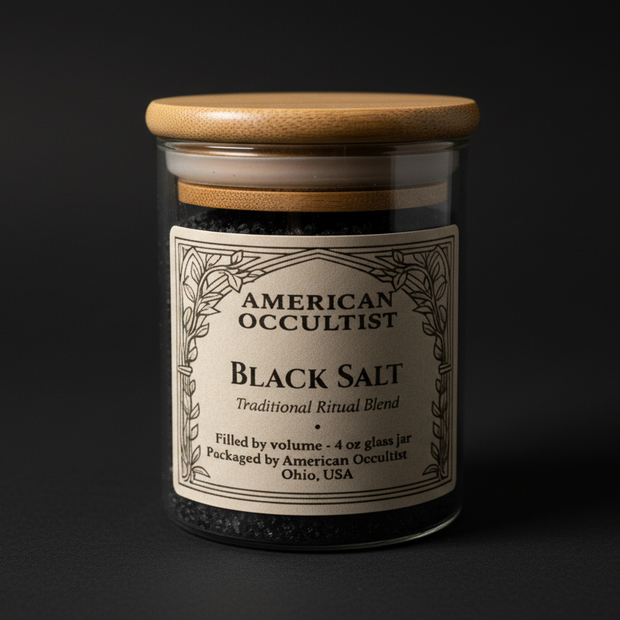
Prepared Witch’s Black Spellcasting Salt is available for practitioners who prefer not to make a mixture from ash.
This mixture is for symbolic external ritual use only. Do not ingest it, inhale the dust, place it in bathwater, apply it to skin, or leave it where children, pets, plants, or wildlife can contact it.
Tools for this practice
Explore the products selected for this guide. Review each listing for what is included and how to use it.
Shop this guide · 1 item Collapse

Keep exploring the shop
You made it to the end of the guide. Keep exploring through related products, major departments, or the full catalog.
 RELATED TO THIS GUIDE
Ritual Herbs
Shop this topic
RELATED TO THIS GUIDE
Ritual Herbs
Shop this topic


Leave a comment