


How to Read Crystal Certificates and Gem Lab Reports

The word certificate can describe very different documents. One may be an item-specific gem laboratory report based on testing. Another may be a seller-printed card containing a product name and metaphysical meanings. Both can accompany a purchase, but they do not provide the same evidence.
Read the document by asking who issued it, what object it describes, which tests were performed, and which conclusions are actually stated.
Identify the Type of Document
| Document | Typical Purpose | What It Does Not Automatically Prove |
|---|---|---|
| Seller information card | Name, care, symbolism, or stock information | Independent identification |
| Authenticity card | Seller or brand assurance | Laboratory testing unless a lab is identified |
| Gem identification report | Material, natural or synthetic status, treatments | Retail value or spiritual properties |
| Appraisal | Estimated value for a stated purpose and date | Guaranteed resale price |
| Mineral label | Species, locality, collection history | Testing unless methods are stated |
Look for the Issuing Organization
A meaningful report should name the laboratory, appraiser, geologist, gemologist, dealer, or organization responsible. Check for:
- full organization name;
- contact information;
- report number;
- issue date;
- qualified signer or analyst when applicable;
- an independent report-verification system;
- terms explaining the scope and limitations.
A logo and embossed seal can look official without identifying any accountable issuer.
Determine Whether the Document Is Item-Specific
An item-specific report should describe the exact stone or jewelry piece through a combination of:
- weight;
- dimensions;
- shape and cutting style;
- color and transparency;
- photograph;
- inscription number;
- mounted or loose condition;
- distinctive inclusions or features.
Compare every field with the object. A generic card printed for hundreds of pieces is educational material, not an individual test report.
Read the Identification Line Carefully
The report may distinguish among:
- mineral species;
- recognized variety;
- rock or aggregate;
- natural material;
- laboratory-grown or synthetic material;
- imitation glass, resin, or another substitute;
- assembled or composite material.
Do not assume a commercial trade name is a formal mineral identification. Review Natural vs. Synthetic vs. Treated vs. Imitation Crystals.
Find the Treatment Statement
Reports may state that no indications of treatment were observed, that a particular treatment was detected, or that treatment cannot be determined under the report’s testing conditions.
Common treatment language may involve:
- heating;
- dyeing;
- irradiation;
- fracture filling;
- impregnation or stabilization;
- surface coating;
- diffusion;
- bleaching;
- assembly or reconstruction.
“Natural” does not always mean untreated. A natural mineral can be altered after extraction.
Ask Which Tests Were Performed
Depending on the object and laboratory, examination may involve magnification, refractive index, spectroscopy, fluorescence, specific gravity, microscopy, chemical analysis, or other methods. A report that states a conclusion without explaining its scope may still be valid, but the laboratory should provide methodology standards.
Some mounted jewelry cannot be tested as completely as a loose stone. Settings can block measurements, hide treatments, or prevent accurate weight determination.
Understand the Difference Between Identification and Origin
Identifying a material is not the same as proving geographic origin. Country, region, or mine origin can require specialized comparison and may remain an opinion with a stated confidence level.
For mineral specimens, original labels, field records, collection history, and dealer provenance may be more relevant than a gemstone report. Read How to Read a Mineral Label.
A Certificate Does Not Prove Metaphysical Claims
A gemological document may identify composition, treatment, or origin. It cannot verify that a crystal heals disease, guarantees protection, attracts money, changes destiny, or carries a measurable spiritual vibration. Seller cards often discuss traditional symbolism; that information should be labeled as tradition or belief rather than laboratory result.
An Appraisal Is Not a Guaranteed Selling Price
Appraisals are prepared for a specific purpose, date, and market. Insurance replacement value, fair market value, liquidation value, and retail asking price can be very different.
Check:
- the valuation purpose;
- the date;
- the market assumed;
- whether taxes and replacement labor are included;
- the appraiser’s qualifications;
- whether the identification was independently tested.
Verify the Report Independently
- Use the issuing laboratory’s official verification system.
- Enter the report number yourself rather than following an unknown QR destination.
- Compare the online record with the paper report.
- Match dimensions, weight, photo, and inscription to the object.
- Contact the issuer when information conflicts.
A copied report number can be paired with a different stone. The match between report and object matters as much as the existence of the report.
Recognize Common Warning Signs
- No issuing organization is named.
- The same certificate image appears on many unrelated listings.
- The report number cannot be verified.
- Dimensions do not match the object.
- A seller-created authenticity card is described as independent laboratory proof.
- The document guarantees spiritual or medical outcomes.
- Rare origin is claimed without origin analysis or provenance.
- The certificate uses only a trade name and never states the underlying material.
- An appraisal value is used as proof that the sale price is a bargain.
When Is Laboratory Testing Worth the Cost?
Independent testing is most useful when:
- the stone is high value;
- natural versus synthetic status materially affects price;
- treatment affects value or care;
- the identification is uncertain;
- insurance requires documentation;
- the buyer and seller need neutral evidence;
- origin is central to the purchase and can be meaningfully tested.
For inexpensive common material, the cost of testing may exceed the item’s value. Accurate seller disclosure and a return policy may be more practical.
Compare the Certificate With the Listing
The product listing should not claim more than the document says. If a report identifies “natural quartz” but the listing promises a particular mine, treatment status, and metaphysical result, those additional claims need their own support.
Use How to Buy Crystals Online and browse Crystals & Stones or Jewelry with the same questions.
Frequently Asked Questions
Does every real crystal come with a certificate?
No. Many genuine common minerals are sold without laboratory paperwork. Documentation should be proportionate to value and uncertainty.
Can a seller issue an authenticity card?
Yes, but it represents the seller’s assurance unless independent testing is identified. It should not be mistaken for a laboratory report.
What does “no indication of treatment” mean?
It means the laboratory did not observe evidence under its examination methods. Read the report’s limitations rather than interpreting it as an unlimited guarantee.
Can a report identify the mine?
Sometimes origin opinions are possible for certain gem materials, but mine-level claims are often difficult and require specialized evidence. Mineral specimen provenance may depend more on labels and records.
Should I pay more because a stone has a certificate?
Only when the report is credible, item-specific, relevant to value, and matched to the object. Paper alone does not add automatic value.
Does a certificate replace a return policy?
No. The report addresses stated characteristics; the return policy addresses condition, listing accuracy, and buyer remedies.
Read the Evidence, Not the Decoration
A useful report connects an accountable issuer, a specific object, stated tests, clear conclusions, and defined limitations. Decorative paper, seals, and confident language are not substitutes for that chain of evidence.
Tools for this practice
Explore the products selected for this guide. Review each listing for what is included and how to use it.
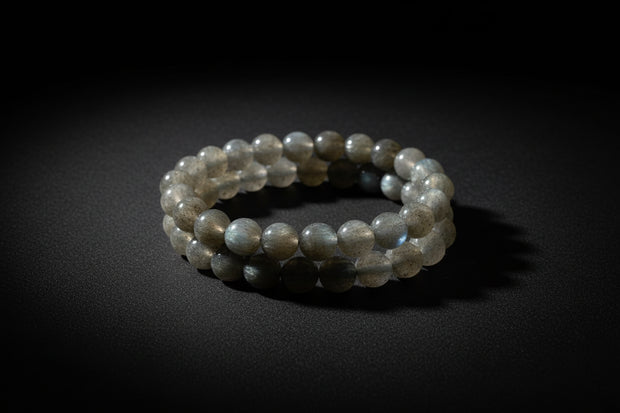

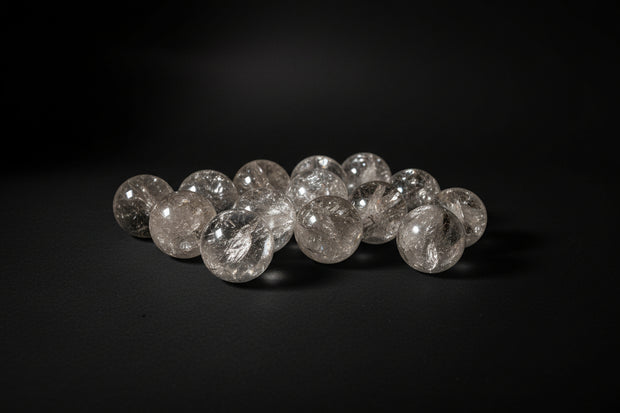
Shop this guide · 3 items Collapse


Keep exploring the shop
You made it to the end of the guide. Keep exploring through related products, major departments, or the full catalog.
 RELATED TO THIS GUIDE
Occult Jewelry & Symbolic Adornments
Shop this topic
RELATED TO THIS GUIDE
Occult Jewelry & Symbolic Adornments
Shop this topic


Leave a comment