


How to Read Oracle Cards for Beginners: Questions, Spreads, Guidebooks, and Discernment

Oracle cards are flexible divination and reflection tools. Unlike tarot, an oracle deck does not have one standard structure: one deck may contain thirty cards about plants, another fifty cards about archetypes, and another a set of prompts for grief or shadow work. The creator decides the system.
That freedom makes oracle cards approachable, but it also means the guidebook matters. A beginner is not failing by reading it. The guidebook is often the deck’s actual framework.
Oracle cards vs. tarot
Tarot usually follows a seventy-eight-card structure with Major Arcana, Minor Arcana, suits, and numbered progressions. Oracle decks may use any number of cards and any organizing idea. Our comparison of tarot and oracle cards explains the differences in more detail.
Neither system is inherently more accurate. Both can support storytelling, self-reflection, ritual, creative thinking, or spiritual practice. They should not replace medical, legal, financial, or mental-health expertise.
Start by learning the deck’s language
- Read the introduction. Note the creator’s purpose and whether cards are meant to be read upright only.
- Study the categories. Look for suits, elements, plants, deities, stages, keywords, or repeated symbols.
- Scan every card. Do not memorize. Notice the emotional range and whether the deck includes difficult as well as encouraging themes.
- Check the guidebook format. Some entries provide meanings, questions, rituals, affirmations, or reversals.
- Write your own observations. Separate what you see in the image from what the book says.
Ask useful questions
Questions shape the reading. Broad fortune-telling questions often produce vague answers, while practical questions create room for reflection and action.
| Less useful | More useful |
|---|---|
| Will everything work out? | What part of this situation can I influence this week? |
| Does this person love me? | What behavior should I pay attention to in this relationship? |
| When will I get rich? | What habit is affecting my financial stability? |
| Am I cursed? | What practical problem needs attention, and what support would help? |
Avoid using cards to diagnose illness, investigate crimes, decide whether to stop medication, or replace consent and direct communication.
Three beginner spreads
One card: focus
Ask, “What deserves my attention today?” Pull one card and write three observations before consulting the guidebook.
Three cards: situation, influence, next step
- Card 1: What is happening?
- Card 2: What is shaping it?
- Card 3: What constructive step is available?
Three cards: release, support, practice
- What can I stop feeding?
- What resource already supports me?
- What can I practice consistently?
More cards do not automatically create more clarity. Use a small spread until you can explain how every position answers the original question.
How to interpret a card
- Observe. List colors, figures, direction, objects, weather, posture, and repeated motifs.
- Name the first association. Write it down without declaring it supernatural truth.
- Read the guidebook. Note where the creator’s meaning agrees or conflicts with your response.
- Connect it to the question. A card means something different in a career reading than in a grief reading.
- Translate meaning into action. End with one behavior, question, boundary, or experiment.
Our guide to reading tarot intuitively offers a compatible method for separating observation, association, and interpretation.
Clarifiers and repeated pulling
Pulling one clarifier can help when you cannot identify the card’s role. Pulling ten cards until one gives the preferred answer usually reduces clarity. Before drawing again, ask what is actually unclear: the card, the spread position, the wording of the question, or your willingness to consider an uncomfortable interpretation.
Set a limit before beginning—such as one spread and one clarifier—especially when reading about emotionally charged situations.
Use a reading journal
Record the date, question, cards, first impressions, guidebook meanings, interpretation, and later outcome. A journal reveals which interpretations were useful and which were hindsight, wishful thinking, or anxiety.
When making a prediction, write it in specific, falsifiable language and record misses as carefully as hits. This protects against remembering only the readings that seemed accurate.
Reading for other people
- Ask permission before reading about someone.
- Explain whether the session is spiritual, reflective, or entertainment-based.
- Do not claim certainty about death, pregnancy, crimes, curses, infidelity, or medical conditions.
- Do not use fear to sell cleansing, removal, or additional readings.
- Protect private information and let the person decline a question.
Choosing a deck
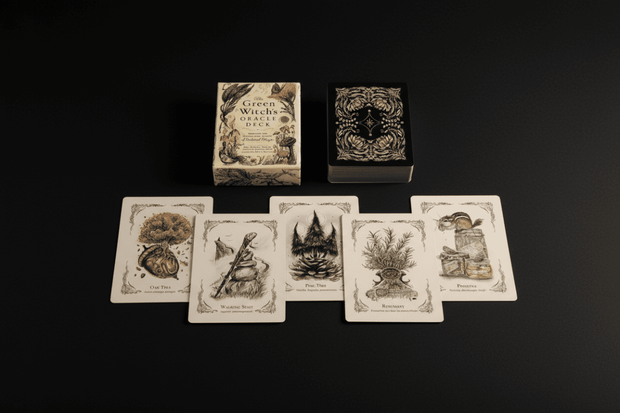
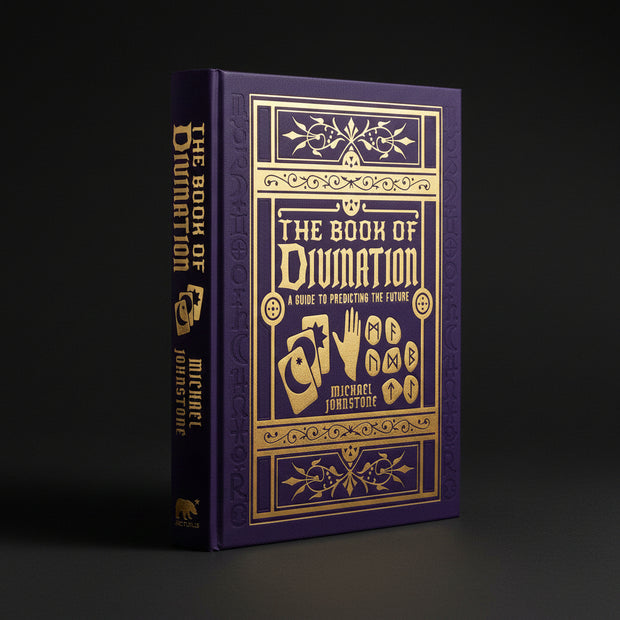
Select artwork you can read, a guidebook with enough detail for your learning style, and a theme you will use beyond the first week. The store’s divination tools include oracle and tarot systems with different tones and purposes.
Frequently asked questions
Do oracle cards have reversals?
Only if the creator includes them or you choose to develop a consistent reversal method.
Can I read without the guidebook?
You can, but learning the deck’s intended system first usually improves consistency.
How many cards should a beginner pull?
One to three cards is enough for most early practice.
Can oracle cards predict the future?
People use them predictively, but their predictive ability is not scientifically established. Treat outcomes as possibilities, not guarantees.
Do I need to cleanse a new deck?
No. Cleansing is an optional ritual preference, not a functional requirement.
Tools for this practice
Explore the products selected for this guide. Review each listing for what is included and how to use it.


Shop this guide · 4 items Collapse


Keep exploring the shop
You made it to the end of the guide. Keep exploring through related products, major departments, or the full catalog.
 RELATED TO THIS GUIDE
Divination Tools
Shop this topic
RELATED TO THIS GUIDE
Divination Tools
Shop this topic


Leave a comment