


Tumbled Stones, Palm Stones, Towers, and Natural Specimens: Which Crystal Form Should You Choose?

Walk into a well-stocked crystal shop and the same mineral may appear in several completely different forms: a smooth tumbled stone, a broad palm stone, a polished tower, or a natural specimen that still carries the rough architecture of the earth. They may share the same mineral name, but they do not create the same experience in the hand, on an altar, in a collection, or in daily practice.
The form does not turn one mineral into another. A piece of amethyst remains amethyst whether it is polished into a point or left as a natural cluster. What changes is how the stone is handled, displayed, observed, carried, and used. In metaphysical traditions, different shapes are also given symbolic meanings, but those interpretations should be understood as matters of practice and belief rather than scientific properties.
This guide will help you choose the form that best fits what you actually want from the stone.
What Crystal Shape Changes—and What It Does Not
Shape can influence four practical things:
- Comfort: how easily the stone can be carried, held, or placed against the body.
- Display: whether the piece stands upright, fills a shelf, anchors an altar, or fits into a bowl.
- Observation: whether polishing reveals color, pattern, banding, flash, or internal inclusions.
- Symbolism: how a practitioner may interpret direction, focus, grounding, expansion, or natural formation.
Shape does not make a low-quality mineral rare, nor does polish automatically make a piece better. A beautiful natural specimen may be more valuable to a collector than a heavily shaped piece, while a polished form may reveal optical effects that rough material hides. The best choice depends on your purpose.
Tumbled Stones: Portable, Affordable, and Easy to Use
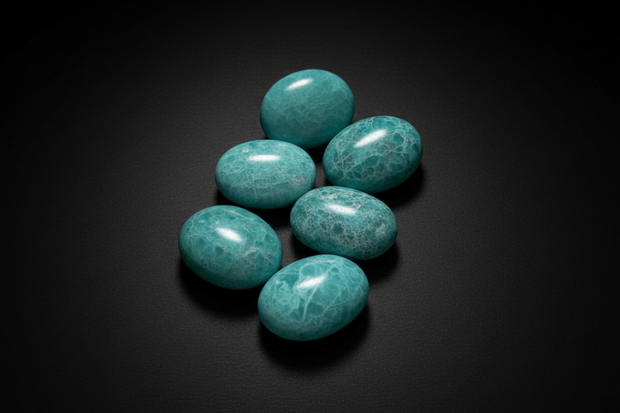
Tumbled stones are small pieces of mineral that have been smoothed and polished in a rock tumbler. Their rounded edges make them one of the easiest forms to carry in a pocket, place in a pouch, add to a crystal grid, or keep in a bowl near a workspace.
They are often the best starting point for someone who wants to explore several minerals without committing to larger display pieces. Because tumbling uses smaller pieces of material, tumbled stones are usually more affordable than large towers, carvings, or collector specimens of the same mineral.
Choose tumbled stones when you want:
- A stone that can be carried comfortably every day.
- An affordable way to build a broad collection.
- Small stones for grids, spell bags, charm bags, or altar bowls.
- A polished surface that makes color and pattern easy to see.
The main tradeoff is that tumbling removes much of the stone’s original structure. Crystal faces, matrix, growth patterns, and natural points may be lost. For a mineral collector, that can matter. For someone seeking a smooth, practical object, it may not.
Palm Stones: Made for Holding
Palm stones are larger, flatter polished stones shaped to rest comfortably in the hand. They offer more weight and surface area than a typical tumble without becoming as decorative or fragile as a tower.
This form is especially useful for meditation, grounding exercises, focused breathing, or simply keeping the hands occupied during stressful moments. A palm stone also provides enough surface area to appreciate banding, flash, veining, or color transitions that may be difficult to see in a smaller tumble.
Choose a palm stone when you want:
- A substantial stone for meditation or quiet reflection.
- A smooth object that feels secure and balanced in the hand.
- A portable piece that still showcases the mineral’s visual character.
- A bedside, desk, or reading-space stone that can be picked up often.
Palm stones are generally less suited to tight crystal grids or small pouches, but they excel anywhere touch and repeated handling are part of the experience.
Crystal Towers and Points: Direction, Presence, and Display
Polished towers are cut with a flat base and a pointed top. They stand upright, making them visually prominent on shelves, desks, and altars. The polish often reveals internal patterning, while the vertical form gives the piece a strong architectural presence.
In many modern metaphysical systems, points and towers are used symbolically to represent focus, direction, concentration, or the movement of intention. Some practitioners place them at the center of a grid or use the point to establish a visual direction during ritual work. These meanings vary by tradition and practitioner.
Choose a tower when you want:
- A mineral piece that stands upright and draws the eye.
- A central object for an altar, shelf, or crystal arrangement.
- A polished form that emphasizes color and internal detail.
- A symbolic focal point for meditation, ritual, or grid work.
Towers require more care than tumbled stones. A pointed tip can chip if dropped, and tall pieces may fall if placed on an unstable surface. Always check the base and position the tower where it will not be easily knocked over.
Natural Specimens: The Mineral on Its Own Terms
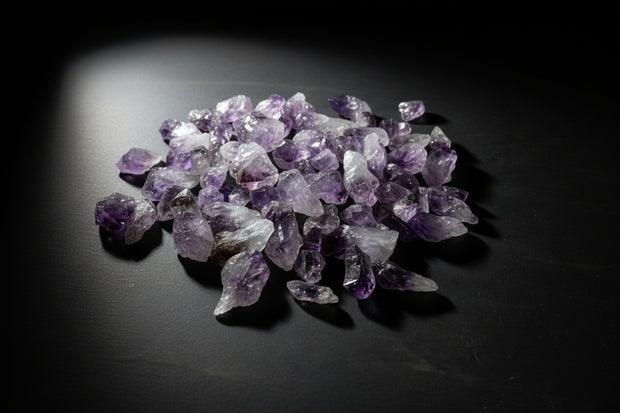
Natural specimens preserve more of the mineral’s original formation. Depending on the material, this may include crystal faces, points, clusters, matrix rock, druzy surfaces, terminations, or visible growth habits. For collectors, these features are often the most important part of the piece.
A natural specimen can teach you more about how a mineral formed than a heavily polished piece. It may reveal whether crystals grew in a cluster, formed inside a cavity, developed alongside another mineral, or remained attached to the host rock.
Choose a natural specimen when you want:
- A piece that preserves natural crystal structure and growth patterns.
- A mineral for serious collecting, study, or display.
- Unique formations that cannot be reproduced by carving or polishing.
- A direct connection to the geology of the material.
Natural specimens can be delicate. Clusters may shed tiny crystals, matrix can be brittle, and some minerals should not be exposed to water, sunlight, salt, or frequent handling. Ask about care requirements before cleaning or placing an unfamiliar specimen.
Which Form Is Best for Metaphysical Practice?
There is no universal best form. The most useful stone is the one that fits the way you practice.
- For carrying: choose a tumbled stone.
- For holding during meditation: choose a palm stone.
- For a focal point or altar centerpiece: choose a tower.
- For appreciating natural formation and mineral history: choose a specimen.
- For crystal grids: use small tumbles for layout and a tower or natural point as the center if desired.
Do not feel pressured to choose a shape because someone claims it is automatically more powerful. Personal connection, quality of material, practical use, and honest interest matter more than following a rigid rule.
Which Form Is Best for Mineral Collecting?
Collectors often prioritize natural specimens because formation, locality, crystal habit, condition, rarity, and matrix can all affect scientific and collector interest. However, polished pieces also have a place in a mineral collection. Certain materials reveal chatoyancy, labradorescence, banding, translucency, or internal scenery only after cutting and polishing.
A balanced collection can include both: natural specimens to preserve geology and polished forms to showcase color and optical character.
How to Judge Quality in Any Form
Regardless of shape, look closely at the actual piece rather than relying only on the mineral name.
- Check for repairs, resin fills, dye, coatings, or artificial treatments.
- Look at the polish for scratches, flat spots, or poorly finished edges.
- Inspect tower tips and specimen points for chips.
- Ask about locality when it is known and relevant.
- Remember that natural inclusions and fractures are not always defects; they can be part of the mineral’s character.
A reputable shop should be willing to explain what is known about the material and avoid presenting metaphysical claims as guaranteed medical or scientific outcomes.
Build a Collection That Fits You
You do not need one of every shape, and you do not need to choose between being interested in minerals and being interested in metaphysical practice. A stone can be appreciated for its geology, beauty, symbolism, craftsmanship, or all of those things at once.
Explore our Crystals & Stones collection to compare polished pieces, jewelry-grade material, ritual forms, and natural mineral specimens. For tools used in pendulum work and other forms of practice, visit our Divination Tools collection. You can also visit The American Occultist in Coshocton, Ohio, to see the material in person and choose the piece that feels right in your hand and looks right in your collection.
Tools for this practice
Explore the products selected for this guide. Review each listing for what is included and how to use it.


Shop this guide · 4 items Collapse


Keep exploring the shop
You made it to the end of the guide. Keep exploring through related products, major departments, or the full catalog.
 RELATED TO THIS GUIDE
Crystals & Stones
Shop this topic
RELATED TO THIS GUIDE
Crystals & Stones
Shop this topic


Leave a comment