


What Is the Egyptian Book of the Dead? Spells, Papyrus, Judgment, and the Afterlife

The Egyptian Book of the Dead is one of the most famous names in ancient religion, but the title creates several misunderstandings. It was not one single book, it was not a secret biography of the dead, and it was not a modern occult manual assembled for casual spellwork.
What we call the Book of the Dead is a modern name for collections of ancient Egyptian funerary texts intended to help deceased people move safely, knowledgeably, and successfully through the afterlife.
What Was the Egyptian Book of the Dead?
The ancient Egyptian title is commonly translated as the Book of Coming Forth by Day. The material consists of spells, prayers, declarations, hymns, instructions, and illustrated scenes placed in tombs or burials.
These texts were used especially during the New Kingdom and later periods, though they developed from older funerary traditions such as the Pyramid Texts and Coffin Texts.
There was no single universally fixed edition. A papyrus might contain a selection of spells chosen for a particular deceased person, arranged according to cost, availability, workshop practice, family preference, and changing religious tradition.
Why Call It a “Book”?
Many surviving examples are written on papyrus rolls, which encourages the modern word “book.” But funerary texts and images could also appear on coffins, mummy wrappings, tomb walls, amulets, and other burial objects.
The Metropolitan Museum of Art notes that the modern category “Book of the Dead” can hide the diversity of texts used for the dead. Different compositions served different purposes, and manuscripts could be highly individualized.
What Did the Spells Do?
The spells were meant to equip the deceased with knowledge and sacred speech. They address needs such as:
- Passing through gates and guarded regions.
- Naming divine beings and obstacles.
- Protecting the body and its parts.
- Restoring breath, movement, memory, and identity.
- Avoiding dangerous creatures or punishments.
- Joining the gods and participating in divine cycles.
- Receiving food, water, light, and freedom of movement.
- Preventing the heart from testifying against the deceased.
- Emerging into the day and continuing an effective afterlife.
In Egyptian religion, correct names, images, words, ritual knowledge, and material preparation could be powerful. The texts did not merely describe the afterlife; they helped make desired conditions ritually possible.
The Weighing of the Heart
One of the best-known scenes shows the heart of the deceased weighed against the feather associated with Ma’at—truth, justice, balance, and right order. The scene is often connected with Spell 125 and the declarations sometimes called the “Negative Confession.”
In the image, Anubis attends the balance, Thoth records the result, and the composite being Ammit waits near the scales. Osiris may preside over the judgment.
This is not simply a modern courtroom scene. It belongs to a larger religious system concerning moral order, ritual purity, identity, divine recognition, and successful transformation after death.
Why Was the Heart So Important?
The heart was associated with thought, memory, character, and identity. Preserving it and ensuring that it did not oppose the deceased were therefore essential concerns.
Heart scarabs could be inscribed with language asking the heart not to stand against its owner in judgment. The object, text, image, body, and burial ritual worked together.
Was Everyone Given the Same Text?
No. Manuscripts vary in length, quality, sequence, spelling, illustration, and selection. Wealth influenced what could be commissioned, but funerary knowledge also appeared in many material forms.
Scribes and workshops could prepare manuscripts in advance and later insert the owner’s name. Other papyri were more extensively customized. Variation is a central feature, not a corrupted version of one original master book.
Pyramid Texts, Coffin Texts, and the Book of the Dead
- Pyramid Texts: earlier funerary utterances written mainly in royal pyramids of the Old Kingdom.
- Coffin Texts: later collections written on coffins and other objects, available to a broader group of people.
- Book of the Dead: later funerary compositions often written on papyrus and used widely among people who could obtain them.
These bodies of text overlap and develop across time. They should not be treated as three neat editions of the same book.
Images Were Part of the Ritual Technology
The illustrated scenes, or vignettes, were not merely decoration. They identified beings, represented transformations, showed ritual actions, and made aspects of the desired afterlife visible.
Image and text could support one another. A scene of a person farming in the Field of Reeds, traveling in a solar bark, standing before divine beings, or passing judgment participated in the manuscript’s function.
Is the Book of the Dead a Grimoire?
It contains spells, sacred names, protective formulas, and ritual instructions, so comparisons with grimoires are understandable. But calling it a grimoire without qualification can force an ancient funerary tradition into a later European occult category.
Its primary context was burial, afterlife transformation, divine order, and the continued existence of the deceased. It was not designed as a general-purpose book of spells for living modern practitioners.
Can Modern Practitioners Use It?
People can study translations, museum objects, ancient Egyptian religion, art, and funerary beliefs. Kemetic practitioners may engage the texts within reconstructed or revived religious contexts.
Responsible study includes:
- Using scholarly translations rather than unsourced internet fragments.
- Identifying the spell number, manuscript, date, and translator.
- Remembering that ancient Egyptian religion changed over thousands of years.
- Avoiding claims that one text reveals a universal Egyptian belief.
- Not removing funerary language from context merely because it sounds powerful.
- Distinguishing historical reconstruction from personal adaptation.
For a wider introduction to modern Kemetic practice, deities, offerings, and Ma’at, read Kemetic Paganism for Beginners.
How to Read a Translation
- Read the introduction. Learn which manuscript and period the translator is using.
- Track editorial choices. Spell order and numbering are modern scholarly tools and may vary.
- Study the image with the words. Do not treat vignettes as optional illustration.
- Note divine names and titles. A god’s role can change by context.
- Compare manuscripts. Variation reveals how the tradition functioned.
- Use museum provenance carefully. Record where an object came from, its date, material, and acquisition history.
Common Misconceptions
“It was written by one author”
No. It is a changing body of funerary compositions transmitted and adapted over long periods.
“It contains the complete Egyptian religion”
No. It addresses funerary and afterlife concerns. Temple ritual, local cults, festivals, household religion, kingship, myth, and daily devotion require other sources.
“Every Egyptian owned one”
No. Access to elaborate funerary goods depended on period, status, wealth, and circumstance.
“Reading a spell summons a curse”
There is no reason to treat scholarly reading as an automatic supernatural danger. Fear-based claims often reflect modern entertainment more than historical evidence.
“The Egyptian and Tibetan Books of the Dead are the same kind of text”
No. The similar English titles were applied to distinct traditions with different histories, languages, religious systems, and purposes.
Where to Study Original Objects
Museums including the Metropolitan Museum of Art and the Smithsonian preserve papyri and funerary objects with catalog information, dates, materials, translations, and images. The Met’s essay “Books for the Dead?” is a useful starting point because it explains why the familiar modern title can be misleading.
Museum records should be read critically, including the history of excavation, collecting, colonialism, and ownership. Documentation can teach both ancient context and the modern history through which objects reached current institutions.
Frequently Asked Questions
How many spells are in the Book of the Dead?
Modern scholarship numbers roughly two hundred known compositions, but no individual manuscript contains all of them, and numbering systems are editorial tools.
Was it only for pharaohs?
No. Its predecessors included strongly royal material, but Book of the Dead manuscripts were made for a broader range of people who could obtain funerary texts and goods.
What is the Field of Reeds?
It is an idealized afterlife realm often represented as a fertile continuation of life in ordered abundance, though Egyptian afterlife ideas were diverse and changed over time.
Is Anubis the god who judges the dead?
Anubis has major roles in embalming, protection, guidance, and the weighing scene. Osiris is also central to judgment and the transformed dead. Reducing the process to one god misses the larger divine assembly.
Can I buy an authentic ancient papyrus?
Antiquities markets raise legal, ethical, authenticity, and provenance concerns. Study documented museum collections and lawful modern reproductions rather than purchasing objects with unclear histories.
Final Perspective
The Egyptian Book of the Dead is not one mysterious volume waiting to reveal a single secret. It is a diverse funerary tradition built from words, images, objects, ritual knowledge, and hopes for continued existence. Understanding it requires attention to manuscript variation, historical period, burial context, and the religious world in which “coming forth by day” was a profound transformation.
Read a Modern Public Edition
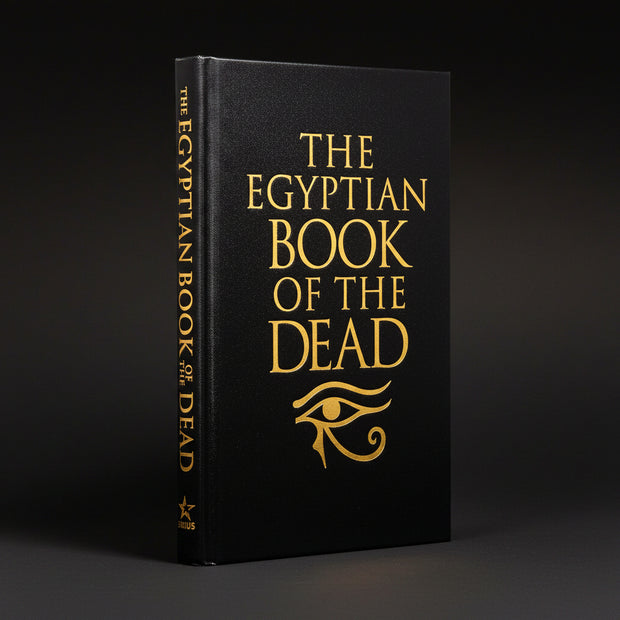
Explore our Egyptian Book of the Dead edition and related public devotional imagery in the Deity Statues, Idols & Talismans collection. A modern retail edition supports study; it is not an ancient artifact, a complete Egyptian canon, or automatic ritual authority.
Tools for this practice
Explore the products selected for this guide. Review each listing for what is included and how to use it.
Shop this guide · 1 item Collapse

Keep exploring the shop
You made it to the end of the guide. Keep exploring through related products, major departments, or the full catalog.


Leave a comment