


Appalachian Folk Magic: History, Healing, Belief, and Modern Misconceptions
“Appalachian folk magic” is often presented online as a single, secret system of mountain witchcraft. The real history is more complicated and more interesting. Appalachia is a large, culturally diverse region rather than one isolated community, and its household traditions developed through many peoples, places, religions, economies, and family lines.
This article offers a respectful introduction to recurring themes without claiming that every Appalachian family practiced them—or that one modern label can contain the region’s entire history.
What Does Appalachia Mean?
Appalachia spans a broad mountain region in the eastern United States. Communities differ by state, valley, town, religion, race, occupation, and family history. Coal camps, farming communities, cities, Cherokee homelands, Black Appalachian communities, immigrant settlements, and remote rural areas cannot be flattened into one culture.
Any useful discussion must begin by rejecting two stereotypes at once: Appalachia is neither a primitive place frozen in time nor a fantasy kingdom of inherited witches.
Is Appalachian Folk Magic One Tradition?
No. The phrase is a modern umbrella term. Practices commonly grouped beneath it may include:
- Household remedies and plant knowledge.
- Prayer, scripture, and spoken blessings.
- Protective customs around the home and livestock.
- Weather signs and agricultural timing.
- Dream interpretation and omens.
- Dowsing, charming, and other forms of practical divination.
- Stories about spirits, witches, haints, and unusual encounters.
- Midwifery and community healing.
- Funeral, mourning, and death-related customs.
These were not necessarily understood as “witchcraft.” Many practitioners identified as Christian and considered prayer, healing, or protection fully compatible with their faith.
Many Cultural Streams, Not One Origin Story
Appalachian traditions emerged through contact among Indigenous nations, African American communities, British and Irish settlers, German-speaking settlers, and later migrations. Specific customs may have multiple possible origins or may have changed through generations of exchange.
Cherokee history is not a decorative preface to settler folklore. The southern Appalachian region includes Cherokee homelands and living Cherokee communities. Indigenous knowledge should not be treated as anonymous regional material available for anyone to claim.
Likewise, Black Appalachian history and African American spiritual traditions are essential to the region and should not disappear beneath a simplified Scots-Irish origin story.
Religion and the Bible in Mountain Practice
Christian prayer, Psalms, spoken scripture, faith healing, signs, and providence have played major roles in many Appalachian communities. A household practice might involve a Bible verse, a spoken charm, a plant remedy, and practical labor without the family using occult terminology.
Modern practitioners sometimes remove this Christian context to make the material fit contemporary paganism. That may create a new personal practice, but it should not be presented as an unchanged historical tradition.
Granny Women, Midwives, and Folk Healers
The term “granny woman” is often used for community midwives or older women with practical knowledge of birth, herbs, household care, and local healing. It should not automatically be translated as “witch.” Their work developed partly where professional medical care was distant, expensive, inaccessible, or distrusted.
Romanticizing this history can hide the danger and hardship surrounding childbirth, illness, poverty, and medical exclusion. Traditional knowledge deserves respect, but historical remedies should not be assumed safe or effective by modern standards.
Storytelling, Signs, and the Supernatural
Appalachian oral traditions include wonder tales, ghost stories, Jack tales, family narratives, religious testimony, and accounts of strange events. The Library of Congress preserves extensive material on Appalachian storytelling, including magic and wonder tales. Storytelling communicates entertainment, warning, identity, humor, ethics, and memory—it is not simply a catalog of spells.
Folklore about omens, dreams, death signs, witches, and spirits varies greatly. A story told as true in one family may be treated as entertainment in another.
Common Modern Misconceptions
“Every Appalachian family practiced magic”
No. Some families maintained customs later described as magical; others rejected them, forgot them, or never held them.
“Appalachian folk magic is a closed practice”
There is no single authority who can declare every regional custom universally open or closed. Some knowledge is public folklore, some belongs to families or communities, and some draws from living Indigenous or African American traditions with their own boundaries. Treating everything as either completely available or completely forbidden avoids the necessary research.
“If my ancestor lived in Appalachia, I inherited the tradition”
An address or genealogy can guide research, but ancestry does not automatically transmit knowledge, permission, or practice. Family interviews and documented sources matter.
“Appalachian practice is just hoodoo with mountain plants”
No. Hoodoo is an African American tradition with its own histories and regional expressions. Influence and contact do not make distinct traditions interchangeable.
“The older and stranger a claim sounds, the more authentic it is”
Online folklore is easily invented. Vague claims about secret grandmothers, ancient Celtic survival, or universal mountain rules require evidence.
How to Research Responsibly
- Begin with place. Research a particular county, community, church, occupation, or migration route rather than “all Appalachia.”
- Use regional archives. Look for oral histories, university collections, historical societies, museums, Library of Congress material, and National Park Service resources.
- Record who is speaking. A folklorist, family member, commercial author, tribal historian, and social-media creator do not hold the same relationship to the material.
- Distinguish documentation from instruction. A source describing a custom does not automatically invite reenactment.
- Do not invent family memory. It is acceptable to say, “I am studying regional history,” rather than claim inherited secrets.
- Protect living people. Ask before sharing family remedies, names, recordings, or sacred stories.
Building a Modern Practice Without Counterfeit Ancestry
You can build a place-based folk practice honestly by learning local ecology, caring for neighbors, studying regional history, keeping family recipes with consent, observing weather, supporting traditional artists, and developing household rituals that you clearly identify as modern.
A practice does not become more legitimate by pretending it is older than it is. Transparency is stronger than fabricated lineage.
For related approaches to folk practice and spirit work, read Hedge Witchcraft. When working with plants, also see Herbalism vs. Herbal Witchcraft.
Frequently Asked Questions
Is Appalachian folk magic pagan?
Not inherently. Much documented practice is Christian or culturally mixed. Contemporary pagans may adapt regional material, but adaptation should be labeled honestly.
Can outsiders study Appalachian folklore?
Yes. Public history and folklore can be studied respectfully. Study does not grant automatic access to private family knowledge, Indigenous ceremony, or community authority.
Is “granny magic” an accurate term?
It is popular today but can blur differences among midwifery, herbal care, Christian healing, family custom, and modern occult practice. Use more precise language whenever the source allows it.
Are all regional remedies safe?
No. Historical use is not proof of modern safety. Plant identity, dose, interactions, contamination, and medical conditions all matter.
How do I know whether an online claim is real?
Look for a named region, source, collector, archive, interview, publication date, and cultural context. Claims that rely only on mystery and authority deserve caution.
Final Perspective
Appalachian folk practice is not a single occult brand. It is a complicated field of family knowledge, religion, labor, storytelling, healing, migration, survival, and regional identity. Respect begins with specificity: name the place, name the source, preserve cultural context, and never use romantic mystery to replace history.
Continue With Regional Study
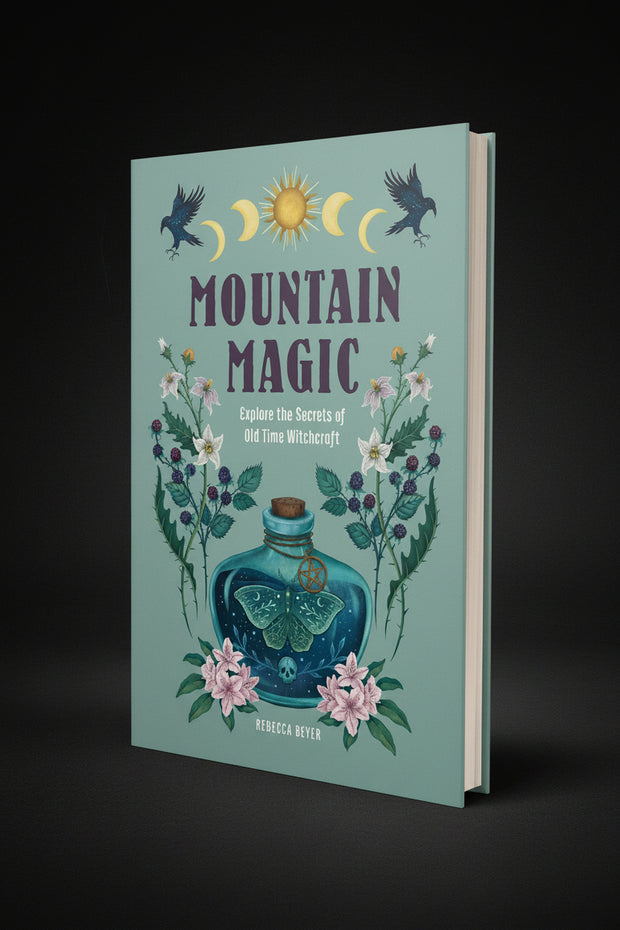
Use Mountain Magic: Modern Folk Magic as one contemporary perspective and compare it with archives, regional histories, and community voices. Public retail books support study; they do not establish ancestry, lineage, or authority over private family and living-community traditions.
Tools for this practice
Explore the products selected for this guide. Review each listing for what is included and how to use it.
Shop this guideHide product


Leave a comment