


Attraction Oils Compared: Attraction vs. Come to Me vs. Soulmate vs. Fidelity vs. Love Obsession

Attraction, Come to Me, Soulmate Connection, Fidelity & Faithfulness, and Love Obsession oils all sit near the “love” shelf, but they describe different stages and different ethical questions. Attraction broadens your magnetism. Come to Me calls for approach. Soulmate work seeks compatible connection. Fidelity addresses an existing commitment. Obsession intensifies focused desire and therefore requires the most caution.
No ritual oil can guarantee another person’s feelings or consent. Treat these formulas as aids for clarifying your intention and directing your own ritual practice—not as tools that erase another person’s agency.
Relationship oils compared
| Oil | Relationship stage | Responsible focus |
|---|---|---|
| Attraction | Open-ended | Your presence and receptivity to suitable opportunities |
| Come to Me | Invitation or approach | Mutual, welcome contact |
| Soulmate Connection | Seeking compatibility | Aligned values and reciprocal partnership |
| Fidelity & Faithfulness | Existing agreement | Trust, honesty, and keeping shared commitments |
| Love Obsession | Intensified focus | Best redirected toward consensual passion or personal confidence |
Attraction is the broadest formula
Attraction Ritual Oil is not limited to a named person or even to romance. Its broad language suits visibility, social confidence, welcome attention, or drawing opportunities that meet stated standards. For relationship work, a petition such as “may I recognize and be recognized by compatible people” leaves room for mutual choice.
Choose this when you want to open possibilities rather than direct one person’s behavior. It is also the cleanest option when you are unsure what kind of relationship you want but know how you want it to feel.
Come to Me emphasizes movement and contact
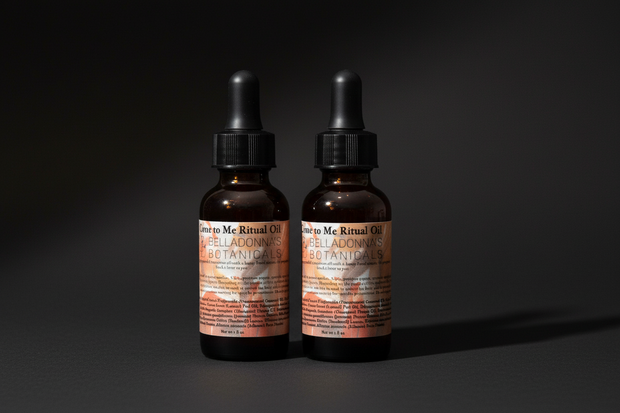
Come to Me Ritual Oil narrows the intention from general magnetism to approach. That could mean welcoming a compatible partner, encouraging reciprocal communication, or inviting the right opportunity to become visible.
The ethical wording matters. “Let mutually desired communication open” respects an answer, including no answer. A ritual should never become a reason to ignore silence, a blocked account, a breakup, or a stated boundary.
Soulmate Connection is about fit, not predestination
Soulmate Connection Ritual Oil is most useful when “soulmate” means a deeply compatible, growth-supporting relationship rather than one guaranteed person whom fate must deliver. Center qualities: emotional availability, shared values, respect, attraction, and willingness to build a relationship.
This approach also reduces tunnel vision. Intensity alone is not evidence of compatibility, and a difficult relationship is not automatically sacred because it feels consuming.
Fidelity belongs to an actual commitment
Fidelity & Faithfulness Ritual Oil addresses loyalty, trust, and agreements within an existing relationship. It cannot repair betrayal on its own. Honest conversation, mutually defined expectations, changed behavior, and sometimes professional counseling are the practical foundation.
Do not confuse fidelity with surveillance or possession. A sound petition includes both parties’ integrity and the health of the agreement, not fear-based control over a partner.
Love Obsession requires the narrowest guardrails
The name Love Obsession Ritual Oil expresses extreme focus. Obsession in real life can be painful, destabilizing, or unsafe; it is not a reliable sign of love. If you include this formula in practice, direct the symbolism toward consensual passion, confidence, creative intensity, or rekindling attention within an explicitly willing partnership.
Never use ritual claims to justify repeated contact, tracking, threats, pressure, or disregard for consent. If you feel unable to stop monitoring or pursuing someone, step away from the ritual and seek grounded support.
How to choose without stacking every oil
Write one sentence that starts with “I welcome…” If the object is broad opportunity, choose Attraction. If it is reciprocal approach, choose Come to Me. If it is compatibility, choose Soulmate Connection. If it is honoring an existing agreement, choose Fidelity. If it is intensity, examine whether a safer, consent-centered intention can carry the energy before choosing Love Obsession.
For ways to work with the selected formula, see our ritual oil application and safety guide. Follow the exact label; do not ingest ritual oil or assume it is skin-safe.
Frequently asked questions
Attraction oil or Come to Me oil—which is better for dating?
Attraction is broader and suits meeting compatible people. Come to Me is more specifically about welcome approach or communication. Neither can guarantee a particular person’s response.
Can Soulmate oil reveal who my soulmate is?
No product can verify a predestined identity. Use it to define and invite the qualities of a reciprocal relationship, then evaluate people by conduct and compatibility.
Can Fidelity oil stop cheating?
It cannot control behavior. It may support a ritual about trust and commitment, but boundaries, disclosure, accountability, and informed choices are what address infidelity.
Is Love Obsession oil dangerous?
The physical safety depends on the product label and handling. The ethical risk lies in treating obsession or coercion as romance. Keep any working consent-centered and stop if it feeds fixation or boundary violations.
Can these oils be mixed?
They can be combined only when the label permits and the intentions genuinely complement one another, but more formulas usually create less clarity. One accurately chosen oil is enough.
Good relationship work does not ask how to overpower someone’s will. It asks what kind of connection you are prepared to recognize, reciprocate, and sustain.
If you prefer a written petition instead of an oil-based working, see Paper Love Spell: How to Do a Love Spell With Paper.
Tools for this practice
Explore the products selected for this guide. Review each listing for what is included and how to use it.
Shop this guide · 1 item Collapse
Keep exploring the shop
You made it to the end of the guide. Keep exploring through related products, major departments, or the full catalog.
 RELATED TO THIS GUIDE
Ritual Supplies & Altar Tools
Shop this topic
RELATED TO THIS GUIDE
Ritual Supplies & Altar Tools
Shop this topic


Leave a comment