


Chakras for Beginners: History, the Seven-Chakra Model, and Respectful Practice

Chakras are often introduced as seven colored energy centers running from the base of the spine to the top of the head. That model is now widespread in yoga studios, metaphysical shops, meditation apps, crystal guides, and modern spiritual practice. It is useful to many people—but it is not the only chakra system, nor is every part of the popular presentation ancient.
The word chakra comes from Sanskrit and can be translated as wheel or disc. Chakra teachings developed within diverse South Asian religious and philosophical traditions, including Hindu and Buddhist tantric systems. Historical texts describe subtle bodies, channels, winds, sounds, deities, elements, mantras, and centers in several different arrangements. Some systems contain five chakras, six, seven, more, or fewer.
A respectful beginner’s approach begins with that diversity. It does not claim one modern chart represents every tradition, and it does not turn spiritual symbolism into unsupported medical promises.
What Is a Chakra?
In broad terms, a chakra is a subtle or symbolic center used within particular contemplative, ritual, and yogic systems. Chakras are commonly associated with the movement or organization of vital force through a subtle body. The precise meaning depends on the tradition, text, lineage, and practice.
Modern Western metaphysical practice often treats chakras as psychological and energetic themes. A practitioner might meditate on the throat chakra while reflecting on communication, or on the heart chakra while exploring grief and connection. This is a contemporary interpretive use and should not be confused with every historical tantric practice.
Are There Always Seven Chakras?
No. The familiar seven-center model is only one arrangement. Historical South Asian traditions contain multiple maps, and the centers may have different names, locations, correspondences, purposes, and methods of activation.
The now-common rainbow sequence—red, orange, yellow, green, blue, indigo, violet—became especially influential in modern global spirituality. It combines selected South Asian concepts with later Western esoteric, psychological, color, and New Age correspondences. That does not make it meaningless. It does mean it should be described accurately as a modern synthesis rather than the single original chakra doctrine.
The Popular Seven-Chakra Model
The following meanings summarize a common modern system. They are not universal definitions.
Root Chakra — Muladhara
Common location: base of the spine or pelvic floor
Modern color: red
Common themes: stability, survival, embodiment, home, material support, and belonging
Root-chakra reflection often focuses on basic routines, safety, money, housing, food, sleep, and connection to the physical world. Spiritual work here should never replace practical action when someone lacks safety or material support.
Sacral Chakra — Svadhisthana
Common location: lower abdomen
Modern color: orange
Common themes: emotion, pleasure, creativity, desire, intimacy, and adaptability
Modern practitioners may use this center to examine the difference between healthy pleasure and compulsion, or between emotional movement and avoidance.
Solar Plexus Chakra — Manipura
Common location: upper abdomen
Modern color: yellow
Common themes: agency, confidence, will, boundaries, discipline, and purposeful action
Work with this center is often connected with decision-making and the responsible use of personal power. Confidence is not domination, and boundaries are not punishment.
Heart Chakra — Anahata
Common location: center of the chest
Modern color: green, sometimes pink
Common themes: love, compassion, grief, reciprocity, forgiveness, and connection
Heart-centered practice is sometimes reduced to forced positivity. A more grounded approach allows grief, anger, and boundaries to exist alongside care. Forgiveness is not always required for healing or safety.
Throat Chakra — Vishuddha
Common location: throat
Modern color: blue
Common themes: communication, truth, listening, expression, and integrity
Throat-chakra reflection can include both speaking and listening. Honest expression does not mean saying everything without regard for timing, consent, or consequence.
Third-Eye Chakra — Ajna
Common location: brow or between the eyebrows
Modern color: indigo
Common themes: perception, imagination, insight, discernment, and intuition
Discernment is essential. Intuition should be compared with facts, patterns, and alternative explanations. See Psychic Development for Beginners for exercises that emphasize observation and mental-health boundaries.
Crown Chakra — Sahasrara
Common location: crown or above the head
Modern color: violet or white
Common themes: transcendence, meaning, consciousness, spiritual connection, and unity
Crown-oriented practice can become ungrounded when transcendence is used to avoid the body, relationships, or ordinary responsibilities. Spiritual reflection is strongest when it remains connected to daily life.
What Does “Blocked Chakra” Mean?
“Blocked chakra” is common modern language for feeling stuck, disconnected, imbalanced, or unable to express a theme associated with a center. It is not a medical diagnosis.
Physical pain, fatigue, anxiety, depression, digestive symptoms, hormonal concerns, neurological changes, or other health problems should not be assumed to come from a chakra blockage. Chakra meditation may be used as a personal spiritual practice, but it should not replace qualified medical or mental-health care.
A safer question is: What experience am I using this chakra symbol to explore? That keeps the language reflective rather than diagnostic.
A Simple Chakra Meditation
- Sit or lie in a comfortable position where you can breathe naturally.
- Notice physical contact with the floor, chair, or bed.
- Select one chakra rather than trying to force all seven open.
- Bring attention to the associated body region without straining or holding the breath.
- Use a neutral phrase such as “I am noticing,” “I am listening,” or “I am making space.”
- Observe sensations, thoughts, emotions, and images without treating each one as a supernatural message.
- End by looking around the room, moving the body, drinking water, and returning to ordinary activity.
Those who become dizzy, panicked, dissociated, or distressed should stop. Shorter, eyes-open practices or basic grounding and centering may be more appropriate.
Chakra Journaling Without Diagnosis
Choose one center and answer:
- What does this theme mean in my actual life?
- What observable situation brought it to my attention?
- What emotion is present?
- What practical need, conversation, boundary, or action may be involved?
- What alternative explanation should I consider?
- What support would help?
For example, a throat-chakra journal entry might reveal that the issue is not mystical blockage but fear of a supervisor, an unclear agreement, a need for communication skills, or an unsafe environment. The symbol can help organize reflection without replacing analysis.
Chakras and Crystals
Modern crystal practice frequently assigns stones to chakras by color. Red jasper may be paired with the root chakra, citrine with the solar plexus, rose quartz with the heart, and amethyst with the crown. These correspondences are modern spiritual associations rather than scientific properties.
Crystals can function as visual anchors, meditation objects, reminders, or meaningful ritual tools. They should not be presented as treatments for disease. A stone does not need to match a color chart to be meaningful; personal symbolism and cultural context matter.
Chakras and Sound
Some chakra systems use seed syllables, mantras, or ritual sounds. These practices can belong to specific textual and lineage contexts. Beginners should be cautious about claiming mastery from a short chart or removing sacred sounds from their traditions without study.
A simple non-lineage practice can use ordinary humming, a singing bowl, or quiet breathing as a concentration aid without claiming to reproduce a traditional initiation-based method.
Respectful Practice
- Acknowledge that chakra concepts come from South Asian traditions.
- Do not describe the modern rainbow chart as the only ancient system.
- Learn the difference between a personal adaptation and a lineage practice.
- Avoid turning Sanskrit terms into decorative labels without study.
- Do not promise medical cures or emotional healing on demand.
- Credit teachers, texts, and traditions when using specific methods.
- Remain open to the fact that practitioners within Hindu and Buddhist traditions may understand chakras differently from Western metaphysical sources.
Common Chakra Mistakes
Trying to “open” everything immediately
More intensity is not automatically more spiritual. Slow observation and integration are safer than forcing dramatic sensations.
Interpreting every sensation as energy movement
Tingling, warmth, pressure, and emotional shifts can have many ordinary causes. Notice them without insisting on one explanation.
Using chakra language to avoid practical problems
A symbolic heart practice cannot substitute for relationship boundaries. Root meditation cannot replace financial planning or safe housing. Throat meditation cannot replace a necessary conversation or professional support.
Ranking upper chakras above lower chakras
Embodiment, safety, emotion, and agency are not less spiritual than vision or transcendence. A balanced model values the whole person.
Frequently Asked Questions
Are chakras scientifically proven?
Chakras are spiritual and subtle-body concepts, not anatomical structures established by modern medical science. Meditation may affect well-being, but chakra claims should not be presented as medical fact.
Do chakras belong to witchcraft?
They originated in South Asian religious and yogic traditions, not in a single historical witchcraft system. Some modern witches incorporate chakra concepts, but that is a contemporary combination.
Can a chakra be permanently blocked?
“Blocked” is symbolic language with no standardized diagnostic meaning. Use it to explore an experience rather than to label yourself as damaged.
Do I need crystals to work with chakras?
No. Attention, breath, study, mantra within an appropriate context, visualization, ethical reflection, or journaling may all be used. Crystals are optional modern additions.
Is the seven-chakra rainbow model wrong?
It can be meaningful as a modern spiritual system. The problem arises when it is presented as the only authentic or unchanged ancient model.
Study Before Certainty
Chakra work can offer a rich symbolic language for embodiment, emotion, communication, perception, and spiritual meaning. Its value grows when practitioners acknowledge its cultural roots, recognize the variety of historical systems, avoid health misinformation, and distinguish modern adaptation from universal tradition. Respect does not make practice less accessible. It makes practice more honest.
Use Modern Chakra Resources With Context
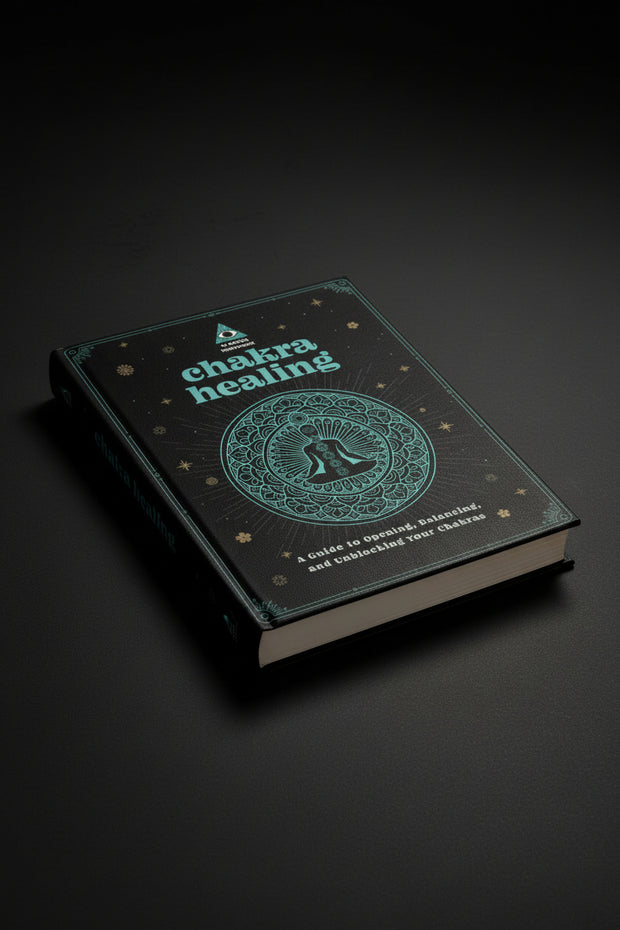
For an openly modern workbook approach, explore Chakra Healing: An In Focus Workbook and our Crystals & Stones collection. These products may support meditation and symbolism; they are not substitutes for medical care and should not be presented as the complete history of South Asian chakra traditions.
Tools for this practice
Explore the products selected for this guide. Review each listing for what is included and how to use it.
Shop this guide · 1 item Collapse

Keep exploring the shop
You made it to the end of the guide. Keep exploring through related products, major departments, or the full catalog.


Leave a comment