


Psychic Development for Beginners: Intuition, Exercises, Discernment, and Safety

Psychic development is commonly described as training intuition, perception, symbolic awareness, divination, dreams, meditation, or sensitivity to subtle impressions. Some people understand these experiences spiritually; others understand them through attention, memory, pattern recognition, imagination, and psychology. A responsible practice can leave room for interpretation without turning every feeling into supernatural certainty.
Psychic abilities have not been scientifically established as reliable powers for obtaining hidden information. The exercises below are best used for reflection, observation, and disciplined testing—not for diagnosing illness, identifying enemies, predicting emergencies, or replacing professional judgment.
What Does “Psychic Development” Include?
The phrase may refer to:
- Intuition and rapid pattern recognition.
- Dream recall and symbolic interpretation.
- Tarot, runes, pendulums, or other divination systems.
- Meditation and focused attention.
- Visualization and imaginative exercises.
- Empathy and awareness of nonverbal cues.
- Spiritual ideas such as clairvoyance, clairaudience, clairsentience, or mediumship.
These categories should not be treated as identical. Being emotionally perceptive does not prove telepathy. Having a vivid dream does not establish prophecy. Hearing an internal phrase during meditation does not automatically identify an outside entity.
Start With Grounding, Not Opening
Many beginner guides encourage people to “open the third eye” or increase sensitivity as quickly as possible. A safer order is:
- Establish sleep, food, hydration, and ordinary routines.
- Learn to calm and orient yourself.
- Set time limits for spiritual exercises.
- Keep records.
- Practice stopping before practicing opening.
A basic grounding exercise:
- Name five things you can see.
- Name four things you can physically feel.
- Name three things you can hear.
- Name two things you can smell.
- Name one thing you can taste or one slow breath you can notice.
The goal is not to eliminate spiritual interpretation. It is to return attention to the present environment before deciding what an experience means.
Exercise 1: The Prediction Journal
Write one specific, ordinary prediction before the result is known. Include the date, exact wording, confidence level, and deadline.
Example: “Before Friday evening, the person I am waiting to hear from will send a message. Confidence: 60%.”
After the deadline, score it as correct, incorrect, partly correct, or too vague to evaluate. Do not rewrite the prediction after the fact.
This exercise exposes three common errors:
- Confirmation bias: remembering hits and forgetting misses.
- Hindsight bias: believing a vague impression was more precise than it was.
- Moving the goalposts: changing the meaning after the outcome.
Exercise 2: Observation Before Interpretation
When you receive an impression, divide the journal page into two columns:
- Observation: “My chest tightened when the phone rang.”
- Interpretation: “I sensed bad news.”
The observation is directly reportable. The interpretation is a hypothesis. Keeping them separate improves discernment and reduces fear.
Exercise 3: Controlled Card Practice
Shuffle a small set of cards face down. Before turning one over, record a guess about color, suit, image category, or another clearly defined feature. Use enough trials to see ordinary misses as well as hits.
This is not proof of psychic ability. It is a way to practice concentration, honest scoring, and tolerance for uncertainty.
Exercise 4: Dream Recall Without Forced Prophecy
Keep a notebook near the bed and record dreams immediately. Include:
- Events and images.
- Emotions.
- People and places.
- Recent waking-life influences.
- Possible symbolic meanings.
- Whether any apparent prediction was specific and recorded before the event.
Dreams can be spiritually meaningful without being literal forecasts. Grief, stress, medication, illness, media, memory, and sleep disruption can all affect dream content.
Exercise 5: Divination With a Verification Step
Ask a modest question, perform the reading, and write the interpretation before acting. Then identify what evidence would confirm or challenge it.
For example, instead of asking, “Is my coworker secretly attacking me?” ask, “What communication issue should I clarify at work?” The second question leads toward observable action rather than accusation.
Never use divination as the sole basis for medical decisions, legal accusations, financial commitments, pregnancy claims, missing-person searches, or confronting someone about abuse or infidelity.
Discernment Questions for Unusual Experiences
Before assigning a spiritual cause, ask:
- Was I falling asleep or waking up?
- Have I been sleeping enough?
- Am I grieving, frightened, isolated, or under unusual stress?
- Did I use alcohol, cannabis, stimulants, psychedelics, or a new medication?
- Could sound, lighting, memory, or expectation explain part of it?
- Does the interpretation make me calmer and more capable, or more afraid and compulsive?
- Can I pause the practice?
- Is the experience interfering with work, relationships, hygiene, sleep, or safety?
Spiritual meaning and ordinary explanations do not always have to compete. You can preserve the personal meaning of an experience while still checking sleep, health, environment, and evidence.
Boundaries for Spiritual Practice
Create clear rules before intense experiences occur:
- Practice only during a chosen time window.
- Do not interpret every coincidence immediately.
- Wait before spending money or contacting a practitioner.
- Do not obey frightening commands or threats.
- Do not accept claims that questioning is disrespectful or dangerous.
- Stop when sleep or daily functioning declines.
- Consult grounded people who do not intensify fear.
Healthy spiritual practice permits doubt, rest, privacy, and refusal.
Mediumship and Grief
Grief can make messages from deceased loved ones feel especially urgent. Dreams, memories, sensed presence, and meaningful coincidences can be comforting, but vulnerability also creates openings for exploitation.
Be cautious of practitioners who claim a deceased person is trapped, suffering, angry, cursed, or unable to move on unless you purchase additional services. Ethical spiritual support does not turn grief into escalating financial pressure.
For a grounded approach to dreams of deceased loved ones, read Visitation Dreams or Grief Dreams?. For financial and emotional red flags, see Fake Psychics and Spiritual Scams.
When to Pause and Seek Help
Stop spiritual exercises and seek professional support when experiences become frightening, commanding, persistent, or difficult to distinguish from shared reality; when you cannot sleep; when you feel watched or targeted; or when daily functioning is deteriorating.
The National Institute of Mental Health explains that hallucinations, delusions, confused thinking, social withdrawal, sleep disruption, and difficulty functioning can be signs that professional assessment is needed. Spiritual practice is not a substitute for mental-health care. Review the official NIMH resources on understanding psychosis and finding help.
In the United States, call or text 988 for crisis support. Call 911 or go to an emergency department when there is immediate danger, a command to harm yourself or someone else, or an inability to remain safe.
A Four-Week Beginner Plan
Week 1: Grounding and observation
Practice five minutes of grounding daily. Record observations without spiritual interpretation.
Week 2: Testing and scoring
Use a prediction journal or controlled card exercise. Record every result, including misses.
Week 3: Symbolism
Study one divination system or keep a dream journal. Compare personal symbols with established sources.
Week 4: Review and boundaries
Identify what was useful, what increased fear, which impressions were too vague, and whether the practice improved or disrupted daily life.
Frequently Asked Questions
How do I know whether an impression is intuition or anxiety?
There is no perfect internal test. Anxiety often repeats urgently and demands certainty, but intuition can also feel intense. Record the impression, regulate the body, seek evidence, and avoid immediate high-stakes action.
Should I believe the first message I receive?
No. Treat it as a possibility. Verify what can be verified and preserve the right to reject it.
Can meditation cause unusual experiences?
Some people report changes in perception, emotion, sleep, or sense of self during intense practice. Use short sessions, stop if distressed, and seek qualified help when symptoms persist or interfere with functioning.
Do I need crystals, cards, or special tools?
No. A notebook, timer, and structured observation practice are enough.
Can psychic development tell me who is dangerous?
Do not rely on impressions alone. Evaluate behavior, evidence, boundaries, and credible safety information.
Final Perspective
The most valuable skill in psychic development is not unquestioning belief. It is disciplined discernment: observing carefully, recording honestly, testing claims, accepting uncertainty, maintaining boundaries, and knowing when to stop. A practice that cannot survive questions is not strengthened by greater sensitivity.
Practice With Records and Limits
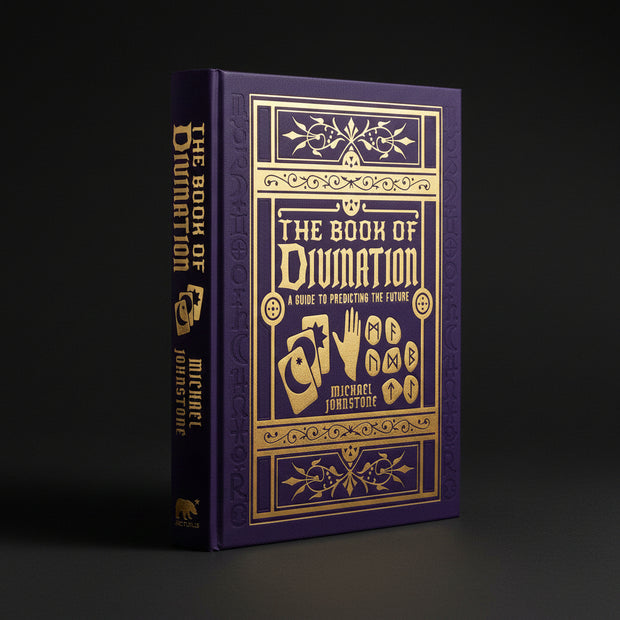
For structured exercises, explore the Book of Divination and our Divination Tools collection. Tools can support observation and symbolic study; they do not prove psychic powers, identify hidden enemies, or replace professional assessment.
Tools for this practice
Explore the products selected for this guide. Review each listing for what is included and how to use it.
Shop this guide · 1 item Collapse

Keep exploring the shop
You made it to the end of the guide. Keep exploring through related products, major departments, or the full catalog.


Leave a comment