


Enochian Magic vs. Satanic Enochian: What LaVey Changed

Enochian magic did not originate in Satanism. John Dee and Edward Kelley recorded their Angelical material in a Christian, Renaissance setting almost four centuries before Anton LaVey published The Satanic Bible. The connection exists because LaVey adapted nineteen Enochian Keys for the book’s final section, the Book of Leviathan.
That adaptation is historically important, but it is not a neutral reprint of Dee’s system. It changes the religious frame, the English meaning, the pronunciation convention, and the purpose for which the Keys are used.
Enochian and Satanic Enochian compared
| Question | Dee–Kelley context | LaVeyan context |
|---|---|---|
| Historical setting | 1580s Christian angelic conversations | Twentieth-century non-theistic Satanic ritual |
| Primary purpose | Knowledge, angelic communication, and divine or cosmic order | Ritual drama, emotional expression, and Satanic symbolism |
| Authority claimed | Communications presented as received through angels | Deliberate modern adaptation by LaVey |
| English renderings | Manuscript translations preserved with the Calls | Recast with infernal or Satanic language |
| Pronunciation | Dee left scattered phonetic guidance reflecting his period | The Church of Satan teaches a forceful modern convention |
| Wider system | Tables, seals, hierarchies, scrying records, and ritual apparatus | The Keys are incorporated into LaVeyan ritual without the complete Dee apparatus |
What LaVey retained
LaVey retained the idea of nineteen Keys and Enochian-language passages derived through the later occult publication chain. He credited Dee and treated the language’s unfamiliar sound as valuable ceremonial material. The result gave many modern Satanists their first exposure to Enochian words.
He did not, however, import the whole Dee–Kelley system. The Great Table, Liber Loagaeth, Holy Table, wax seals, complex angelic hierarchies, and Dee’s devotional theology are not made into a complete Enochian curriculum in The Satanic Bible.
What LaVey changed
LaVey’s accompanying English versions replace or reinterpret heavenly references with Satanic and infernal ones. Academic discussions of LaVey’s sources generally trace his Keys through Aleister Crowley’s publication of the material rather than a new transcription of Dee’s manuscripts. The adapted English and the inherited Enochian strings therefore do not always express the same theology in a simple line-for-line way.
This distinction matters. A Satanist can use LaVey’s Keys within LaVeyan ritual, but should not claim that Dee and Kelley recorded Satanic prayers or that LaVey’s English is the uncontested literal translation.
Why pronunciation sounds different
There is no single modern Enochian pronunciation accepted by every school. Dee recorded phonetic hints in Early Modern English. The Golden Dawn and Crowleyan traditions developed their own conventions. The Church of Satan’s pronunciation guide favors clearly sounded consonants and a dramatic delivery appropriate to its ritual philosophy.
A pronunciation can therefore be correct within a stated lineage without being the only historically possible reconstruction. Saying “this is the LaVeyan convention” is more accurate than calling it the original angelic pronunciation.
Is the Enochian text itself Satanic?
Not in origin. The recorded Calls belong to Dee’s Christian angelic project and repeatedly use divine language. Their later presence inside a Satanic book changes their ritual setting, not their sixteenth-century origin.
This does not make Satanic adaptation illegitimate as modern religious creativity. Traditions regularly translate, reinterpret, parody, invert, and reclaim older material. The responsible approach is to identify the adaptation rather than backdate it.
Is Satanic Enochian a separate language?
No. It is better described as a Satanic ritual use and translation layer applied to inherited Enochian material. It does not supply an independently developed grammar or new historical corpus comparable to Dee’s papers.
How this differs from enns
Enochian Keys and demonic enns are not the same category. Enns are short modern formulas circulated mainly through demonolatry and devotional spirit work. Enochian has a documented Renaissance manuscript history. Our existing guide to Satanic ritual words, invocations, Enochian, and enns introduces the distinction; this article explains the Enochian side in depth.
Frequently asked questions
Did Anton LaVey invent Enochian?
No. He adapted older Dee-derived material for modern Satanic ritual.
Are the nineteen Keys in The Satanic Bible accurate translations?
They are LaVey’s Satanic renderings, not neutral critical translations. Readers comparing traditions should consult Dee-based transcriptions and later scholarly editions.
Do all Satanists use the Keys?
No. Satanism contains multiple organizations, theologies, and individual practices. Even within LaVeyan Satanism, ritual participation varies.
Does reciting Enochian make a ritual Christian?
Religious meaning depends on context and belief, but the historical divine language embedded in the source does not vanish. Practitioners should understand what they are adapting and decide whether it fits their theology.
Can a non-Satanist study LaVey’s version?
Yes, as a significant chapter in Enochian reception and modern Satanic literature. Study does not require ritual use or religious agreement.
Further reading
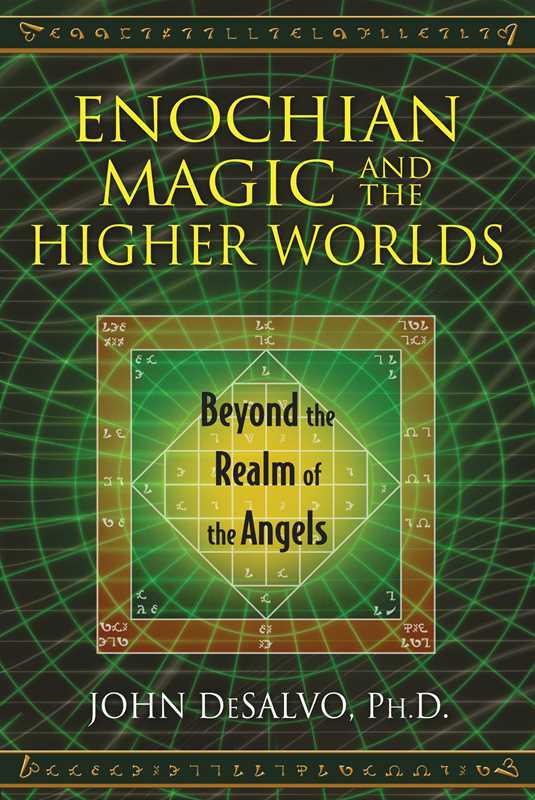
Enochian Magic and the Higher Worlds represents a different modern reconstruction centered on angelic and divine ascent. Comparing its stated theology with LaVey’s use makes clear how widely the same inherited material can be reframed.
The accurate conclusion is neither “Enochian is Satanic” nor “Satanists have no connection to it.” Enochian began in Dee and Kelley’s angelic project; LaVey later created an influential Satanic adaptation.
Tools for this practice
Explore the products selected for this guide. Review each listing for what is included and how to use it.
Shop this guide · 1 item Collapse
Keep exploring the shop
You made it to the end of the guide. Keep exploring through related products, major departments, or the full catalog.


Leave a comment