


Satanic Ritual Words: Invocation, Enn & Symbolic Language Explained

Satanic ritual language includes invocations, affirmations, Enochian passages, devotional phrases, and modern formulas known as enns. Their meaning depends on the tradition, theology, and purpose of the ceremony.
Most widely used Satanic ritual words are not secret remnants of a medieval devil cult. They developed through Renaissance occultism, modern literature, twentieth-century Satanic texts, and contemporary devotional practice.
What Satanic Ritual Words Do
- Mark the beginning or ending of a ceremony
- Shift attention into ritual space
- State an identity, value, or allegiance
- Address a deity, spirit, symbol, or archetype
- Build emotional intensity through repetition and sound
- Provide a shared structure for group practice
The function matters more than whether the wording sounds ancient or dramatic.
Invocation in Satanic Ritual
An invocation is language that calls upon, welcomes, identifies with, or addresses a force, idea, deity, or spiritual being.
Non-Theistic Invocation
In LaVeyan and other symbolic forms, invocation functions as psychodrama. The language may activate confidence, anger, desire, concentration, or an adversarial identity without calling a literal being.
Theistic Invocation
In devotional Satanism, invocation may be understood as prayer or spiritual communication directed toward Satan, Lucifer, or another being.
The same words can therefore be interpreted psychologically by one practitioner and devotionally by another.
Enochian in Satanic Ritual
Enochian originated in the late sixteenth-century work of John Dee and Edward Kelley, who described it as language received through angelic communication.
Anton LaVey adapted Enochian Keys for The Satanic Bible. In LaVeyan ritual, the language was valued for dramatic sound and atmosphere rather than accepted as literal angelic speech.
Enochian is therefore older than organized modern Satanism but was reinterpreted within it.
What Are Enns?
Enns are short repeated phrases associated mainly with modern demonolatry and some theistic Satanic traditions. They often combine the name of a spirit with a devotional or invitational formula.
- They are used repetitively, much like a mantra.
- Devotional practitioners may understand them as calls to a spirit.
- Other practitioners use them to focus attention or create atmosphere.
- Most documented enns appear in recent occult literature rather than Renaissance grimoires.
Claims that every enn is an ancient preserved demonic language should be treated cautiously.
“Hail Satan,” “Hail Thyself,” and Affirmation Language
Hail Satan
In non-theistic practice, the phrase may affirm adversarial philosophy or Satanic identity. In theistic practice, it may function as devotional praise.
Hail Thyself
This phrase emphasizes self-respect, personal authority, and the non-theistic idea that the individual rather than a god is the central authority.
Personal Declarations
Many practitioners write their own ritual language instead of relying on fixed liturgy. Clear wording connected with actual beliefs is usually more useful than borrowed language that is not understood.
Ritual Language as Performative Speech
Words spoken in ceremony can perform social and psychological work:
- A vow creates a stated commitment.
- A renunciation marks separation from a former identity.
- An invocation changes the ritual relationship or atmosphere.
- A repeated phrase reinforces memory and group belonging.
- A closing formula marks the return to ordinary activity.
This effect does not require hidden power in particular syllables.
Common Misconceptions
“All Satanic ritual words are ancient spells.”
Many are modern compositions or adaptations from earlier ceremonial magic and literature.
“A ritual fails if the exact words are changed.”
No universal Satanic authority requires one fixed liturgy. Language can be adapted to the practitioner’s beliefs and purpose.
“Enns and Enochian are the same thing.”
No. Enochian comes from Renaissance ceremonial magic, while enns are modern devotional formulas associated with demonolatry.
Frequently Asked Questions
What is a Satanic invocation?
It is a spoken address to a symbol, archetype, deity, spirit, or value within a Satanic ritual framework.
Are enns historically ancient?
Most widely circulated enns appear in modern occult sources rather than documented medieval or Renaissance manuscripts.
Can practitioners write their own ritual words?
Yes. Personal language can be more coherent and meaningful than repeating phrases without understanding them.
Related Reading
Selected References
- Dyrendal, Asbjørn, James R. Lewis, and Jesper Aa. Petersen. The Invention of Satanism.
- LaVey, Anton Szandor. The Satanic Bible.
- Petersen, Jesper Aa., ed. Contemporary Religious Satanism.
- van Luijk, Ruben. Children of Lucifer.
Tools for this practice
Explore the products selected for this guide. Review each listing for what is included and how to use it.

Shop this guide · 4 items Collapse
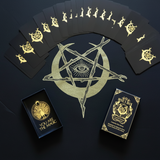


Keep exploring the shop
You made it to the end of the guide. Keep exploring through related products, major departments, or the full catalog.


Leave a comment