


Enochian Watchtowers Explained: Great Table vs. Wiccan Quarters

Calling the four quarters, invoking the Enochian Watchtowers, and working with John Dee’s Great Table can all involve four directions and four elements. That resemblance causes them to be treated as interchangeable. Historically and structurally, they are not the same practice.
A Wiccan quarter call can be a brief invitation to Air, Fire, Water, and Earth. Enochian tablet work derives names and hierarchies from lettered grids. The Golden Dawn later placed those tablets inside its ceremonial temple system and helped popularize “Watchtower” language. Using the same directional framework does not erase those differences.
Four directional practices compared
| Practice | Main function | What makes it distinct |
|---|---|---|
| Wiccan quarter call | Acknowledge directions, elements, guardians, or powers during a circle | Wording and theology vary across Wiccan traditions |
| Dee’s Great Table | Organize a lettered angelic system from which names and relationships are derived | The grids, names, and manuscript history—not four generic element symbols—are central |
| Golden Dawn Watchtowers | Integrate Enochian tablets with a later Hermetic temple and elemental system | Uses order-specific colors, correspondences, ritual movements, and hierarchy |
| Modern eclectic “watchtowers” | Often another name for elemental quarters | May retain the word while omitting the Enochian tables entirely |
What is the Great Table?
The Great Table is a combined arrangement of four lettered tablets received during the Dee–Kelley angelic sessions. Names are produced through defined patterns within the grids. The table went through corrections and arrangements in the surviving record, which is one reason modern diagrams do not always agree.
It is not merely a square altar tile representing balance. Its letters, divisions, and derived names carry the system. A decorative object with four colors but no traceable table arrangement should not be sold or taught as an accurate Enochian Great Table.
What are the Enochian Watchtowers?
Modern ceremonial magicians commonly call the four elemental tablets Watchtowers. Each is associated with an element and contains a hierarchy of names derived from the grid. In Golden Dawn practice, the tablets were woven into a larger ritual system that included Hebrew divine names, elemental weapons, color scales, grades, and temple officers.
That synthesis is historically later than Dee. It can be a coherent Golden Dawn practice, but it should not be presented as an unchanged transcript of a ritual Dee performed.
What are Wiccan quarters?
In many forms of modern Wicca, a circle is oriented to four directions and elements. A practitioner may light candles, acknowledge local powers, invite elemental qualities, or address guardians. The structure is flexible, and not every Wiccan uses the term Watchtower.
Our guide to casting a Wiccan circle deliberately distinguishes calling elements, quarters, guardians, and Watchtowers. A short invitation to “powers of Air” is not automatically an invocation of an Enochian hierarchy.
Why did the systems become mixed?
Twentieth-century witchcraft absorbed vocabulary and ritual forms from ceremonial magic, Freemasonry, Romantic literature, folklore, and other sources. Published circle-casting scripts sometimes used “Lords of the Watchtowers” without teaching the Enochian tables behind the term. Repetition then made the word sound generically Wiccan.
Borrowing is not automatically a problem. Unmarked borrowing is. A ritual can say it uses Golden Dawn-influenced Watchtower language, an eclectic elemental adaptation, or a lineage-specific Wiccan quarter call. Each description tells the reader what is actually happening.
Do the directional correspondences always match?
Many modern northern-hemisphere systems use East/Air, South/Fire, West/Water, and North/Earth. That pattern is common, not universal. Wiccan practitioners may adapt directions to landscape or lineage. A formal Enochian or Golden Dawn tablet arrangement should be studied within that system rather than rearranged casually and still called source-accurate.
Can you put Enochian tablets in a Wiccan circle?
You can create an eclectic ritual, but first decide what the tablets are doing. If they serve only as four decorative elemental markers, say so. If you intend to invoke names derived from the tablets, learn their source, structure, pronunciation convention, and the ritual framework you are adopting.
Adding complex symbols does not automatically add protection or power. It adds another system whose assumptions need to be understood.
Frequently asked questions
Are Watchtowers required in Wicca?
No. Many Wiccans call quarters or elements without Enochian language, while others do not use a formal four-quarter structure for every rite.
Is every four-element altar Enochian?
No. Four-element symbolism appears widely in Western esotericism and modern Paganism. Enochian specificity comes from the actual tables, names, and source tradition.
Is the Tablet of Union a fifth Watchtower?
It is a smaller coordinating table associated with Spirit and the elemental tablets in later ceremonial interpretation. Calling it simply a fifth directional quarter obscures its different role.
Did Dee use Golden Dawn colors?
No. The familiar elaborately colored tablet scheme belongs to later Golden Dawn interpretation.
Which version should a beginner learn?
Choose a named system. Study Dee’s manuscript-derived material for historical foundations or a documented Golden Dawn curriculum for that order’s practice. Avoid diagrams that provide no source or version.
Further reading
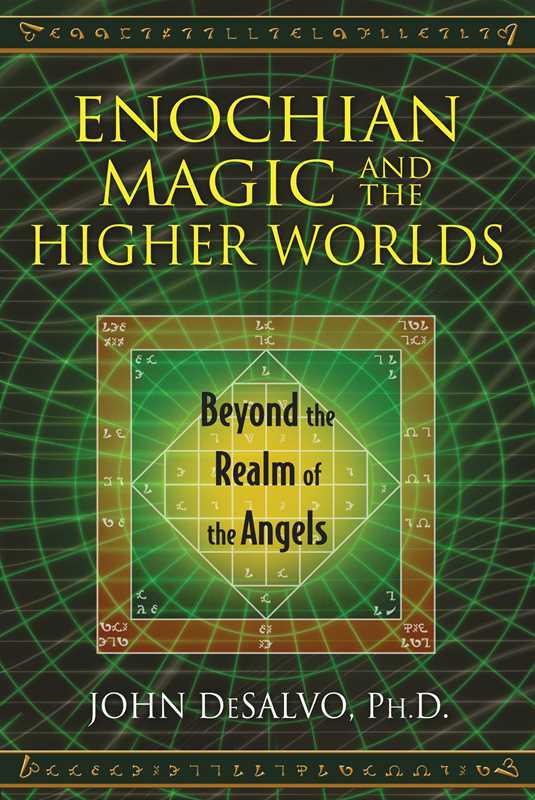
Enochian Magic and the Higher Worlds is one modern practical interpretation. Readers should compare its arrangement and instructions with source-based editions rather than assuming all contemporary Enochian books teach the same table system.
The clean distinction is simple: quarters organize ritual space; the Great Table organizes a specific angelic letter system; Watchtowers are a later ceremonial way of working with its elemental tablets. They can meet in one ritual, but they do not begin as synonyms.
Tools for this practice
Explore the products selected for this guide. Review each listing for what is included and how to use it.
Shop this guide · 1 item Collapse
Keep exploring the shop
You made it to the end of the guide. Keep exploring through related products, major departments, or the full catalog.


Leave a comment