


How to Cast a Wiccan Circle: Quarters, Tools, and Closing the Rite

For many Wiccans, casting a circle is the act that marks the beginning of ritual. The circle separates ordinary activity from deliberate sacred work, gives the rite a clear structure, and helps the practitioner gather attention around a single purpose. Within Wiccan traditions, it may also be understood as a spiritual boundary or a space held between the everyday and the sacred.
Those meanings belong to religious and magical practice. A ritual circle is not a scientifically demonstrated physical barrier, and different Wiccan traditions explain its function in different ways. Some use elaborate invocations and formal quarter calls; others create a quiet boundary with a hand, a candle, or a few spoken words. There is no single script followed by every Wiccan.
This guide presents a practical, adaptable method for beginners. It can be used for an esbat, sabbat, devotional rite, meditation, divination session, or simple act of spellwork. Treat it as a framework rather than a rulebook, and defer to the teachings of your own tradition when they differ.
What Does Casting a Wiccan Circle Mean?
In common modern Wiccan practice, a circle can serve several related purposes:
- Defining ritual space: It creates a clear beginning, middle, and end for the rite.
- Supporting concentration: Repeated movements and words help shift attention away from ordinary distractions.
- Establishing a symbolic boundary: Many practitioners understand the circle as containing the ritual and distinguishing sacred space from the surrounding room.
- Organizing elemental work: The four directions are often connected with Air, Fire, Water, and Earth.
- Creating a place for reverence: The circle may become the setting for prayer, seasonal observance, offerings, or communion with deities.
A circle is usually temporary. It is deliberately created before the main working and deliberately opened or released afterward. This is different from maintaining a permanent household altar or shrine.
Is Circle Casting Required in Wicca?
No single practice is universal across all Wiccan paths. Circle casting is central to many forms of Wicca, especially ritual forms influenced by initiatory and ceremonial structures, but not every solitary practitioner casts a formal circle for every act of devotion or magic.
A brief prayer at an altar, a moment of gratitude outdoors, or a simple candle meditation may not require a full ritual boundary. More formal rites often benefit from one because the circle gives the work order and helps the practitioner enter and leave ritual space intentionally.
Readers who are still learning how Wiccan beliefs and practices fit together may wish to begin with Wicca 101: Introduction to Wiccan Beliefs and Rituals.
Prepare the Space Before You Begin
Good ritual preparation is both spiritual and practical. Before casting, make the area safe enough that you will not need to interrupt the rite unnecessarily.
- Clear walking paths and remove objects that could be tripped over.
- Place every tool you plan to use inside the working area before beginning.
- Use stable holders for candles and keep flame away from fabric, dried plants, paper, pets, and loose clothing.
- Ventilate the room when using incense, and choose a smoke-free method when anyone present has respiratory sensitivities.
- Keep water or an appropriate extinguisher nearby when open flame is involved.
- Use battery-operated candles when the setting does not safely permit fire.
- Silence avoidable notifications, but keep a phone accessible when real-world safety requires it.
The physical room does not need to be perfect. A clean, workable area is enough. Ritual focus is not improved by creating hazards in pursuit of atmosphere.
Tools You May Use
Tools help embody parts of the ritual, but they are not substitutes for attention and intention. A practitioner can cast a circle with no purchased equipment at all.
Athame or Ritual Wand
An athame is a ceremonial blade used symbolically to direct attention or ritual power. It is not normally used for physical cutting. A wand can serve a similar directing function and may be preferred by practitioners who associate it with a particular element or style of work.
The store's Athames collection and Ritual Wands collection show several forms used in modern altar practice. A piece such as the Selenite Athame with Etched Pentagram Handle should be handled as a fragile ceremonial object rather than as a functional knife.
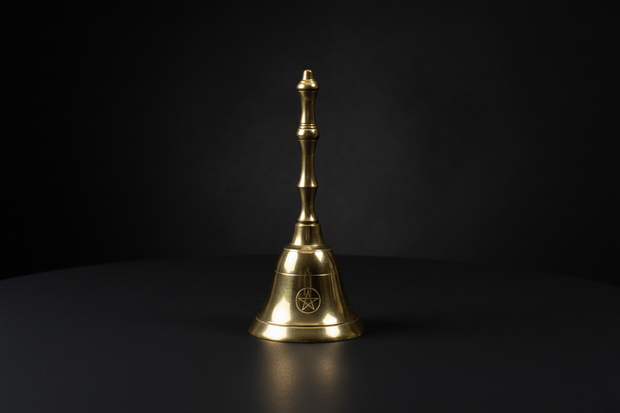
Bell
A bell can mark transitions, call attention to a direction, or signal the opening and closing of the rite. Sound is especially useful in small spaces where walking a large boundary is impractical. The Brass Pentacle Ritual Bell is one example of a tool suited to this role.
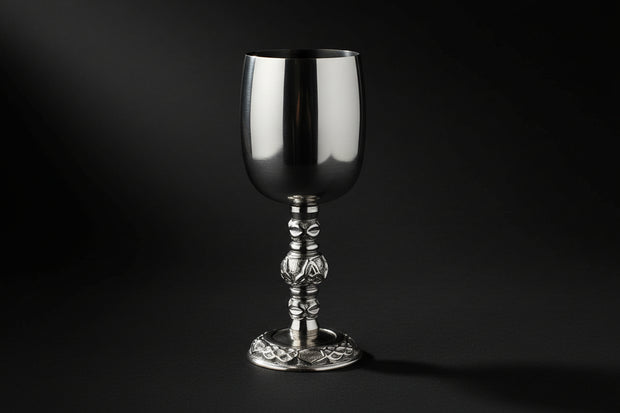
Chalice
A chalice may represent Water, hold a ritual beverage, or serve during a blessing or shared rite. Only use a vessel for drinking when its material and care instructions make it food-safe. A dedicated ritual cup such as the Stainless Steel Chalice with Engraved Pentacle can also function as a visual marker for the western quarter.
Pentacle or Altar Tile
A pentacle may represent Earth, material stability, the elements held in balance, or the central foundation of the altar. An altar tile such as the Wood Altar Tile with Pentacle Seal can help organize the center of a compact setup.
Candles, Incense, Water, and Salt
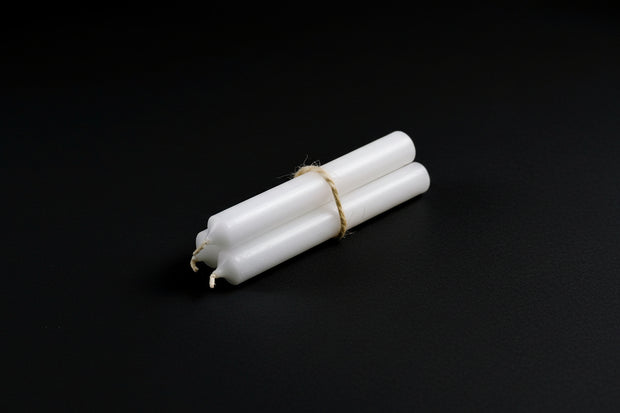
Colored candles, incense, a bowl of water, and a small dish of salt are common elemental markers, but none is mandatory. Never place salt, water, smoke, or flame where it can damage flooring, furniture, wildlife, or ritual tools.
For a broader overview of common implements, see Tools of the Craft: 10 Essential Pagan Altar Tools and Supplies or browse the current Altar Tools collection.
The Directions and Elements
A widely used modern Wiccan pattern associates the directions as follows:
- East — Air: breath, thought, communication, beginnings
- South — Fire: will, transformation, vitality, action
- West — Water: emotion, intuition, reflection, flow
- North — Earth: stability, embodiment, endurance, material life
These correspondences are common, not universal. Geography, climate, lineage, and personal tradition can lead practitioners to arrange the elements differently. A person living beside an ocean, in a desert, or in the Southern Hemisphere may develop a directional system that better reflects local experience.
Calling the elements, calling the quarters, and invoking watchtowers or guardians are not always identical practices. “Watchtower” language comes from particular ceremonial streams and should not be treated as a generic label for every Wiccan quarter call. Use the terminology taught within your path rather than blending systems without understanding their origins.
For a deeper discussion of these correspondences, read The Four Elements in Wiccan Practice.
How to Cast a Wiccan Circle Step by Step
1. Decide the Purpose of the Rite
State clearly why you are creating the circle. The purpose might be celebrating a moon phase, honoring a deity, performing divination, meditating, blessing an object, or carrying out a specific spell. A clear purpose prevents the ritual from becoming a sequence of gestures without direction.
2. Arrange the Space and Tools
Place the altar and quarter markers before beginning. Confirm that everything you need is within reach. When using a directional arrangement, verify which way is east rather than guessing from habit.
3. Center Yourself
Stand or sit comfortably. Take several unforced breaths and notice the floor beneath you. Let the transition be simple: acknowledge that ordinary activity is pausing and ritual attention is beginning.
Some practitioners ring a bell, wash their hands, light a central candle, or speak a brief declaration such as, “I enter this work with attention, respect, and clear purpose.”
4. Mark the Boundary
Begin in the east or at the point used by your tradition. Move clockwise around the working area while pointing with an athame, wand, finger, or open hand. Clockwise movement is often called deosil in Wiccan writing and is commonly used for building or establishing the circle.
You do not need to draw a visible line. Walk the perimeter, trace it from one position, or visualize the boundary from a seated posture. Some practitioners repeat the circuit three times; others make one deliberate round.
A simple statement might be:
“I mark this circle as a place of reverence and focused work. May what serves this rite be welcomed, and may this boundary be held in peace.”
This wording is an adaptable example, not a required traditional formula.
5. Call the Quarters or Elements
Face each direction in turn, usually moving clockwise from east to south, west, and north. Light a quarter candle, raise the corresponding symbol, ring a bell, or simply acknowledge the direction.
A beginner-friendly pattern is:
East: “Powers of Air, breath and clear thought, be present in this circle.”
South: “Powers of Fire, courage and transformation, be present in this circle.”
West: “Powers of Water, intuition and deep feeling, be present in this circle.”
North: “Powers of Earth, stability and enduring strength, be present in this circle.”
Inviting a presence is different from commanding it. Use respectful language consistent with your theology and tradition.
6. Acknowledge the Center or Spirit
Some Wiccans recognize Spirit, the center, above and below, or the divine mystery that unites the elements. This can be done by touching the altar, lighting a central candle, or standing quietly at the center.
7. Invite Deities Only When Appropriate
Calling deities is optional. Do not add a divine invocation merely because a ritual outline includes one. Know whom you are addressing, why the invitation is being made, and how your path understands hospitality, offerings, and dismissal.
A deity should not be treated as an interchangeable ingredient. Some Wiccans address a Goddess and God through ritual titles; others work with specific named deities; others conduct elemental or contemplative rites without deity invocation.
8. Perform the Main Ritual
Proceed with the intended work: prayer, seasonal observance, meditation, divination, spellcraft, blessing, or offering. Keep the central purpose visible. Elaborate circle casting is not a replacement for a coherent rite.
For an example of how a circle can frame a lunar observance, see Full Moon Rituals for Beginners.
9. Pause and Ground
When the main work is complete, pause before closing. Notice your breathing, posture, and surroundings. Eat or drink something appropriate if that is part of your tradition and safe for you. In ritual language, “grounding” describes the deliberate return from concentrated ceremonial attention to ordinary awareness; it is not a medical treatment.
10. Thank and Release Any Invited Deities
If you deliberately invited a deity or other honored presence, offer thanks in a manner consistent with your practice. Avoid language that assumes you can order every spiritual presence to leave. A respectful close might acknowledge that the formal rite is ending while devotion continues beyond the circle.
11. Release the Quarters
Many practitioners release the quarters in reverse order: north, west, south, then east. Face each direction, offer thanks, and extinguish its candle when appropriate.
“Powers of Earth, thank you for your presence. Go in peace as this rite concludes.”
Repeat with Water, Fire, and Air using language that reflects the original call. Some traditions retain clockwise movement during dismissal; others move counterclockwise. Follow the method you have chosen consistently.
12. Open the Circle
Walk or trace the boundary in the closing direction used by your tradition. Counterclockwise movement is often called widdershins and is frequently used for releasing or unwinding, though this is not universal.
A simple closing statement is:
“The rite is complete. The circle is open, and its peace remains with me.”
Extinguish candles safely, clean vessels, dispose of ritual materials responsibly, and record observations while they are fresh.
What If You Need to Leave the Circle?
Some traditions teach “cutting a doorway” by tracing an opening in the boundary with an athame or hand, stepping through, and resealing it afterward. This can help preserve the symbolic structure of the rite.
Real-world safety always comes first. Leave immediately for a fire, medical concern, distressed child, escaping pet, or any other urgent situation. A ritual can be closed, repeated, or simplified later. No ceremonial rule requires remaining in danger.
Circle Casting in Small Spaces
A circle does not need to fill an entire room. In an apartment, shared home, shop, or dormitory, try one of these forms:
- Seated circle: Trace the boundary around your chair or cushion without walking.
- Altar-centered circle: Create the boundary around a tabletop altar and work from one position.
- Four-object circle: Place one safe elemental marker at each direction.
- Sound circle: Ring a bell toward each direction and use sound to mark the perimeter.
- Visualization-only circle: Use breath, gesture, and focused imagination without visible tools.
- Travel circle: Carry one small cloth, candle substitute, or token representing the complete ritual structure.
The strength of the practice lies in clarity and repetition, not in the amount of floor space occupied.
Outdoor Circle Casting
Outdoor ritual requires restraint. Avoid drawing on protected sites, moving stones from archaeological or ecological areas, burying non-biodegradable materials, pouring alcohol or oils onto the ground, or leaving candles and offerings behind. Check land rules and fire restrictions before beginning.
Use existing clearings rather than damaging plants. Battery candles, quiet gestures, and removable direction markers are usually more responsible than open flame or permanent alterations.
Common Circle-Casting Mistakes
- Memorizing words without understanding them: Learn what each action does before adding longer scripts.
- Using too many tools: Begin with only what supports the rite.
- Confusing distraction with failure: A noise, forgotten line, or wandering thought does not automatically ruin the circle.
- Handling ritual blades carelessly: Keep sharpened edges controlled, and never swing a blade near another person.
- Leaving flame unattended: Close or pause the rite before stepping away from burning candles or incense.
- Forgetting the ending: Thank, release, extinguish, clean, and return fully to ordinary activity.
- Copying initiatory material without context: Publicly available outlines are not equivalent to training within an oath-bound tradition.
- Combining systems indiscriminately: Quarter calls, watchtowers, elemental kings, archangels, and local spirits come from different frameworks and are not automatically interchangeable.
A Minimal Circle for Beginners
For a first practice, reduce the ritual to five movements:
- State the purpose.
- Trace a clockwise boundary with your hand.
- Acknowledge Air, Fire, Water, and Earth at the four directions.
- Perform one simple prayer, meditation, or act of intention.
- Thank the directions and open the boundary.
Repeat the same structure several times before adding more elaborate language. Consistency will teach you more than collecting complicated scripts that change with every ritual.
Frequently Asked Questions
Can I cast a Wiccan circle without tools?
Yes. A finger, open hand, breath, spoken words, or silent visualization can perform the symbolic role of a ritual implement.
Do I have to begin in the east?
East is a common starting point in modern Wiccan practice, but it is not universal. Use the pattern taught by your tradition or choose a consistent system that you understand.
Must I call deities into every circle?
No. A circle can be used for elemental work, meditation, divination, seasonal reflection, or other practices without invoking a deity.
What happens if I forget a step?
Pause, correct it when practical, or continue with a simpler structure. Ritual competence develops through repetition. Treat mistakes as information rather than as proof that the rite has failed.
Can more than one person cast the circle?
Yes. In group practice, one person may cast the boundary while others call directions, or each participant may take a ritual role. Agree on the sequence and safety expectations before beginning.
Does clockwise always build and counterclockwise always release?
That pattern is common in modern Wicca, but symbolism varies. Some traditions use different directional logic, especially across hemispheres or within specific lineages.
Build a Circle You Understand
A useful circle is not the most theatrical one. It is the one whose movements, words, tools, and theology make sense to the practitioner performing it. Begin with a clear boundary, respectful directional acknowledgments, a focused central rite, and a deliberate closing. Add complexity only when it deepens understanding.
Practitioners assembling a working setup can explore the Wiccan Path collection, Altar Tools, Athames, Ritual Wands, and Chalices & Cups. Choose tools by function, safety, and fit with your practice—not by the assumption that every item is required.
Tools for this practice
Explore the products selected for this guide. Review each listing for what is included and how to use it.

Shop this guide · 4 items Collapse




Keep exploring the shop
You made it to the end of the guide. Keep exploring through related products, major departments, or the full catalog.
 RELATED TO THIS GUIDE
Ritual Supplies & Altar Tools
Shop this topic
RELATED TO THIS GUIDE
Ritual Supplies & Altar Tools
Shop this topic


Leave a comment