


Fake Psychics and Spiritual Scams: Red Flags, Pressure Tactics, and How to Protect Yourself

Spiritual and divination services can be meaningful, but the industry also attracts people who profit from fear, urgency, grief, and uncertainty. A scammer may call themselves a psychic, medium, healer, rootworker, astrologer, energy reader, curse remover, or spiritual advisor. The title does not determine integrity—the behavior does.
This guide focuses on red flags that apply across traditions. It is not an argument that every paid reading or ritual service is fraudulent. It is a way to separate an ethical service from coercion, manipulation, and escalating financial harm.
The Most Common Spiritual Scam Pattern
- The reader gives a dramatic warning: a curse, attachment, blocked destiny, jealous enemy, inherited darkness, or dead relative who cannot rest.
- They claim the danger is urgent and only they can fix it.
- A small initial payment becomes a larger cleansing, ritual, special material, donation, or “refundable spiritual deposit.”
- When nothing changes, the scammer says the problem is stronger than expected or that you doubted the process.
- Fees escalate while the client becomes more frightened and isolated.
The story may change, but the mechanism remains the same: fear creates dependency, and dependency creates repeated payment.
Red Flag 1: Guaranteed Supernatural Results
No ethical practitioner can guarantee that a lover will return, a court case will be won, a pregnancy will occur, an illness will disappear, or a lottery number will succeed. A reader may discuss possibilities, symbolism, and personal reflection. Certainty about another person’s behavior or a complex future event is a sales tactic, not proof of power.
Red Flag 2: You Are Told You Have a Curse That Requires Immediate Payment
Unsolicited curse diagnoses are among the clearest warning signs. The scammer often begins with a low-cost reading and then reveals a hidden emergency. You may be told that delay will cause death, divorce, financial ruin, or harm to your children.
Stop the interaction. Do not pay for a same-day “removal.” Get distance, speak to someone you trust, and avoid booking multiple readers in panic. Our article When Protection Becomes Fear explains how anxiety can turn into endless spiritual purchasing.
Red Flag 3: Escalating Fees and Secret Materials
A scammer may claim they need rare candles, imported oils, animal materials, temple donations, crystals to be destroyed, or cash that will be “blessed” and returned. The price repeatedly rises because each ritual uncovers another layer.
Legitimate practitioners disclose prices, scope, and refund terms before the service. They do not invent emergencies after receiving the first payment.
Red Flag 4: Pressure to Pay by Gift Card, Wire, Crypto, or Payment App
The Federal Trade Commission warns that demands for gift-card payment are a hallmark of scams. Gift cards, wire transfers, cryptocurrency, and certain payment-app transactions can be difficult to reverse. A person who insists that secrecy or spiritual law requires an unusual payment method is trying to remove your protections.
Review the FTC’s general scam-prevention guidance and gift-card scam resources.
Red Flag 5: Isolation and Secrecy
Be wary when someone says:
- “Do not tell your family or they will interfere with the energy.”
- “Other readers are jealous and will ruin the work.”
- “Your therapist cannot understand this.”
- “If you discuss the ritual, the curse will become permanent.”
Secrecy prevents reality checking. Ethical confidentiality protects the client; it does not trap the client.
Red Flag 6: Using Public Information as Proof
Scammers can gather names, relatives, photographs, workplaces, losses, and relationship details from social media, obituaries, data brokers, and old posts. A surprisingly specific statement may be researched rather than psychically obtained.
Before a reading, limit the public information visible on your profiles. Do not send identification, banking details, passwords, Social Security numbers, or private photographs that are unnecessary for the service.
Red Flag 7: Repeated Confirmation Readings
Some practitioners encourage clients to ask the same question until the desired answer appears. This can create dependency and drain money. An ethical reader should be willing to say that repeated readings are unlikely to help and that the client needs time, action, or professional support.
Red Flag 8: Medical, Legal, or Financial Commands
A reading should not replace a doctor, attorney, accountant, or licensed financial professional. Leave immediately if someone tells you to stop medication, avoid emergency care, ignore legal deadlines, transfer assets, take out loans, or invest in a scheme based on spiritual authority.
Red Flag 9: Threats After You Try to Leave
Scammers may claim that cancelling payment will unleash spirits, reverse a ritual, harm your family, or expose private information. Preserve messages and receipts. Block the person, report the account, contact your payment provider, and seek law enforcement or legal help when threats are credible.
What Ethical Spiritual Services Usually Look Like
- Prices and duration are stated before the session.
- The practitioner explains the service without promising certainty.
- You may decline questions, stop the session, or leave.
- They respect privacy and do not demand unnecessary personal data.
- They acknowledge the limits of divination.
- They refer medical, legal, safety, and mental-health issues to qualified professionals.
- They do not create a crisis in order to sell the solution.
- They allow time to think rather than demanding immediate payment.
How to Verify a Reader or Practitioner
- Read independent reviews across more than one platform.
- Look for a clear business identity, service description, and contact method.
- Ask for the total price and what is included.
- Read cancellation and refund terms before paying.
- Search the business name with words such as “complaint,” “scam,” and “refund.”
- Pay through a method that provides a record and dispute process.
- Start with a limited service rather than an expensive package.
What to Do if You Already Paid
- Stop sending additional money, even if you are threatened.
- Save screenshots, receipts, usernames, phone numbers, and transaction records.
- Contact your bank, card issuer, gift-card company, payment app, or wire service immediately.
- Change compromised passwords and enable multifactor authentication.
- Report impersonation or fraud to the platform involved.
- Report the incident to the FTC at its official fraud-reporting service.
- Contact local law enforcement when money, threats, stalking, extortion, or identity theft are involved.
Shame helps scammers. Reporting quickly gives you the best chance of limiting further damage.
Frequently Asked Questions
Is every curse-removal service a scam?
No single title proves fraud, but unsolicited diagnosis, guaranteed danger, secrecy, and escalating fees are serious red flags. Evaluate conduct rather than tradition.
What if the first reading was accurate?
An accurate or emotionally resonant statement does not justify coercion later. Scams often begin with a satisfying service before creating an emergency.
Can an ethical reader charge a high price?
Yes. Price alone does not establish fraud. The key questions are whether the price is disclosed, the service is clearly defined, consent is respected, and fear is not used to force additional purchases.
Should a reader predict death?
Ethical practitioners generally avoid deterministic death predictions because they cannot be verified and can cause serious harm. A reader who uses death to demand payment is exploiting fear.
Your Fear Is Not Someone Else’s Sales Funnel
Spiritual services should increase clarity and agency, not make you financially and emotionally dependent on one person. Slow down, verify claims, keep records, and walk away from anyone who must frighten you before they can help you.
Self-Directed Divination Study
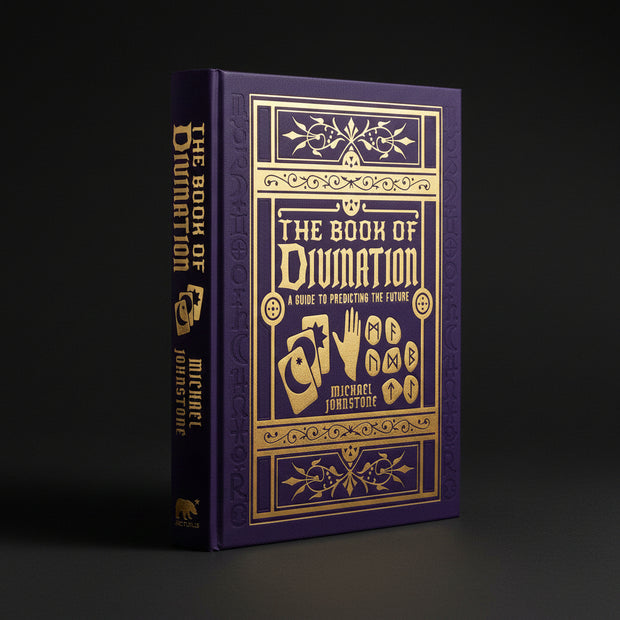
Readers who prefer to learn without pressure can use the Book of Divination or browse our Divination Tools collection. A deck, book, or pendulum should never be sold as an emergency cure for a curse or used to pressure you into repeated payments.
Tools for this practice
Explore the products selected for this guide. Review each listing for what is included and how to use it.
Shop this guide · 3 items Collapse


Keep exploring the shop
You made it to the end of the guide. Keep exploring through related products, major departments, or the full catalog.


Leave a comment