


How to Choose a Crystal Bracelet: Stone Meaning, Bead Size, Fit, and Care

A crystal bracelet is more than a row of polished beads. It can be jewelry, a wearable mineral specimen, a personal symbol, a tactile reminder of an intention, or all of those things at once. Because it stays close to the body and moves through daily life with you, choosing the right bracelet involves more than selecting the first stone name that sounds appealing.
The best bracelet is one that suits your taste, fits comfortably, holds up to the way you live, and carries a meaning that feels genuine to you. This guide explains how to choose the stone, bead size, fit, finish, and care routine that make sense for your wrist and your purpose.
Start With How You Want to Use the Bracelet
Before comparing stones, decide what you want the bracelet to do in your life. There is no wrong reason to wear one.
- Everyday jewelry: You want a color and texture that work with your wardrobe.
- Personal symbolism: You want a stone traditionally associated with a quality, goal, deity, season, or spiritual practice.
- Mineral collecting: You enjoy the geology, patterning, fluorescence, rarity, or natural variation of the material.
- Tactile focus: You like turning or touching the beads during reflection, meditation, or stressful moments.
- Gift giving: You want a stone whose color or traditional meaning connects with the recipient.
A bracelet does not need to meet every purpose. A piece chosen simply because it is beautiful can become more meaningful through wear. Likewise, a spiritually significant stone will probably remain in a drawer if the bracelet is uncomfortable or does not suit your style.
Choose a Stone That Holds Your Attention
Crystal meanings are traditional and symbolic associations rather than medical promises. Different cultures, authors, and practitioners may interpret the same stone differently. Use those traditions as a starting point, then pay attention to the color, pattern, weight, and personal response that make a piece feel worth wearing.
Labradorite: Flash, Mystery, and Transition
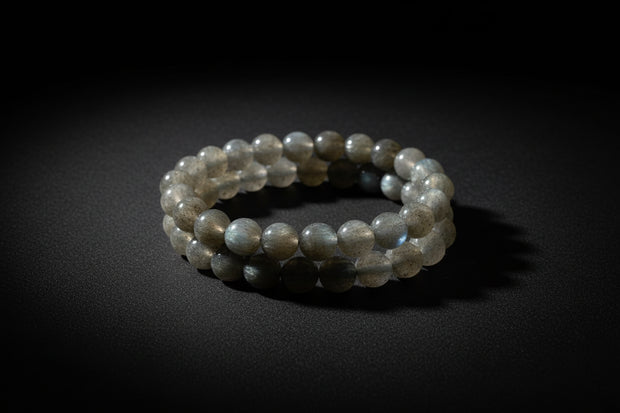
Labradorite is known for labradorescence, the shifting flashes of blue, green, gold, or other colors that appear when the stone catches light at the right angle. In modern metaphysical practice, it is often associated with intuition, protection, transformation, and navigating change. A Labradorite Bracelet is an excellent choice for someone who wants a neutral gray stone with hidden color that reveals itself through movement.
Carnelian: Warmth, Confidence, and Momentum
Carnelian ranges from soft orange to deep reddish brown. It has long been used in jewelry and is commonly associated with courage, creativity, vitality, and decisive action. A Carnelian Bracelet brings a warm, energetic color to the wrist and pairs especially well with black, brown, gold, and earth-toned jewelry.
Lapis Lazuli: Wisdom, Truth, and Deep Color
Lapis lazuli is prized for its rich blue color, often accompanied by pale calcite and metallic-looking pyrite inclusions. It is traditionally connected with wisdom, truth, self-knowledge, communication, and sacred authority. A Lapis Lazuli Bracelet has a strong visual presence even when the beads are relatively small.
Moss Agate: Growth, Patience, and the Natural World
Moss agate is loved for branching or moss-like inclusions that can resemble tiny landscapes. Many practitioners associate it with steady growth, gardening, abundance, patience, and connection to the land. Because every bead can display a different pattern, a Moss Agate Bracelet is also appealing to collectors who enjoy visible natural variation.
Pink Calcite: Gentleness and Reflection
Pink calcite is usually chosen for its soft color and calming visual character. In metaphysical traditions, it is often associated with compassion, emotional reflection, tenderness, and opening oneself to care. A Pink Calcite Bracelet works well for someone who prefers a quieter pastel piece rather than a dark or highly contrasting stone.
Yooperlite: Fluorescence and Geological Curiosity
Yooperlite is a trade name commonly used for sodalite-bearing syenite that reveals bright fluorescent areas under ultraviolet light. In ordinary lighting, it can look like a dark, speckled stone; under UV, hidden orange or yellow fluorescence appears. A Yooperlite Bracelet is a strong choice for mineral enthusiasts, collectors, and anyone who enjoys a stone with a dramatic hidden feature.
Still deciding between wearable stones and other forms? Our guide to tumbled stones, palm stones, towers, and natural specimens explains how form changes the way a crystal is displayed and used.
What Crystal Bracelet Bead Size Should You Choose?
Bead diameter changes the appearance, weight, flexibility, and fit of a bracelet. Two bracelets made from the same stone can feel completely different when one uses 6 mm beads and the other uses 14 mm beads.
- 6 mm beads: Subtle, lightweight, and easy to stack. A good choice for smaller wrists or people who rarely wear large jewelry.
- 8 mm beads: The classic all-purpose size. Noticeable without being bulky and comfortable for most everyday wear.
- 10 mm beads: More visual weight and a clearer view of the stone's pattern, flash, or inclusions.
- 12 mm beads: Bold and substantial. These beads make the mineral itself the center of the piece.
- 14 mm to 20 mm beads: Statement and collector sizes. They are heavier, use fewer beads around the wrist, and can feel tighter than a smaller-bead bracelet with the same nominal circumference.
Available sizes differ by stone and individual bracelet. Larger beads can show more pattern and character, but bigger is not automatically better. A well-polished 8 mm bracelet worn regularly is more useful than a 20 mm bracelet that feels too heavy to leave the jewelry box.
How to Measure Your Wrist for a Stretch Bracelet
Use a flexible measuring tape around the wrist where you plan to wear the bracelet. Keep the tape against the skin without pulling it tight. When a measuring tape is not available, wrap a piece of string around the wrist, mark the meeting point, and measure the string with a ruler.
Use the following additions as a practical starting point:
- Close fit: Add about 1/4 inch to your wrist measurement.
- Comfort fit: Add about 1/2 inch.
- Loose fit: Add about 3/4 inch.
Personal preference matters, and large beads change the equation. Because thicker beads extend farther inward, a large-bead bracelet may feel snugger than a small-bead bracelet with a similar outer measurement. A proper fit should move slightly without sliding over the hand, pinching the skin, or leaving deep marks.
How to Judge Crystal Bracelet Quality
Natural stone jewelry should not be judged by perfect uniformity. Variation in color, transparency, banding, inclusions, and pattern is often part of the material's appeal. Instead, inspect the workmanship and whether the stone is represented honestly.
- Surface: Beads should feel smooth and should not have sharp chips that catch on skin or clothing.
- Drilling: Holes should be reasonably centered and free of severe fractures around the openings.
- Polish: The finish should suit the stone. Some minerals take a glassy polish, while others naturally appear softer or more textured.
- Elastic: The cord should feel resilient rather than brittle, loose, or overstretched.
- Naming: Sellers should use clear material names and avoid presenting glass, resin, or manufactured material as a rare natural mineral.
- Treatments: Dyeing, stabilization, coating, and heat treatment are not automatically unacceptable, but they should not be used to create a false impression of rarity or identity.
Price can reflect material rarity, grade, bead diameter, cutting loss, labor, and sourcing. A higher price should be supported by better material, stronger workmanship, unusual character, or genuine scarcity—not only by an extravagant spiritual claim.
Can You Wear More Than One Crystal Bracelet?
Yes. There is no universal rule limiting how many stones may be worn together. Start with two or three bracelets and see how the combined weight and movement feel. Smaller beads stack more easily, while large beads usually need more room.
There are several useful ways to build a stack:
- Color family: Combine different shades of blue, green, red, or neutral stone.
- Contrast: Pair a bright stone such as carnelian with darker labradorite or tiger's eye.
- Texture: Mix polished round beads with faceted beads or metal accents.
- Shared intention: Combine stones that you personally connect with protection, prosperity, confidence, study, or another theme.
- Mineral interest: Build a group around agates, feldspars, fluorescent stones, or specimens from a region you collect.
For a prosperity-focused combination, our article on five crystals for wealth and prosperity magic offers a traditional metaphysical starting point.
Which Wrist Should You Wear a Crystal Bracelet On?
Some modern systems describe the left wrist as receptive and the right wrist as projective, but this is not a universal law across spiritual traditions. Wear the bracelet on the wrist that is comfortable, practical, and meaningful to you.
Your dominant hand may expose a bracelet to more desks, counters, tools, and impacts. Wearing delicate stones on the non-dominant wrist can reduce accidental knocks. Watches, work requirements, sensory preferences, and mobility matter more than forcing every stone into a rigid left-or-right rule.
How to Care for a Crystal Bead Bracelet
- Roll it over the hand. Stretching the bracelet wide every time it is removed puts unnecessary strain on the elastic.
- Remove it before bathing or swimming. Even when a stone tolerates brief water exposure, repeated soaking, soap, chlorine, saltwater, and heat can shorten the life of the cord or damage finishes.
- Avoid household chemicals. Perfume, hairspray, lotion, cleaning products, and solvents can dull stones, affect coatings, or weaken elastic.
- Protect it from hard impact. Natural stone beads can chip when struck against metal, tile, concrete, or another bracelet.
- Store it out of harsh sunlight. Some colored minerals can fade after prolonged exposure.
- Clean gently. A soft, dry microfiber cloth is the safest routine for most bracelets. Research the specific mineral before using water, salt, oil, or commercial jewelry cleaner.
For spiritual cleansing, many practitioners use sound, smoke, intention, moonlight, or placement near selenite because these methods do not require soaking the bracelet. The physical care needs of the mineral and cord should always come before a cleansing method that could damage the piece.
Quick Crystal Bracelet Choices
- For subtle everyday wear: Look for 6 mm or 8 mm beads in labradorite, moss agate, or another neutral stone.
- For a bold statement: Choose 10 mm or larger beads with strong patterning or saturated color.
- For warm color and symbolic momentum: Consider carnelian or tiger's eye.
- For deep, contemplative color: Consider lapis lazuli or prehnite.
- For geological novelty: Choose a fluorescent material such as Yooperlite.
- For stacking: Begin with two smaller-bead bracelets and add weight gradually.
Frequently Asked Questions
Can I wear a crystal bracelet every day?
Many stone bracelets are suitable for regular wear when they are removed before water exposure, chemicals, heavy exercise, and activities that could strike or stretch them. Softer and more fragile stones need extra care.
Should a stretch bracelet feel tight?
It should feel secure but not restrictive. It should not pinch, leave deep marks, or keep the elastic under constant visible tension.
Do larger beads have stronger energy?
That is a matter of personal belief rather than a measurable rule. Larger beads provide more visual presence and mineral surface, but a smaller bracelet can hold just as much personal meaning.
Can different crystals cancel each other out?
There is no universal traditional rule stating that ordinary crystal combinations cancel one another. Choose combinations that make sense within your own practice and remain comfortable to wear.
How many bracelets should I wear?
Wear as many as remain comfortable and practical. Too many heavy bracelets can knock against each other, chip beads, restrict movement, or become distracting.
Choose a Bracelet You Will Actually Wear
The right crystal bracelet balances the mineral, the meaning, the workmanship, and the person wearing it. Begin with a stone that catches your eye, choose a bead size that suits your style, confirm the fit, and care for it as real jewelry made from real material.
Explore the full American Occultist Jewelry collection to compare crystal bracelets, symbolic pieces, and other wearable objects for daily life and spiritual practice.
Tools for this practice
Explore the products selected for this guide. Review each listing for what is included and how to use it.
Shop this guide · 2 items Collapse

Keep exploring the shop
You made it to the end of the guide. Keep exploring through related products, major departments, or the full catalog.
 RELATED TO THIS GUIDE
Occult Jewelry & Symbolic Adornments
Shop this topic
RELATED TO THIS GUIDE
Occult Jewelry & Symbolic Adornments
Shop this topic


Leave a comment