


How to Choose a Tarot Spread: One Card, Three Cards, Freeform, or Celtic Cross

A tarot spread is a set of positions that gives each card a job. The best spread is not the one with the most cards or the most impressive diagram. It is the smallest structure that can answer the question clearly without creating unnecessary interpretation.
One card may be enough for a daily focus. Three cards can compare a situation, influence, and response. Freeform reading can support an unfolding story when the rules are set in advance. The Celtic Cross can examine a complex situation, but it is often too broad for a simple question.
Choose the question before the layout
Write the question first. A good spread cannot rescue a vague, invasive, or unanswerable prompt. Compare:
- Too vague: What will happen?
- Clearer: What should I understand before deciding whether to accept this job?
- Too invasive: What is my ex secretly thinking?
- Clearer: What relationship pattern am I still carrying, and what boundary would help me move forward?
Use How to Ask Better Divination Questions before selecting the spread.
A quick spread-selection table
| Need | Recommended size | Why |
|---|---|---|
| One focus, prompt, or reflection | One card | Reduces noise and forces a direct interpretation |
| A small comparison or process | Two or three cards | Provides relationships without overwhelming the question |
| Decision preparation | Three to five cards | Can compare needs, risks, information, and next actions |
| Complex situation with several influences | Five to seven cards | Allows more context while keeping each position distinct |
| Broad life situation or layered conflict | Celtic Cross or another established large spread | Examines internal, external, historical, and directional factors |
| Visual narrative or experienced intuitive practice | Freeform with a fixed stopping rule | Supports story development without preset named positions |
When one card is enough
A one-card reading works well for:
- daily focus;
- a quality to practice;
- the central issue in a situation;
- one obstacle or resource;
- a journaling prompt;
- the next constructive action;
- a card-of-the-week study exercise.
The card still needs a clear position. “One card” is not the same as “tell me everything.” Ask, “What deserves my attention in today’s meeting?” rather than “What does the universe want me to know?” when you need an actionable answer.
Useful two-card spreads
Two cards create contrast. Examples include:
- What I know / What I may be overlooking
- Strength / Risk
- What to continue / What to change
- My needs / Their stated needs
- Current condition / Next constructive action
- Assumption / Evidence to seek
A two-card reading is especially helpful when a third card would become an unnecessary tie-breaker.
The adaptable three-card spread
Three cards are enough for many questions. A strong general layout is:
- What is happening?
- What is influencing it?
- What is the most constructive response?
Other useful three-card structures include:
- Situation / Obstacle / Resource
- What to begin / What to maintain / What to stop
- Mind / Emotion / Practical reality
- Option A / Option B / Information needed before deciding
- Past influence / Present condition / Likely direction if nothing changes
- Desire / Fear / Grounded next step
Do not treat “past, present, future” as the only three-card spread. Define what future means and include a timeframe when prediction is genuinely part of the method.
Four- and five-card spreads for decisions
Tarot should not decide in place of evidence, but it can structure reflection. A five-card decision spread might use:
- What I want from this decision
- What practical facts support it
- What risk I may be minimizing
- What resource or information I need
- What action keeps the most agency in my hands
This is more useful than assigning one card to “yes” and one to “no” when the decision involves money, health, safety, law, or another person’s consent.
When to use a seven-card spread
Five to seven cards can handle a project, relationship pattern, creative block, workplace conflict, or spiritual practice with several moving parts. Each position must answer a different question. If two positions are nearly identical—such as “hidden influence” and “what I do not know”—combine them.
A seven-card project spread could examine:
- Current objective
- Available resources
- Missing information
- Internal obstacle
- External obstacle
- Next action
- Review point or likely direction
What is a freeform tarot reading?
Freeform reading does not assign a named position to every card in advance. Cards may be read as a sequence, visual conversation, map, or developing narrative. It works best when the reader sets rules before drawing:
- state the question;
- choose the initial number of cards;
- decide how additional cards may be added;
- set a maximum card count;
- choose a reading direction;
- define what ends the reading.
Without a stopping rule, freeform reading can become endless clarification. Three initial cards with no more than two additions is a reasonable practice structure.
Three methods for freeform reading
Sequence
Read left to right as condition, development, and direction. Additional cards continue the story rather than becoming separate answers.
Visual conversation
Observe where figures face, whether motion continues across cards, and where repeated colors, elements, numbers, or symbols appear.
Clusters
Group cards by suit, rank, theme, or visual relationship. This method suits experienced readers who can explain why each group belongs together.
When the Celtic Cross is useful
The Celtic Cross is a ten-card spread with several variations. It generally examines the central situation, a crossing influence, foundations, recent past, conscious focus, near direction, the querent’s position, environment, hopes or fears, and an outcome or likely development.
It is useful when:
- the situation is broad and genuinely complex;
- internal and external influences both matter;
- the reader understands the chosen position order;
- the question has enough scope for ten distinct perspectives;
- the reader can synthesize the spread rather than interpreting ten isolated cards.
When not to use the Celtic Cross
A Celtic Cross is often excessive for:
- a daily card;
- a simple scheduling choice;
- one narrow conversation;
- a beginner still learning card combinations;
- a repeated question already read several times;
- a highly emotional situation in which more cards create more panic;
- a question that requires factual or professional information.
Using ten cards does not make the answer more accurate. It increases the amount of material that must be integrated.
Define every position before drawing
Do not change the position after seeing an uncomfortable card. Write the layout in a journal or place a small position guide beside the reading. Changing “obstacle” into “future” after the draw makes the interpretation impossible to review.
When using a published spread, record the source and any modifications.
How many clarifiers should you use?
A clarifier should answer a precise new question, not erase a card you dislike. Use these limits:
- one clarifier for one genuinely unclear position;
- state the clarifying question before drawing;
- do not clarify the clarifier;
- do not add cards merely because the answer feels uncomfortable;
- close the reading when the maximum card count is reached.
For repeated-reading boundaries, see Should You Ask Tarot the Same Question Again?.
Read card relationships, not isolated definitions
A spread is useful because positions and cards interact. Look for:
- repeating suits or missing suits;
- several Major Arcana cards;
- court cards and role patterns;
- number progressions;
- figures facing toward or away from one another;
- movement from passive to active cards;
- contradictions between the advice and obstacle positions;
- a card that visually or symbolically links distant positions.
Summarize the whole spread in three sentences before explaining every detail.
A spread-design formula
You can create a spread without inventing a complex shape:
- Write the central question.
- List the information genuinely needed to respond.
- Remove anything that should be answered by evidence or another person directly.
- Turn each remaining need into one distinct position.
- Arrange the positions in a logical order.
- Limit the spread to the smallest useful number.
- Set a stopping rule and review date.
Example: designing a spread for a difficult conversation
Question: “How can I prepare for a conversation with my business partner about an unresolved responsibility?”
- What outcome do I actually need?
- What fact or agreement should I bring?
- What emotion may distort my communication?
- What boundary should I state clearly?
- What response should I prepare for?
The spread supports preparation. It does not claim to reveal the partner’s secret thoughts.
Common spread mistakes
- choosing a large spread to make the reading feel important;
- using vague positions such as “energy” without defining them;
- changing positions after cards are drawn;
- asking several unrelated questions in one layout;
- using “future” without a timeframe or conditions;
- drawing until the desired answer appears;
- treating the outcome as unavoidable fate;
- using tarot instead of obtaining medical, legal, financial, or safety information;
- forgetting to record the spread and review it later.
Frequently asked questions
What is the best tarot spread for beginners?
One-card and three-card spreads are easiest to learn because the positions remain clear and card relationships are manageable.
Is one card enough for a serious question?
It can identify a central focus or next action, but complex decisions usually need ordinary evidence and may benefit from several clearly defined reflective positions.
Should I use past, present, and future?
You can, but define the timeframe and treat the future card as a likely direction under current conditions rather than fixed fate.
How many cards are too many?
Too many means more cards than you can assign distinct jobs and synthesize coherently. For many questions, three to five is enough.
Can I make my own spread?
Yes. Build positions from the information the question requires, record them before drawing, and remove overlaps.
Do spread shapes have magical power?
Shapes may carry personal or tradition-specific symbolism, but the clarity of the positions matters more than visual complexity.
When should I use the Celtic Cross?
Use it for a layered situation that genuinely benefits from internal, external, historical, and directional perspectives—not as the default for every question.
Use the smallest spread that answers the question
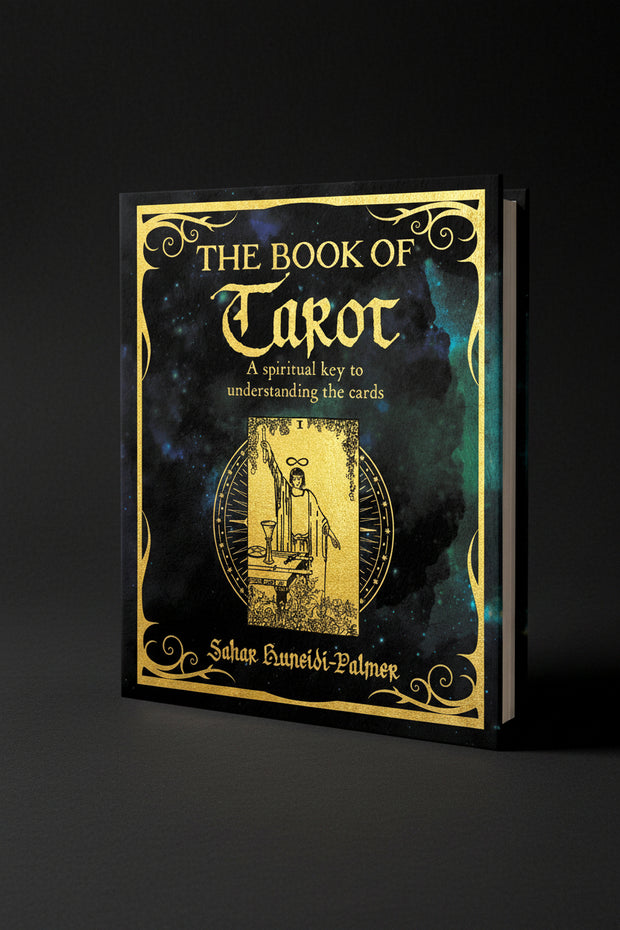
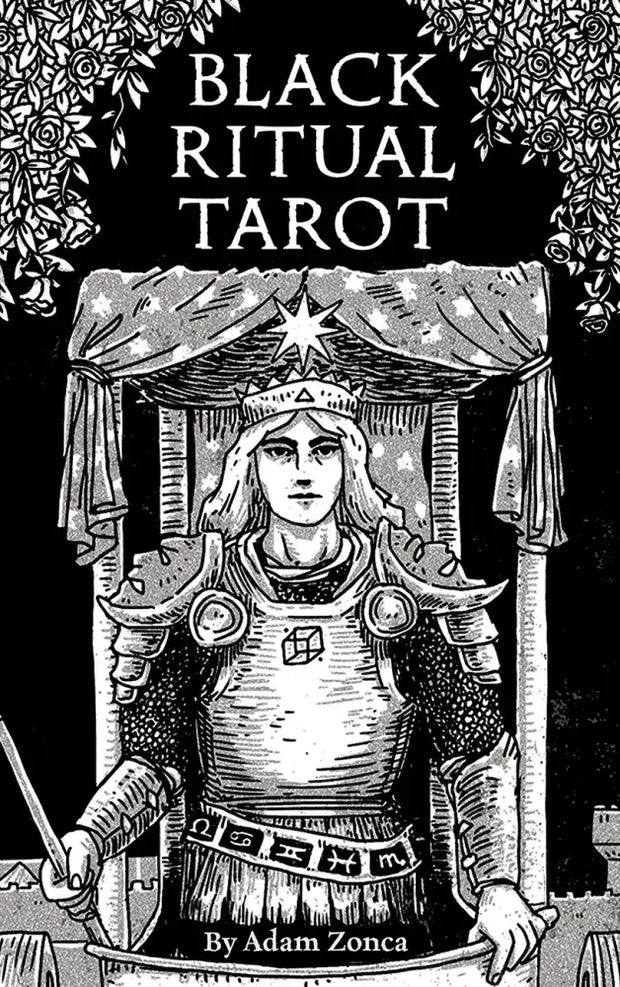
Explore the Tarot collection, keep position maps and outcomes in a journal, and build interpretation skills with How to Read Tarot Intuitively. A clear three-card reading is more valuable than a ten-card spread that cannot be explained.
Tools for this practice
Explore the products selected for this guide. Review each listing for what is included and how to use it.


Shop this guide · 4 items Collapse



Keep exploring the shop
You made it to the end of the guide. Keep exploring through related products, major departments, or the full catalog.


Leave a comment