


How to Ask Better Divination Questions: Clear Prompts, Consent, Timeframes, and Healthy Boundaries

The quality of a divination reading depends partly on the question. A vague, leading, repetitive, or impossible question can produce a reading that feels dramatic without being useful. A clear question gives Tarot, oracle cards, runes, pendulums, and other systems a defined area to explore.
Better questions do not force certainty from an uncertain method. They help the reader examine patterns, choices, assumptions, risks, and actions while leaving room for evidence and change.
What makes a divination question useful?
A useful question is usually:
- Clear: it identifies the actual subject.
- Specific enough: it avoids asking about an entire life at once.
- Open to insight: it allows more than a yes-or-no answer when the method supports depth.
- Centered on agency: it explores what the querent can understand or do.
- Ethical: it respects consent and privacy.
- Bounded: it does not ask divination to replace professional judgment or factual investigation.
Start with the real question
People often ask one question while worrying about another.
“Will they text me?” may mean:
- Do they still care?
- Should I contact them?
- Am I waiting for someone who is unavailable?
- What do I need in a relationship?
- How can I tolerate not knowing?
Before drawing cards, ask: What decision, fear, or desire is underneath this question? Reading for the underlying concern usually produces more useful material than predicting a single message.
Open-ended versus yes-or-no questions
Yes-or-no questions are not forbidden. They are simply narrow. A pendulum or one-card pull may be designed for binary answers, but the result gives little context and is especially vulnerable to expectation, unconscious movement, and repeated checking.
Compare:
- “Will I get the job?”
- “What strengths should I emphasize in this interview?”
- “What obstacle should I prepare for in this application?”
- “What practical action would improve my chances?”
The open questions do not promise an outcome. They create material that can inform behavior.
Ask about influence, not fixed destiny
Future-focused questions work better when they account for changing conditions. Instead of asking what will happen as though the future is fixed, ask what is likely under current circumstances and what could alter the path.
Useful forms include:
- What is shaping this situation now?
- What direction is this taking if nothing changes?
- What factor am I underestimating?
- What action could improve the outcome?
- What would make this option unsuitable?
This framing makes the reading conditional rather than fatalistic.
Use a reasonable timeframe
“What will happen in my love life?” is so broad that almost any interpretation can fit. A timeframe creates focus:
- What should I understand about dating over the next three months?
- What should I prioritize in this project before the end of the month?
- What pattern is likely to affect this conversation this week?
Timeframes should match the situation. Asking for an exact day ten years from now creates false precision. Asking about the next hour for a slow legal or career process is equally unhelpful.
Center questions on the person receiving the reading
Questions about another person’s secret thoughts are common:
- What is my ex hiding?
- Is my coworker jealous?
- Does my friend’s partner cheat?
These questions invite projection and accusation. Divination cannot verify private facts. Reframe toward the querent’s experience:
- What behavior in this relationship deserves my attention?
- What boundary would help me respond to uncertainty?
- What information should I seek directly?
- What assumption might be distorting my interpretation?
For a full discussion of privacy and third-party readings, see The Ethics of Divining About Other People.
Separate facts from symbolic interpretation
Divination can support reflection. It cannot establish whether a person committed a crime, whether a medical condition is present, whether a contract is legal, or whether a financial investment is safe.
For factual questions, identify the appropriate source:
- Medical symptoms: qualified healthcare professional.
- Legal rights: licensed attorney or official legal resource.
- Financial risk: verified records and qualified financial guidance.
- Immediate danger: emergency services, security measures, or trusted local support.
- Relationship agreements: direct conversation and observable behavior.
A reading may help someone prepare questions for a professional. It should not impersonate the professional.
Avoid leading questions
A leading question contains the answer it expects:
- Why is this person attacking my energy?
- Which spirit caused my bad luck?
- Why is my boss planning to fire me?
These prompts assume an attack, spirit, or plan before evidence exists. Neutral alternatives include:
- What factors are contributing to my sense of unease?
- What practical causes should I examine?
- What is the current state of my relationship with my supervisor?
- What information am I missing?
Neutral wording reduces the chance that the reading simply amplifies fear.
Do not ask the same question repeatedly
Repeated readings often create contradiction rather than clarity. A person dislikes the first answer, asks again, changes decks, adds clarifiers, consults another reader, and continues until one result provides temporary relief.
This is a reassurance loop. The relief fades, uncertainty returns, and another reading becomes necessary.
Set a rule before beginning:
- One reading per question.
- No repeat until meaningful new information appears.
- Record the reading and the action taken.
- Use clarifiers only for a defined ambiguity.
- Stop when distress increases rather than insight deepens.
Our article How to Read Tarot Intuitively explains how to use clarifiers without burying the original message.
Question formulas that work
For decisions
- What are the likely strengths and costs of option A?
- What am I failing to consider about option B?
- What value should guide this decision?
- What information should I gather before choosing?
For relationships
- What pattern am I contributing to this relationship?
- What boundary needs clearer communication?
- What would mutual effort look like here?
- What behavior should matter more than promises?
For work and creativity
- What part of this project needs structure?
- What strength am I underusing?
- What obstacle can I address directly?
- What would a sustainable next step look like?
For spiritual practice
- What aspect of my practice needs attention?
- What expectation should I examine?
- How can I distinguish devotion from wishful interpretation?
- What practice would support consistency?
For emotional reflection
- What feeling am I avoiding naming?
- What story am I telling about this event?
- What is within my control today?
- What support would be appropriate?
Match the question to the tool
Different systems handle different question types:
- Tarot: strong for patterns, dynamics, narrative, conflict, and choices.
- Oracle cards: useful for thematic prompts, reflection, and focused messages; deck structure varies.
- Runes: useful for concise themes and forces when studied in context.
- Pendulums: limited binary or selection work, with substantial ideomotor-bias risk.
- Scrying: image-based reflection requiring careful interpretation and documentation.
A tool with a narrow response format cannot supply detail unless the question and follow-up method allow it. Our Divination for Beginners guide compares the systems.
Create a question ladder
A question ladder moves from broad orientation to practical action without repeating the same prompt:
- What is the central issue?
- What influence is most important?
- What am I overlooking?
- What action is available?
- What result should I observe after taking it?
Each step has a separate purpose. Stop when the reading becomes repetitive or the next question requires external evidence.
How readers can improve client questions
A reader does not need to accept a harmful or impossible question exactly as asked. Explain the limitation and offer a reframe.
For example:
“I cannot verify another person’s private thoughts, but we can look at the behavior you are experiencing, what boundary may help, and what information you need before deciding.”
This preserves the client’s concern without pretending divination can invade privacy or prove facts.
When not to read
Delay or decline a reading when:
- The person is intoxicated or unable to consent.
- The question concerns immediate danger requiring practical action.
- The reader is emotionally overwhelmed by the same situation.
- The querent has already asked repeatedly and cannot stop checking.
- The reading is being used to justify stalking, retaliation, accusation, or coercion.
- The person is experiencing paranoia, voices, or fear that an unseen force controls them.
Grounding, rest, direct evidence, and appropriate professional support are sometimes the most responsible answer.
A simple pre-reading checklist
- What is the actual concern?
- Whose choices are being examined?
- Is the question neutral or leading?
- Does it have a useful timeframe?
- Can the answer lead to an action or clearer observation?
- Is another source better suited to verify the facts?
- Have I already asked this question?
Frequently asked questions
Are yes-or-no Tarot questions bad?
No, but they limit context. Add a second prompt asking what supports, obstructs, or changes the answer.
Can I ask when something will happen?
You can explore timing symbolically, but avoid presenting exact dates as guaranteed. Ask what conditions indicate progress and what can delay it.
How many questions should I ask in one reading?
Use as many as the format and attention span can support without becoming repetitive. Several focused questions are usually better than dozens of clarifiers.
Can I ask about a deceased loved one?
You may use cards for remembrance and grief reflection, but a reading cannot prove contact or deliver verifiable messages from the dead.
What should I do when the reading makes no sense?
Record it without forcing an interpretation. Check whether the question was vague, the spread was too complex, or necessary facts are missing. It is acceptable to leave a reading unresolved.
The question should return authority to the querent
The best divination questions do not surrender a person’s life to cards, symbols, or a reader. They organize uncertainty, reveal assumptions, and point toward observation or action. A useful reading ends with more agency than it began with—not a new need to ask the same question again.
Practice With the Right Tool
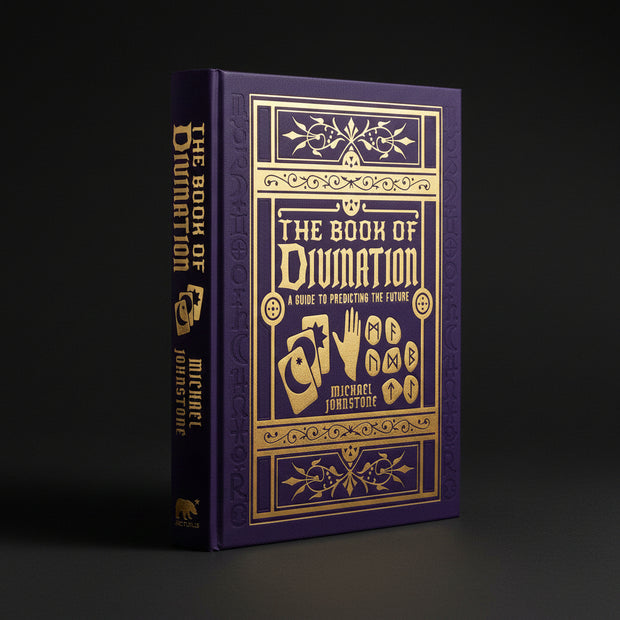
Readers can explore Tarot, oracle decks, runes, pendulums, and related study materials in our Divination Tools collection. For a structured reference, see the Book of Divination. These are reflective tools, not substitutes for factual evidence or professional advice.
Tools for this practice
Explore the products selected for this guide. Review each listing for what is included and how to use it.
Shop this guide · 1 item Collapse

Keep exploring the shop
You made it to the end of the guide. Keep exploring through related products, major departments, or the full catalog.


Leave a comment