


How to Clean, Store, and Display Mineral Specimens Without Damaging Them

A mineral specimen can be damaged by an enthusiastic cleaning more quickly than by years of careful display. Water dissolves some materials, acids attack carbonates, brushes remove delicate crystals, sunlight changes certain colors, and an unstable stand can turn a valuable specimen into fragments.
The safest care method begins with identification and restraint. Preserve the specimen’s structure, coatings, matrix, label, and provenance before trying to make it brighter.
Document the Specimen Before Cleaning
Photograph all sides in good light before changing anything. Record:
- mineral or rock identification;
- matrix and associated minerals;
- locality and supplier information;
- dimensions and weight;
- existing chips, fractures, loose crystals, repairs, and coatings;
- labels attached to the specimen or packaging;
- known treatments;
- date acquired;
- the reason cleaning is being considered.
Old labels can be as important as the specimen. Do not discard them because the handwriting or terminology is outdated.
Identify Every Major Component
A specimen is often a combination of minerals. A quartz crystal may sit on calcite, clay, iron oxides, mica, or a fragile secondary mineral. A cleaning method safe for the main crystal can destroy the matrix or an associated species.
When identification is uncertain, use the least invasive method and consult a mineralogist, experienced preparator, museum conservator, or reputable club before applying chemicals.
Inspect Structural Risk
Before lifting or brushing, look for:
- thin crystal points;
- cleavage cracks;
- undercut areas;
- loose matrix;
- surface-reaching inclusions;
- repaired sections;
- glue, filler, or mounting putty;
- water-soluble crusts;
- powdery or fibrous material;
- sharp fracture edges.
Read Crystal Hardness vs. Toughness vs. Cleavage before choosing pressure, tools, or cleaning equipment.
Start With Dry Cleaning
Dry methods are usually the safest first step.
- Move the specimen to a padded work surface.
- Support it from the base rather than gripping crystals.
- Use a hand air blower to move loose dust.
- Use a very soft artist brush only where crystals are stable.
- Brush away from fragile points and into open space.
- Stop if grains, flakes, fibers, or crystals move.
Avoid high-pressure canned air near delicate crystals. Propellant, cold shock, pressure, and moisture can cause damage. Avoid household vacuum nozzles unless a protective screen and extremely low suction are used by someone experienced.
When Water May Be Appropriate
Water cleaning should occur only after confirming that all components, treatments, adhesives, and labels tolerate it.
Even then:
- use room-temperature water;
- avoid sudden temperature change;
- do not soak longer than necessary;
- use a stable basin lined against impact;
- avoid directing force into fractures;
- rinse only when the mineral and matrix are known to be safe;
- dry thoroughly in moving air without intense heat.
Water can penetrate fractures, loosen fillers, rust associated metals, swell clays, dissolve soluble minerals, and leave deposits.
Materials Commonly Vulnerable to Water
This is not a complete list, but extra caution is needed with:
- halite and other soluble salts;
- gypsum and selenite;
- borates and some evaporite minerals;
- porous or clay-rich matrix;
- specimens with unknown coatings or dyes;
- metallic minerals that tarnish or oxidize;
- fracture-filled or glued specimens;
- historic labels and mounted pieces.
“Water safe” is not a permanent identity. Condition, inclusions, treatments, matrix, and exposure time matter.
Soap, Solvents, Acids, and Chemical Cleaners
Household cleaners are not general mineral cleaners. Vinegar and other acids attack calcite and many carbonates. Bleach, ammonia, rust removers, detergents, solvents, and proprietary mineral-cleaning chemicals can alter color, dissolve surfaces, create toxic exposure, or react with matrix.
Do not mix chemicals. Use gloves, eye protection, ventilation, compatible containers, and professional instructions when chemical preparation is genuinely appropriate. Disposal may be regulated.
Cleaning to expose a mineral can also remove natural coatings that are scientifically or aesthetically important. “Dirt” may be matrix, alteration, or a secondary mineral.
Ultrasonic and Steam Cleaning
Ultrasonic vibration and steam can damage included, fractured, cleavable, treated, porous, repaired, or heat-sensitive material. They are not safe simply because a mineral is high on the Mohs scale.
Do not place collector specimens, clusters, unknown stones, selenite, moonstone, topaz, filled material, or glued pieces into ultrasonic or steam equipment without expert confirmation.
Sunlight and Display Lighting
Light can fade some minerals, organic gems, dyes, photographs, labels, and repaired areas. Heat from a window or display lamp can also create thermal stress.
Safer display practices include:
- keeping specimens out of prolonged direct sunlight;
- using cool LED lighting;
- placing lights far enough away to prevent heating;
- rotating light-sensitive pieces;
- using UV-filtering cases where justified;
- keeping acquisition records and labels in darker storage.
A dramatic window display is not worth irreversible color loss.
Humidity, Air, and Reactive Minerals
Some minerals absorb moisture, dehydrate, oxidize, tarnish, or alter in ordinary indoor conditions. Pyrite and other sulfides can deteriorate under unfavorable moisture conditions, sometimes producing acidic byproducts that damage nearby labels and specimens.
Monitor vulnerable pieces for:
- powdery surfaces;
- new cracks;
- odor;
- rust-colored staining;
- liquid or dampness;
- white or green corrosion products;
- changes in transparency or luster.
Isolate a deteriorating specimen from the rest of the collection and seek qualified advice.
Store Specimens Individually
Minerals damage one another when they touch. Hard stones scratch softer ones; sharp points chip polished pieces; heavy specimens crush delicate clusters.
Use:
- individual boxes or trays;
- acid-free tissue or inert padding where appropriate;
- separate bags only for durable, smooth, fully dry small pieces;
- compartments that prevent rolling;
- support under the matrix rather than the crystals;
- labels that stay with both specimen and container.
Do not wrap delicate clusters tightly. Pressure from the wrapping can remove crystals.
Choose Padding Carefully
Unknown foam, rubber, dyed fabric, newspaper, tape, and plastic can stain, off-gas, trap moisture, or adhere over time. Archival-quality materials are preferable for long-term storage, but even archival materials should not press against unstable surfaces.
For valuable or reactive specimens, conservation-grade storage advice is worth seeking.
Display Heavy Specimens Low
Place heavy and dense specimens on lower shelves. Ensure the cabinet, shelf, bracket, and floor can support the total weight.
Use a stable base wider than the specimen’s center of gravity. Avoid narrow shelves in traffic areas, vibrating furniture, unstable wall anchors, and locations where children or animals can reach the display.
Use Stands Without Creating Stress
A stand should support the specimen at strong areas and distribute weight.
- Do not force a sphere into a stand that is too small.
- Do not clamp thin crystals.
- Do not balance a tower on an uneven base.
- Do not rest a cluster on exposed terminations.
- Use clear barriers or lips where spheres could roll.
- Test stability by gently touching the shelf—not the specimen.
Museum waxes and removable mounting products can be useful in some settings, but they may stain porous material, pull off coatings, collect dust, or become difficult to remove. Test and document any mounting material.
Avoid Permanent Adhesive
Hot glue, superglue, epoxy, putty, and tape can alter value and complicate future conservation. When a repair or mount is necessary, it should be reversible where possible, compatible with the material, and fully disclosed.
Never glue a specimen to improve the appearance of being naturally attached to matrix without disclosure.
Label Every Specimen
A useful label includes:
- mineral or rock name;
- associated minerals;
- locality as specifically documented;
- mine or claim when verified;
- collector or supplier;
- date acquired;
- catalog number;
- treatments or repairs;
- care restrictions.
Keep one label in the display and one duplicate in a separate catalog. Use What Makes a Mineral Specimen Collectible? for provenance practices.
Create a Collection Catalog
A simple spreadsheet or journal can track:
- catalog number;
- name and locality;
- photographs;
- dimensions and weight;
- purchase source and price;
- location in the home or store;
- condition history;
- cleaning and repair history;
- light, humidity, and storage notes;
- insurance or appraisal documents.
Record changes before memory turns them into assumptions.
Care by Display Form
| Form | Main risk | Safer practice |
|---|---|---|
| Sphere | Rolling and falling | Use a fitted stand and shelf barrier |
| Tower or obelisk | Tip chipping and toppling | Use a level, broad base away from edges |
| Cluster | Broken terminations | Support matrix; use air and soft brush sparingly |
| Tumbled stone | Surface abrasion | Store separately from equally hard or harder pieces |
| Soft carved plate | Scratching and cleavage | Support the full underside; avoid stacking |
| Metallic specimen | Tarnish or oxidation | Control moisture and inspect regularly |
Storage and Display Options
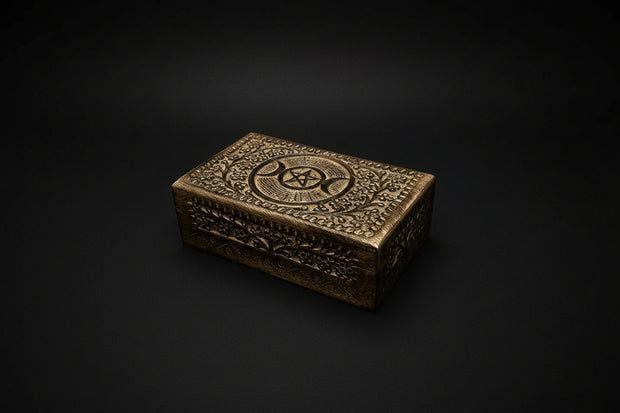
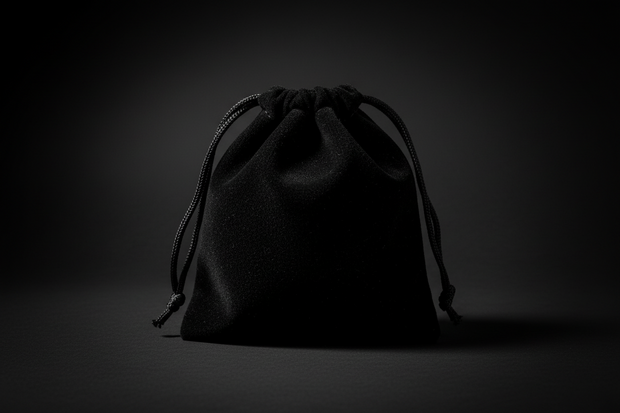
Browse Storage & Chests for organized protection and Crystals & Stones to compare specimen forms. The Triple Moon Pentacle Box, Pentacle Wooden Box, and Black Velvet Pouch can help separate suitable small, durable pieces. Fragile clusters such as the Amethyst Cluster Druzy should be supported in a rigid container rather than compressed in a pouch.
Frequently Asked Questions
Can I wash every quartz specimen with water?
No. Quartz may tolerate water while its matrix, coatings, inclusions, adhesives, labels, or associated minerals do not.
Should I remove iron staining?
Only after identifying the specimen and deciding whether the coating is unwanted, safe to remove, and not part of the specimen’s history. Chemical treatment can be hazardous and irreversible.
Can I display crystals in a sunny window?
Prolonged direct sunlight can fade some materials and heat specimens unevenly. A controlled interior display is safer.
Is a velvet pouch safe for every crystal?
No. Pouches suit many durable polished pieces, but they can compress clusters, trap grit, snag fibers, and provide little impact protection.
How often should specimens be cleaned?
Only as needed. Dust prevention through cabinets and careful display is safer than frequent handling and cleaning.
Can I use oil to improve luster?
Do not oil an unknown specimen. Oil can stain porous material, hide fractures, attract dust, change appearance, and complicate later conservation or sale.
Preservation Comes Before Shine
The best care method preserves the specimen’s mineralogy, structure, labels, and history. Identify first, document condition, begin with dry cleaning, isolate vulnerable pieces, use stable supports, and accept that a natural surface does not need to look freshly polished to be valuable.
Tools for this practice
Explore the products selected for this guide. Review each listing for what is included and how to use it.


Shop this guide · 4 items Collapse


Keep exploring the shop
You made it to the end of the guide. Keep exploring through related products, major departments, or the full catalog.


Leave a comment