


How to Cleanse and Charge Crystals Safely: Methods, Stone Care, and Common Mistakes

Bringing home a new crystal often raises the same questions: Should it be cleansed first? Does it need to be charged under the moon? Can it go in water? The answers depend on both your spiritual practice and the physical properties of the stone.
Crystal cleansing and charging are ritual practices. Cleansing is generally used to mark a release of prior associations, stagnant energy, or the residue of earlier work. Charging is used to prepare a stone for a purpose, renew its place in a practice, or align it with an intention. Neither process requires elaborate tools, and neither should put the mineral at risk.
This guide explains practical methods, common mistakes, and the basic stone-care questions to ask before exposing any crystal to water, salt, smoke, sunlight, or the elements.
Cleansing, Charging, and Programming Are Different
These terms are often used interchangeably, but they describe three separate actions.
- Cleansing symbolically clears previous associations or prepares a stone for new work.
- Charging renews or builds the stone’s ritual purpose through attention, placement, timing, or another symbolic source.
- Programming gives the stone a specific job, such as supporting focus during study, representing protection at a doorway, or serving as the center of a prosperity working.
A crystal can be cleansed without being charged, and it can be charged without receiving a highly specific intention. The distinction is useful because it keeps the process deliberate rather than turning it into a rigid routine.
When Should You Cleanse a Crystal?
There is no universal schedule. Some practitioners cleanse after every working, while others do so only when a stone changes purpose. A practical approach is to cleanse when there is a clear reason.
Common times include:
- When a stone is newly acquired or has been handled by many people.
- Before assigning it a different ritual purpose.
- After using it during emotionally intense spellwork, divination, grief work, or conflict.
- When moving it from a public or shared space to a personal altar.
- When the practice itself feels unfocused and a deliberate reset would be helpful.
You do not need to cleanse a crystal simply because a calendar says it is time. Ritual maintenance should support your practice, not become another source of anxiety.
Begin With the Safest Methods
When the exact mineral, treatment, dye, coating, or structural stability of a stone is uncertain, use a dry method. Sound, intention, smoke used carefully, and placement with selenite avoid many of the risks associated with soaking, salt, harsh sunlight, or outdoor exposure.
Sound
Sound is one of the most broadly compatible cleansing methods because it does not require physical contact with water, salt, oils, or chemicals. A bell, singing bowl, chime, drum, tuning fork, clapping, or spoken prayer can be used.
Place the stones on a stable surface and create sound around them for a short, focused period. The goal is not volume. A quiet bell used intentionally can be as meaningful as a large singing bowl.
Focused Intention and Visualization
Hold the stone or place your hands near it. Breathe slowly and state what is being released. Some practitioners visualize stagnant energy leaving as smoke, dust, shadow, or dim light. Others simply say, “This stone is cleared of its previous purpose and prepared for new work.”
This method is available anywhere, costs nothing, and can be adapted to nearly any tradition.
Smoke and Incense
Pass the stone briefly through incense smoke or allow smoke to move around it while stating the purpose of the cleansing. Resin incense, herbal bundles, sticks, and cones can all be used, but the material should match the practitioner’s tradition and the ventilation available.
Keep stones away from open flame, hot charcoal, and falling embers. Porous stones can also hold scent or collect soot, so brief exposure is preferable. For a broader discussion of materials and fire precautions, read How to Use Incense in Witchcraft.
Selenite Bowls, Plates, and Holders
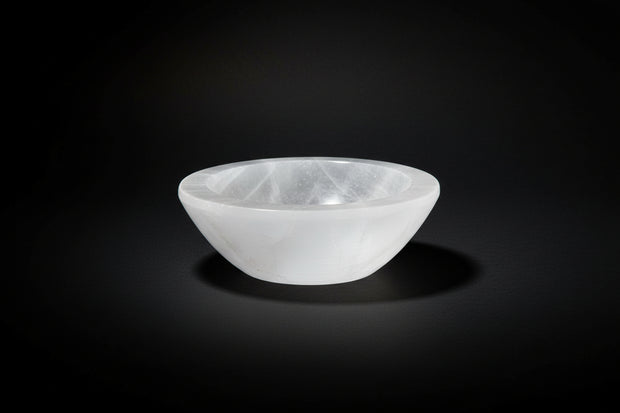
Selenite is commonly used in modern crystal practice as a resting surface for ritual cleansing or charging. Place smaller stones in a white selenite bowl, on a selenite charging plate, or near a larger piece for several hours or overnight.
For a dry setup, compare display plates, holders, cloths and symbolic sound tools. Keep gypsum products sold as satin spar or selenite away from water.
This is a convenient dry method, but remember that selenite itself is soft and moisture-sensitive. Keep it dry, handle it gently, and wipe it only with a soft cloth.
Can Crystals Be Cleansed With Water?
Some can. Many should not be soaked, and internet lists that label stones simply “water safe” or “not water safe” are often incomplete. A stone’s response can be affected by mineral composition, hardness, porosity, fractures, inclusions, metal content, surface coatings, glue, dye, and heat treatment.
Best rule: When the identity or treatment of a stone is uncertain, do not submerge it. Choose sound, intention, brief smoke, or a dry resting method instead.
Selenite and other gypsum varieties can be damaged by water. Pyrite can oxidize when exposed repeatedly to moisture. Soft, porous, layered, metallic, dyed, glued, or coated specimens may discolor, weaken, rust, separate, or lose their finish.
Even a durable mineral should not automatically be soaked. Natural fractures can trap water, temperature changes can stress a specimen, and polished pieces may contain treatments not visible from the surface.
For a verified, untreated, stable stone that is suitable for water, a brief rinse followed by complete drying is generally more cautious than prolonged soaking. Never make crystal elixirs or drink water in which unidentified minerals have been submerged. Some minerals contain elements that should not be ingested.
Should You Use Salt or Saltwater?
Salt is traditional in many forms of cleansing magic, but direct contact is unnecessarily harsh for many specimens. Salt can enter fractures, scratch softer surfaces, draw moisture, accelerate corrosion, or leave residue that is difficult to remove.
A safer symbolic alternative is to place the stone in a separate dry dish and set that dish inside a larger bowl of salt. The stone remains physically isolated while the ritual correspondence is preserved. Dispose of or repurpose the salt according to your tradition, but do not eat salt used in ritual work.
Moonlight and Sunlight
Moonlight
Moonlight is popular because it is gentle and can be tied to lunar timing. A windowsill is usually safer than leaving stones outdoors. Outdoor placement creates risks from dew, rain, humidity, animals, temperature swings, theft, and accidental loss.
The moon does not need to be physically visible for the ritual to be meaningful. Cloud cover and glass do not invalidate the practice. Choose a lunar phase that fits the intention, or simply use the night as a quiet period of renewal.
Sunlight
Sunlight is often associated with vitality, success, confidence, and solar magic, but prolonged direct exposure can fade or alter some stones. Amethyst is especially known for losing color under strong, repeated light, and other colored or treated specimens can also change. Heat buildup on a windowsill may stress included, fractured, glued, or dyed material.
When solar symbolism matters, use a short period of gentle morning light rather than leaving an unknown specimen in intense afternoon sun. A spoken solar invocation, candle placed safely nearby, or gold-colored cloth can provide the same correspondence without exposing the stone.
Earth and Burial Methods
Some practitioners return stones to the earth for grounding or renewal. Direct burial, however, can introduce moisture, soil, fertilizer, salts, chemicals, and physical abrasion. Small stones are also surprisingly easy to lose.
Use a lidded glass or ceramic container, wrap the stone in a natural cloth, or place it on top of clean soil rather than burying it directly. Avoid public land, protected areas, agricultural fields, and any location where digging is prohibited. Never leave plastic, wire, offerings, or other waste behind.
How to Charge a Crystal
Charging is not a measurable battery level. It is a ritual act that establishes attention, timing, and purpose. The most effective method is one you can repeat consistently and connect to the work being done.
Charge With Intention
- Choose one clear purpose.
- Hold the stone or place it before you.
- State the intention in direct language.
- Visualize the intended result or the behavior the stone will represent.
- Place it where that purpose can be acted upon.
For example, a smoky quartz stone intended for grounding might be kept near a desk where stressful decisions are made. The placement reinforces the ritual by connecting it to an actual habit.
Charge on an Altar
Place the stone beside a candle, petition, deity image, offering bowl, tarot card, sigil, or other symbol connected to the intention. The object does not need to remain there permanently. A single focused ritual may be enough, or the stone may stay through a full working cycle.
Charge With Selenite
Resting stones on selenite is a simple option for people who want a dedicated charging station. A bowl or plate keeps smaller pieces together and can become part of the altar rather than a separate process.
Charge With Lunar or Solar Timing
Lunar timing can be used for intuition, reflection, release, growth, or completion depending on the phase. Solar timing can be used for courage, visibility, vitality, and action. Use light only when the specimen can tolerate it, and remember that symbolic timing does not require prolonged physical exposure.
A Simple Crystal Programming Ritual
After cleansing and charging, programming gives the stone a defined role.
- Name the purpose. Avoid vague instructions such as “bring good energy.” Choose something observable, such as “support calm breathing before difficult conversations.”
- Set a boundary. State how and when the stone will be used.
- Connect it to action. Decide where it will be carried, displayed, or used.
- Close the ritual. Thank the spirits, deity, ancestors, elements, or personal practice involved, then place the stone in its working location.
Crystals work best as ritual anchors when they are connected to choices and habits. A stone for confidence can remind you to speak, prepare, practice, and follow through; it should not replace those actions.
Quick Care Guide by Stone
| Stone | Lower-Risk Methods | Important Cautions |
|---|---|---|
| Clear or smoky quartz | Sound, intention, brief smoke, moonlight, selenite | Avoid assuming every polished piece is untreated or safe to soak; fractures and coatings matter. |
| Amethyst | Sound, intention, smoke, moonlight, selenite | Avoid prolonged direct sunlight, which can fade color. |
| Selenite or gypsum | Sound, intention, brief smoke, dry cloth | Keep dry. It is soft, easily scratched, and vulnerable to moisture. |
| Pyrite | Sound, intention, smoke, selenite | Avoid water, saltwater, humid storage, and harsh chemical cleaners. |
| Obsidian | Sound, intention, smoke, moonlight, dry cloth | Volcanic glass can chip and develop sharp edges. Handle carved or thin pieces carefully. |
| Jet | Sound, intention, brief smoke, soft dry cloth | Jet is an organic material and can scratch. Avoid soaking and harsh cleaners. |
| Unknown, dyed, coated, or glued stone | Sound, intention, selenite, careful dry storage | Do not soak, salt, oil, heat, or expose to strong sunlight until the material is identified. |
Common Crystal Cleansing Mistakes
- Using the same method on every stone. Mineral specimens differ in composition and stability.
- Confusing ritual cleansing with physical cleaning. Smoke or moonlight will not remove dirt, oil, germs, or adhesive residue.
- Soaking unknown stones. Water damage may not appear immediately.
- Leaving crystals outside overnight. Dew and weather can damage stones that seemed safe in dry conditions.
- Using salt directly. Salt can scratch, corrode, or lodge in fractures.
- Overexposing stones to sunlight. Some colors fade, and heat can affect treated or fractured material.
- Turning maintenance into fear. Missing a full moon does not ruin a crystal, and a stone does not become dangerous because it was not cleansed on schedule.
A Five-Minute Crystal Care Routine
- Inspect the stone for cracks, loose parts, moisture, dust, or changes in color.
- Wipe it gently with a clean, dry cloth when appropriate.
- Use a bell, spoken cleansing, or brief incense smoke.
- State the stone’s current purpose in one sentence.
- Return it to a stable location away from direct sun, humidity, children, and pets.
This routine works for most collections because it separates physical inspection from ritual care and defaults to methods that do not expose the specimen to unnecessary risk.
Choose the Method That Respects the Stone
Crystal care begins with knowing what you have. The form of a specimen also affects how it should be handled: a polished tumble, delicate cluster, carved tower, palm stone, and natural point may share a mineral name while having very different weak spots. Our guide to tumbled stones, palm stones, towers, and natural specimens explains how form changes practical use.
When in doubt, keep the process dry, simple, and deliberate. Sound, intention, and a protected resting place are enough. Cleansing and charging should deepen your relationship with a stone—not shorten its life.
Explore the full Crystals & Stones collection to find tumbled stones, worry stones, spheres, towers, selenite charging pieces, and natural specimens for ritual work, collecting, and display.
Crystal traditions are spiritual and symbolic practices. They are not substitutes for medical, mental health, legal, or financial care. Verify a specimen’s identity and treatment before cleaning it, and keep small stones, smoke, salt, and ritual materials away from children and pets.
Tools for this practice
Explore the products selected for this guide. Review each listing for what is included and how to use it.
Shop this guide · 1 item Collapse

Keep exploring the shop
You made it to the end of the guide. Keep exploring through related products, major departments, or the full catalog.
 RELATED TO THIS GUIDE
Crystals & Stones
Shop this topic
RELATED TO THIS GUIDE
Crystals & Stones
Shop this topic


Leave a comment