


How to Compare Editions and Translations of Occult Books

Occult books are often available in many editions that share a title while differing substantially in language, completeness, notes, illustrations, and source text. A low-cost reprint may be perfectly suitable for casual reading, while serious study may require an edition with editorial history, variant readings, or a clearly identified translation.
The best edition is not always the oldest, newest, most expensive, or most attractive. It is the one that supports what you are trying to learn.
Begin With Your Purpose
Decide whether you need the book for:
- general introduction;
- historical study;
- close comparison with the original language;
- ritual practice;
- artwork, diagrams, or tables;
- collecting a particular publisher or printing;
- portable everyday reading;
- citation in a paper, article, or research project.
A readable modern edition may be ideal for a beginner. A facsimile may better preserve page layout. A scholarly edition may explain sources but feel slower to read.
Identify the Author, Translator, and Editor Separately
These roles are not interchangeable:
- Author: created the original work or is traditionally credited with it.
- Translator: rendered the text from another language.
- Editor: selected, corrected, arranged, annotated, or introduced the material.
- Compiler: assembled material from several sources.
- Commentator: added interpretation without necessarily establishing the text.
An edition that lists only the historical author while hiding the translator or editor makes comparison difficult. Search the title page and copyright page, not only the front cover.
Ask Which Source Text Was Used
Translations and modern editions may derive from:
- an original manuscript;
- a critical edition comparing several manuscripts;
- an earlier printed edition;
- a public-domain translation;
- a facsimile scan;
- a modernized transcription;
- another translator’s version rather than the original language.
The introduction or editorial note should explain the source. When it does not, treat claims of completeness or authority cautiously.
Check Whether the Text Is Complete
Words such as selected, concise, adapted, modernized, abridged, retold, or essential may signal that material was shortened or reorganized.
Compare:
- table of contents;
- chapter count;
- appendices;
- illustrations and plates;
- footnotes or endnotes;
- indexes;
- bibliography;
- ritual tables, alphabets, diagrams, or foldouts.
An abridgment can be useful when clearly labeled. It should not be mistaken for the full work.
Translation Style Changes Meaning
One translator may preserve archaic sentence structure and technical terms. Another may favor contemporary readability. A third may interpret ambiguous words through a specific magical, religious, psychological, or academic framework.
Compare a short passage before buying when previews are available. Notice:
- whether technical terms are translated or retained;
- how names and divine titles are spelled;
- whether measurements and dates are modernized;
- how gendered language is handled;
- whether unclear phrases are marked or silently resolved;
- whether translator additions are distinguished from the original text.
Annotations Can Clarify or Dominate
Notes may provide:
- historical context;
- source citations;
- variant manuscript readings;
- definitions of obsolete words;
- cross-references to related texts;
- practical commentary;
- the editor’s personal interpretation.
Decide whether you want minimal interruption or extensive guidance. A commentary-heavy edition should clearly separate the historical text from the commentator’s additions.
Facsimile, Transcription, and Modern Typesetting
| Edition Type | Strength | Limitation |
|---|---|---|
| Facsimile | Preserves original page design, spelling, and illustrations | May reproduce faint print, damaged pages, or difficult type |
| Diplomatic transcription | Recreates wording closely in readable type | May retain unfamiliar spelling and errors |
| Modernized edition | Easier for contemporary readers | Editorial changes may affect nuance |
| Critical edition | Explains variants and sources | Usually more expensive and academically dense |
| Popular reprint | Affordable and accessible | Source and editing may be poorly documented |
Illustrations and Diagrams Matter
Occult texts may depend on seals, circles, tables, card images, hand positions, alphabets, or geometric diagrams. Confirm whether they are:
- included at full size;
- printed clearly;
- placed near the relevant text;
- redrawn or reproduced from the source;
- in color when color carries information;
- cropped by a low-quality scan.
A cheap reprint can become unusable when essential diagrams are blurred or cut off.
Publisher and Publication Date Provide Context
Record the publisher, edition date, printing date, ISBN, and copyright information. A recent printing may reproduce a much older translation. “New edition” may refer only to cover design or formatting rather than a new translation.
Research the publisher’s editorial approach. Some specialize in scholarly editions, some in accessible handbooks, and some in automated public-domain reprints with minimal quality control.
Public-Domain Reprints Are Not All Equal
Public-domain texts can make important works affordable, but inspect:
- whether the source edition is identified;
- scan and OCR quality;
- missing pages or illustrations;
- broken footnote numbering;
- unexplained changes to spelling or punctuation;
- page size and margins;
- whether an index still points to the correct pages.
A low-cost edition may be useful as a reading copy even when it is not suitable for citation or ritual reconstruction.
Compare Reviews Carefully
Reviews that discuss the ideas in the book may not identify edition-specific problems. Look for comments about print size, missing plates, translation quality, binding, annotations, and formatting. Confirm that the reviewer purchased the same ISBN.
Create an Edition Comparison Sheet
Record:
- full title and subtitle;
- translator and editor;
- publisher and date;
- ISBN;
- source text;
- complete or abridged status;
- notes, bibliography, index, and illustrations;
- sample passage observations;
- price and format;
- your intended use.
Read How to Evaluate an Occult Book for a broader method covering authors, sources, citations, and red flags.
Explore Current Books
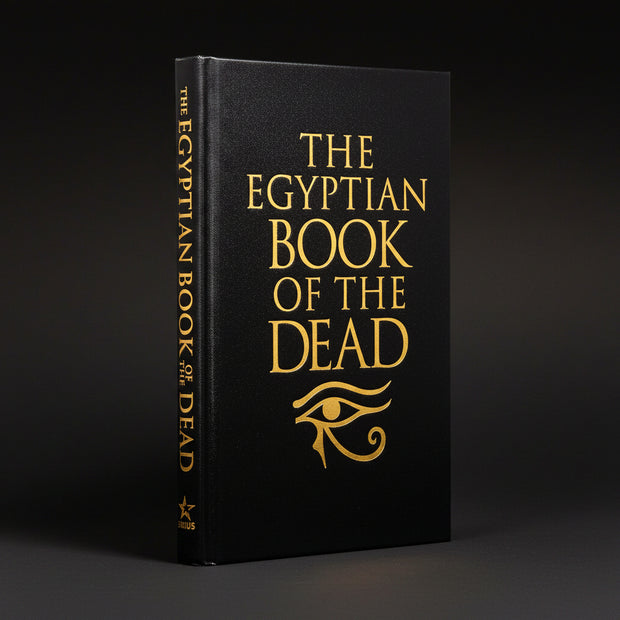
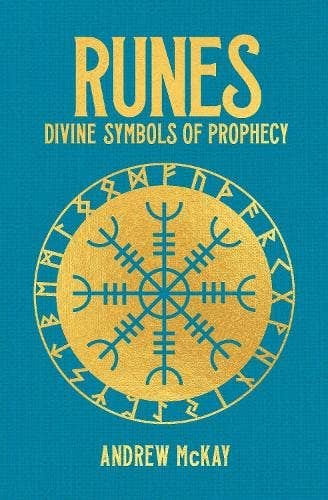
Different books require different comparison questions. Review current listings such as the Egyptian Book of the Dead, Runes, and Spellcraft: A Practical Guide to Magic. Use each product page’s author, publisher, format, and description to determine what kind of edition or handbook it is.
Frequently Asked Questions
Is the oldest translation always best?
No. Older translations may be historically important but contain outdated scholarship, difficult language, or interpretive assumptions. They can still be valuable for comparison.
Does “unabridged” guarantee completeness?
It is a useful claim, but compare contents and source information. An edition may be unabridged relative to a particular earlier translation while still omitting images or apparatus.
Are facsimile editions better?
They are best when original layout matters. They may be difficult to read and can reproduce defects from the source copy.
Why do translations use different names?
Transliteration systems, source languages, manuscript variants, and translator choices can produce different spellings. Good editions explain their convention.
Can I cite a popular reprint?
You can cite the exact edition you used, but serious research benefits from an edition with clear source, editor, translator, and publication data.
Should I own more than one edition?
For close study, comparing two translations or a modern edition with a facsimile can reveal editorial choices. Casual readers may need only one well-selected copy.
Choose the Edition That Matches the Work
Look beyond the cover and title. Translator, editor, source text, completeness, annotation, illustrations, and production quality determine what an edition can actually help you do.
Tools for this practice
Explore the products selected for this guide. Review each listing for what is included and how to use it.

Shop this guide · 3 items Collapse


Keep exploring the shop
You made it to the end of the guide. Keep exploring through related products, major departments, or the full catalog.


Leave a comment