


How to Evaluate an Occult Book: Authors, Sources, Citations, Editions, and Red Flags

An occult book can be inspiring, useful, historically important, deeply personal, poorly researched, or several of those things at once. The goal of evaluating a book is not to divide every title into “good” or “bad.” It is to understand what kind of book you are holding, what evidence supports its claims, and how confidently you should use it.
This guide complements our beginner’s guide to building a witchcraft study library. Instead of recommending a reading order, it gives you a repeatable method for assessing individual books.
Start by Identifying What the Book Is Trying to Be
A practical spellbook should not be judged by exactly the same standards as an academic history, a devotional text, a memoir, or a record of personal revelation. Before evaluating its claims, identify its purpose.
- Historical study: Should explain evidence, dates, debates, and source limitations.
- Practical manual: Should clearly describe methods, risks, required materials, and the tradition or experience behind the instructions.
- Devotional or theological work: May present beliefs from within a religious framework rather than attempting neutral history.
- Personal memoir or gnosis: Can be valuable testimony, but one practitioner’s experience is not automatically universal.
- Reference work: Should make information easy to trace through notes, bibliography, index, and consistent terminology.
Research the Author Without Turning Credentials Into a Shortcut
Look for a clear author biography, previous work, relevant education, community experience, language skills, archival research, or long-term practice. None of these alone guarantees accuracy. An academic can misunderstand living practice, while an experienced practitioner can repeat weak history. What matters is whether the author is transparent about the basis of their knowledge.
Be cautious when the author claims secret authority that cannot be questioned, presents unverifiable initiations as proof of every statement, or relies on vague phrases such as “the ancients knew” without identifying who, where, or when.
Check Whether Claims Can Be Traced
A bibliography is helpful, but the quality of the sources matters more than the number of pages listed. Strong books let readers distinguish between documented history, interpretation, inherited tradition, and the author’s own method.
Look for footnotes, endnotes, quotations with page references, named manuscripts, dates, editions, translators, archaeological reports, or clearly identified interviews. A practical book may not need academic citation on every page, but major historical claims should still be traceable.
Pay Attention to Editions and Translations
Occult texts often exist in several editions. They may differ because of translation choices, omitted material, editorial modernization, manuscript selection, or later commentary. A title alone does not tell you which text you are reading.
Check the publication date, translator, editor, introduction, source manuscript, and whether the edition is complete or abridged. When studying influential ceremonial texts, compare editions rather than assuming the cheapest or newest printing is definitive. Our beginner’s guide to Crowley and Thelema shows why reading context and publication history can matter as much as the title.
Separate Evidence From Interpretation
Watch for transitions from “a surviving record says” to “therefore all practitioners believed.” Historical evidence is usually partial. A trial transcript, folklorist’s collection, archaeological object, later magical manual, and modern practitioner interview each reveal different things.
Good authors mark uncertainty. Words such as “possibly,” “in this region,” “in the surviving sources,” or “one modern interpretation” are not signs of weakness. They show that the writer understands the limits of the evidence.
Test Claims of Ancient or Unbroken Tradition
Statements that a modern practice is thousands of years old, unchanged, universally practiced, or secretly preserved should be treated carefully. Ask:
- What is the earliest dated evidence?
- Is the practice documented continuously, or reconstructed from separated sources?
- Does the author distinguish resemblance from direct descent?
- Are later revivals being presented honestly as revivals?
A modern adaptation does not become less meaningful because it is modern. Honest dating protects the practice from fragile marketing myths.
Evaluate Practical Instructions for Safety and Scope
Useful practical books explain fire, smoke, ingestion, skin contact, toxic plants, sharp tools, pets, children, ventilation, and local law where relevant. Be wary of instructions that promise guaranteed medical, legal, financial, or psychological outcomes.
Also notice whether the author explains what to do when a ritual does not produce the expected result. Responsible teaching leaves room for uncertainty, ordinary causes, personal boundaries, and changing one’s mind.
Common Red Flags
- Every practice is described as universally ancient.
- Different cultures are blended without names, dates, or context.
- Criticism is dismissed as spiritual weakness or lack of belief.
- The reader is pressured to buy increasingly expensive secrets.
- Historical claims rely only on other recent popular books repeating one another.
- The author claims one symbol, deity, herb, or ritual has exactly the same meaning everywhere.
- Dangerous instructions are presented without ordinary safety precautions.
A Useful Book Can Still Have Limits
You do not need to discard a book because one section is dated or poorly supported. Mark the limitation. Compare it with stronger sources. Keep practical material that works for your goals while refusing claims the evidence does not support.
If you are keeping your own record, our guide to a Book of Shadows versus a grimoire can help you separate copied material, personal results, research notes, and developing practice.
Frequently Asked Questions
Does a bibliography prove that an occult book is accurate?
No. A bibliography shows that sources were listed, but you still need to examine their quality, relevance, age, and whether the author represented them fairly.
Are older occult books automatically more authentic?
No. Older books can be historically important while containing errors, prejudices, mistranslations, or claims later scholarship has challenged.
Can personal experience be a valid source?
Yes, for describing the author’s own experience. It becomes unreliable when presented as proof that everyone will experience the same thing.
Should beginners avoid advanced or controversial books?
Not necessarily. Read them with context, compare interpretations, and avoid treating one author as the final authority.
Apply the Checklist to Real Books
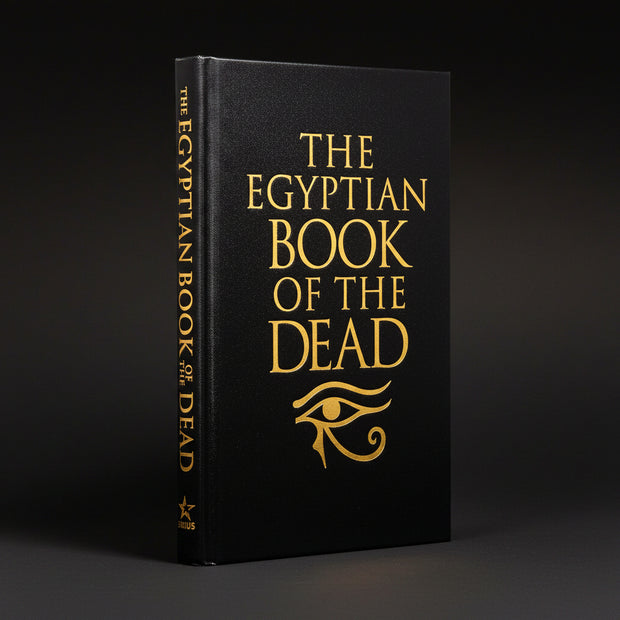
Use this framework while comparing practical and historical titles such as The Book of Practical Witchcraft, The Egyptian Book of the Dead, and other public-facing study materials in our Pagan Path collection. A store listing is a starting point; readers should still examine author, edition, sources, and scope.
Tools for this practice
Explore the products selected for this guide. Review each listing for what is included and how to use it.
Shop this guide · 1 item Collapse

Keep exploring the shop
You made it to the end of the guide. Keep exploring through related products, major departments, or the full catalog.


Leave a comment