


How to Read a Birth Chart for Beginners: Planets, Signs, Houses, and Aspects

A birth chart can look overwhelming at first: a wheel divided into twelve sections, filled with planetary symbols, zodiac signs, colored lines, and unfamiliar abbreviations. The easiest way to understand it is not to interpret everything at once. A chart is a layered symbolic map. Read it in a consistent order, and the pieces begin to form a story.
Astrology is a cultural and spiritual interpretive system, not a scientifically proven method of predicting personality or fate. A thoughtful reading should create questions, language, and perspective—not replace judgment or declare that your life is fixed.
What Is a Birth Chart?
A natal or birth chart is a diagram of the sky calculated for a specific date, time, and location of birth. It shows where the Sun, Moon, planets, and other selected points appeared within the zodiac and houses at that moment.
Most modern Western charts are read through four main components:
- Planets: what kind of function or drive is being described.
- Signs: how that function tends to express itself.
- Houses: where in life the theme is emphasized.
- Aspects: how different parts of the chart interact.
A useful sentence formula is: planet in sign, acting in house, modified by aspects.
Step 1: Start With the Big Three
The Sun
The Sun is commonly associated with identity, vitality, purpose, and the qualities a person is developing into conscious expression. It is important, but it is only one piece of the chart.
The Moon
The Moon is often read through emotional needs, instinctive reactions, comfort, memory, and the conditions that help a person feel secure.
The Ascendant
The Ascendant, or rising sign, is the zodiac sign rising on the eastern horizon at the recorded birth time. It begins the first house in many house systems and is associated with approach, presentation, embodiment, and the way a person enters situations.
Read the three together. A person can have a fiery Sun, a private water Moon, and a cautious earth Ascendant. The apparent contradiction is often where the chart becomes useful.
Step 2: Learn What the Planets Represent
- Mercury: thinking, language, learning, and exchange.
- Venus: attraction, values, pleasure, relating, and aesthetics.
- Mars: action, desire, assertion, conflict, and effort.
- Jupiter: growth, meaning, confidence, opportunity, and excess.
- Saturn: limits, responsibility, discipline, fear, time, and mastery.
- Uranus: disruption, independence, innovation, and awakening.
- Neptune: imagination, longing, spirituality, idealization, and confusion.
- Pluto: power, compulsion, loss, regeneration, and deep transformation.
The outer planets move slowly, so their sign placements describe whole generations. Their house positions and close aspects often make them more personal.
Step 3: Treat Signs as Styles, Not Characters
A sign does not tell you what a planet is; it describes how the planet tends to operate. Mars in Aries may act directly and rapidly. Mars in Libra may negotiate, weigh options, or pursue action through relationship. Neither is automatically stronger, better, or worse.
Elements offer a fast first layer:
- Fire: inspiration, expression, confidence, and movement.
- Earth: material reality, stability, skill, and practicality.
- Air: thought, language, social connection, and perspective.
- Water: feeling, intuition, memory, and sensitivity.
Modalities add another layer: cardinal signs initiate, fixed signs sustain, and mutable signs adapt.
Step 4: Read the Houses as Areas of Life
- First: self, body, approach, and personal presence.
- Second: resources, money, possessions, and values.
- Third: communication, learning, siblings, and local environment.
- Fourth: home, roots, family, and private life.
- Fifth: creativity, pleasure, romance, children, and self-expression.
- Sixth: routines, labor, service, maintenance, and health habits.
- Seventh: partnership, contracts, projection, and direct others.
- Eighth: shared resources, intimacy, inheritance, crisis, and transformation.
- Ninth: worldview, higher learning, religion, travel, and publishing.
- Tenth: vocation, reputation, responsibility, and public life.
- Eleventh: community, friends, networks, causes, and long-term hopes.
- Twelfth: retreat, unconscious patterns, isolation, surrender, and hidden matters.
A house is not a prediction that an event must happen there. It marks an arena where certain themes may receive attention.
Step 5: Add the Major Aspects
Aspects are angular relationships between planets. Begin with the five major aspects:
- Conjunction: planets combine and intensify one another.
- Opposition: polarity, tension, awareness, and balancing.
- Square: friction that demands action, adjustment, or skill.
- Trine: ease, flow, talent, or patterns that operate with little resistance.
- Sextile: cooperation and opportunity that usually benefits from participation.
Do not label trines “good” and squares “bad.” Ease can become complacency, while friction can produce competence and resilience.
Step 6: Look for Repetition
The strongest chart themes are usually repeated. One placement rarely defines a person. Look for several indicators pointing in the same direction:
- Multiple planets in one element or sign.
- Several planets in one house.
- A planet connected to many others by aspect.
- The ruler of the Ascendant placed prominently.
- The same theme appearing through planet, sign, house, and aspect.
Repetition matters more than dramatic interpretations of isolated placements.
A Simple Beginner Reading Order
- Confirm the birth data and chart settings.
- Read the Sun, Moon, and Ascendant.
- Find the Ascendant ruler and its sign, house, and aspects.
- Identify element and modality emphasis.
- Notice planets near the four angles.
- Study personal planets: Mercury, Venus, and Mars.
- Add Jupiter and Saturn.
- Review the tightest major aspects.
- Summarize three repeating themes.
Write a short paragraph rather than a list of disconnected meanings. A chart becomes readable when the symbols are synthesized.
What Birth Time Changes
An accurate time affects the Ascendant, house cusps, Midheaven, and sometimes the Moon’s exact degree. When no reliable time is available, a chart can still be used for planetary signs and many aspects, but house-based claims should be treated cautiously. Do not invent a noon birth time and then read the houses as certain.
Common Beginner Mistakes
- Reducing everyone to a Sun sign.
- Reading every placement separately without synthesis.
- Treating difficult symbolism as a sentence or diagnosis.
- Using astrology to excuse harmful behavior.
- Letting social-media keywords override the full chart.
- Assuming a chart removes choice, context, culture, or development.
Using Astrology in Pagan or Magical Practice
Some practitioners use charts to select planetary correspondences, study recurring themes, plan devotional work, or reflect on cycles. These practices are optional. You do not need to obey a transit, fear a placement, or delay necessary action because of astrology.
For a broader introduction to zodiac signs, planetary symbolism, moon phases, and magical timing, read Astrology for Pagans.
Frequently Asked Questions
Which placement is the “real me”?
No single placement owns the whole personality. Astrology works through combinations, contradictions, and repeated patterns.
What if I do not relate to my chart?
Check the birth data, consider whether the interpretation is overly generic, and allow for age, environment, culture, and personal development. You are not required to identify with an astrological description.
Do empty houses mean nothing happens there?
No. Every house has a sign on its cusp and a ruling planet. Empty simply means no natal planet occupies that house.
Should I use whole-sign or quadrant houses?
Both are established approaches. Beginners can choose one system, learn it consistently, and compare later rather than mixing systems unconsciously.
Can a birth chart predict the future?
Astrologers use different predictive techniques, but astrology has not been scientifically established as reliable forecasting. It is safest to treat predictions as interpretive possibilities, not guaranteed events.
Final Perspective
A birth chart is best read as a coherent symbolic pattern rather than a collection of labels. Start with the major structures, look for repetition, and preserve room for choice. A useful interpretation should deepen reflection without shrinking a person into a diagram.
Continue Your Astrology Study
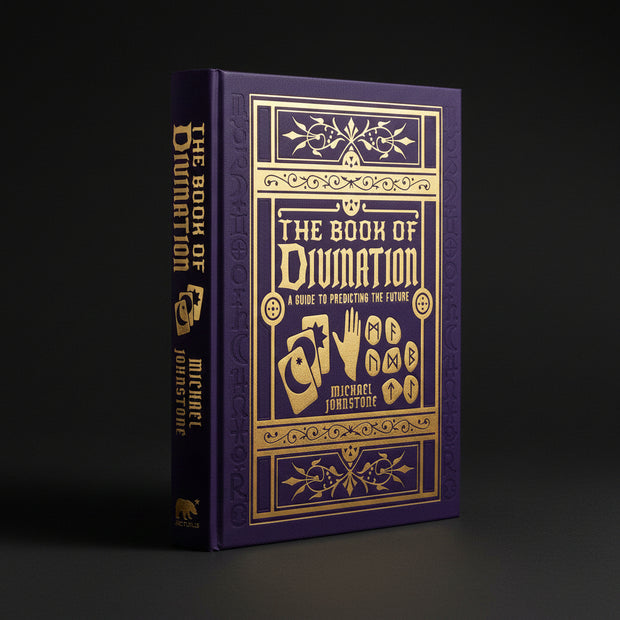
For symbolic reference and comparative divination study, explore the Book of Divination and our Divination Tools collection. These resources support interpretation and recordkeeping; they do not make a birth chart scientifically predictive or determine fixed fate.
Tools for this practice
Explore the products selected for this guide. Review each listing for what is included and how to use it.
Shop this guide · 1 item Collapse

Keep exploring the shop
You made it to the end of the guide. Keep exploring through related products, major departments, or the full catalog.


Leave a comment