


How to Use a Scrying Mirror: Preparation, Techniques, and Interpretation

A scrying mirror is a dark reflective surface used as a focal point for divination, contemplation, and symbolic interpretation. Rather than reading a fixed system of cards, runes, or marked symbols, the practitioner observes changes in light, shadow, imagery, memory, and association that arise during a period of quiet attention.
Within occult and witchcraft traditions, these impressions may be interpreted as intuitive material, symbolic communication, spiritual insight, or glimpses into a possible future. Those interpretations belong to systems of belief and practice; they are not scientifically established guarantees. Low light, prolonged attention, eye adaptation, afterimages, and the human tendency to recognize patterns can also produce apparent movement, faces, colors, or shapes on an otherwise blank surface.
A grounded scrying practice makes room for both possibilities. It does not dismiss a meaningful experience, but it also does not assume that every flicker, shadow, or image is a supernatural message. This guide offers a repeatable method for preparing a mirror, conducting a session, recording raw observations, evaluating interpretations, and closing the work safely.
What Is Scrying?
Scrying is a broad term for concentrated gazing into a medium used for divination or reflective work. The medium might be a dark mirror, polished stone, crystal sphere, bowl of water, flame, smoke, or another surface that allows the eyes to rest without presenting a fixed image.
If you are sorting out scrying from pathworking, hedge crossing, or astral travel, see Liminality vs. Hedge Crossing, Astral Travel, Scrying & Pathworking.
The goal is not usually to stare until a complete scene appears like a film. Experiences are often subtler. A practitioner may notice:
- Shifts in light or contrast
- Mist-like or clouded areas
- Brief geometric forms
- Faces or silhouettes
- Colors that seem significant
- Memories, words, or emotions arising suddenly
- A strong association with a person, place, or event
- No unusual imagery at all, but a clearer understanding of the question
Some traditions treat visual phenomena as the central result. Others place equal or greater importance on thoughts, bodily responses, and symbolic associations. Neither approach requires forcing the experience into a dramatic form.
What Is a Scrying Mirror?
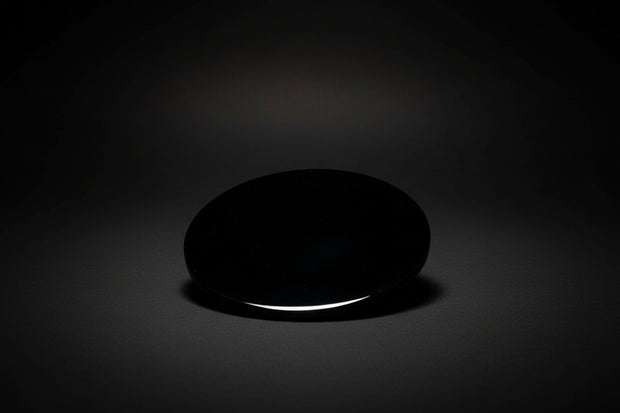
A scrying mirror is normally black or very dark, with enough reflectivity to hold light and vague forms without producing the sharp detail of an ordinary household mirror. It may be made from polished obsidian, dark glass, painted glass, acrylic, or another reflective material.
Obsidian mirrors are popular because polished black volcanic glass creates a deep reflective surface. In contemporary crystal and occult practice, obsidian is also traditionally associated with protection, truth, grounding, and shadow work. These metaphysical correspondences are traditional beliefs rather than measurable properties of the mineral.
The Black Obsidian Scrying Mirror offers a compact surface for seated practice. A dark sphere can serve a related purpose; the curved surface changes reflections and provides a broader field of shifting light. The Obsidian Sphere is one current option for practitioners who prefer a three-dimensional focus.
Why Do Shapes and Faces Appear?
Understanding ordinary visual effects does not make scrying meaningless. It helps the practitioner avoid confusing every perceptual change with an external presence.
In dim conditions, the eyes and brain work with limited visual information. Edges may fade, contrast can shift, small movements of the eyes can create apparent motion, and afterimages may linger. The mind also naturally searches for recognizable patterns, especially faces and figures. These effects can make a dark reflective surface appear active even when nothing physical is changing on it.
From a practical standpoint, the appearance of a form is only the beginning of interpretation. The more useful questions are:
- What did I actually observe before assigning meaning?
- What associations arose immediately?
- Was I already expecting or hoping to see something similar?
- Does the interpretation fit the question without being forced?
- Does the same symbol recur across separate sessions?
- Can the interpretation be tested against later events or reflection?
This distinction between observation and interpretation is one of the most important disciplines in scrying.
What Scrying Can and Cannot Do
Scrying can provide a structured period of concentration in which symbols, memories, concerns, and intuitive associations become easier to notice. It can support meditation, ritual reflection, creative work, dream study, and divination within a spiritual practice.
It cannot guarantee an accurate prediction or prove that a particular spirit, deity, or deceased person has communicated. It should not replace professional medical, legal, financial, or mental health guidance. A disturbing image is not evidence that harm is certain to occur, and a reassuring image is not a reason to ignore real-world warning signs.
Use scrying as one reflective tool among several. When a decision has serious consequences, rely on verifiable information, qualified advice, and direct communication.
How to Prepare a Scrying Mirror
Clean the Surface Physically
Dust, fingerprints, and streaks can become distracting shapes during a session. Clean the mirror according to its material. Polished obsidian and coated glass may require different care, so avoid harsh chemicals or abrasive cloths unless the maker confirms they are suitable.
Physical cleaning is distinct from ritual cleansing. Some practitioners also use sound, breath, prayer, incense, moonlight, or a symbolic wiping gesture before beginning. These are optional spiritual customs, not substitutes for appropriate material care.
Use a Stable Position
Place the mirror on a secure stand or support so it cannot slide or fall. A handheld mirror can work, but muscle movement and shifting angles often make the reflection harder to observe. A stable setup is usually easier for beginners.
Position the surface near eye level or slightly below it. Tilt it so you do not see a sharp reflection of your own face, the room, or a direct light source. A Sphere Holder can stabilize a small crystal sphere when using one instead of a flat mirror.
Create Indirect, Dim Lighting
The room should be dim enough to soften detail but bright enough to move safely. A shaded lamp placed behind or beside the practitioner is often easier to control than a candle. Avoid directing a flame, bright bulb, or concentrated reflection into the eyes.
If candles are used for atmosphere, place them on stable, heat-resistant surfaces away from fabric, paper, dried herbs, pets, and walking paths. Never leave flame unattended. Battery-operated candles are an effective alternative when open flame is unsafe.
Reduce Visual Clutter
A plain backdrop behind the mirror makes subtle changes easier to observe. Remove blinking electronics and bright objects from the mirror's field. Silence unnecessary notifications and arrange everything before the session so you do not need to search for supplies in low light.
Choose a Clear Question
A useful question is specific enough to guide attention but open enough to allow an unexpected answer. Questions such as “What should I understand about this situation?” or “What factor am I overlooking?” are generally more productive than questions designed only to confirm a preferred outcome.
A beginner can also conduct an open session without a question, using the time simply to observe. Do not attempt to ask many unrelated questions in one sitting.
What You Need for a First Session
- A clean, stable scrying mirror or sphere
- A chair or cushion that supports a relaxed posture
- Indirect, adjustable lighting
- A timer
- A notebook and writing instrument
- Water or another simple grounding item for afterward
Incense, ritual oils, herbs, candles, protective symbols, and elaborate invocations are optional. They may help mark the transition into ritual for some practitioners, but none is required for the visual technique itself.
When smoke is used, ventilate the room and consider allergies, asthma, pets, and other occupants. The guide How to Use Incense in Witchcraft explains sticks, resins, charcoal, and basic fire precautions in greater detail.
How to Use a Scrying Mirror Step by Step
1. Set a Short Time Limit
Begin with ten to fifteen minutes. A defined session prevents eyestrain, discourages the urge to force results, and gives you a clear stopping point. Longer sessions are not automatically more effective.
2. State the Purpose
Write the question at the top of the journal page. Then state it once aloud or silently. A simple opening may be:
“I begin this session to observe clearly, record honestly, and understand without forcing an answer.”
This is an adaptable statement, not a required traditional formula.
3. Settle the Body
Sit comfortably with both feet supported or with the body securely grounded on the floor. Take several ordinary, unforced breaths. Relax the jaw, shoulders, and hands. The aim is attentive calm, not a dramatic trance.
Notice the room and remind yourself where you are. This keeps the practice anchored in the physical setting before attention narrows toward the mirror.
4. Use a Soft Gaze
Look toward the center of the mirror without focusing sharply on a single speck. Let the gaze remain relaxed, similar to looking through the surface rather than inspecting it. Blink normally. Do not hold the eyes open or strain to keep them still.
If your face is visible, adjust the mirror slightly so its details become less prominent. Some practitioners find it helpful to look just beyond the center rather than directly at their reflection.
5. Observe Before Naming
Notice changes without immediately deciding what they mean. You may see the surface darken, brighten, blur, or seem to develop depth. Shapes may form and dissolve quickly. A thought or memory may arise before any visual image appears.
Use neutral mental language:
- “A pale area appeared on the upper left.”
- “The center seemed to pulse.”
- “I briefly thought of a bridge.”
- “I felt uneasy when the reflection changed.”
Avoid converting the observation instantly into a conclusion such as, “A spirit opened a portal,” or, “The bridge means I must leave my job.” Interpretation comes later.
6. Allow Images to Pass
Do not chase a disappearing shape by shifting your eyes around the mirror. Return gently to the center and continue observing. Trying to hold an image often increases tension and replaces perception with deliberate imagination.
Imagination is not necessarily useless in occult practice, but it should be identified honestly. A deliberately constructed image and an unprompted impression are different kinds of experience and should be recorded separately.
7. End When the Timer Sounds
When the session ends, look away from the mirror. Turn up the lights gradually, blink, and focus on ordinary objects in the room. Move the hands and feet, stand only when steady, and drink water if helpful.
A closing statement can be simple:
“This session is complete. I release the question and return my attention to the present room.”
8. Record the Session Immediately
Write the raw observations before looking up symbolic meanings or discussing the session with someone else. Record visual details, thoughts, emotions, bodily sensations, interruptions, and environmental factors. This preserves what happened before later interpretation reshapes the memory.
A Better Method for Interpreting Scrying Images
Use four stages: observation, association, context, and hypothesis.
Observation
Describe what was perceived in plain terms. Include location, movement, color, duration, and whether the image was clear or uncertain.
Example: “A narrow pale form crossed the lower half of the mirror from left to right. It lasted about two seconds.”
Association
Write the first personal meanings that arose. Personal associations often matter more than a universal symbol dictionary.
Example: “It reminded me of a road, a river, and the scar on an old photograph.”
Context
Relate those associations to the original question and current circumstances. Note what was already on your mind before the session.
Example: “I asked about relocating. I had reviewed a map earlier that day, so a road image may reflect recent attention rather than an independent message.”
Hypothesis
Offer one or more tentative interpretations rather than declaring certainty.
Example: “The image may reflect movement or transition, but it may also be a visual echo of the map. I will compare it with practical information before making a decision.”
This method preserves symbolic value while reducing overconfidence.
How to Avoid Confirmation Bias
Confirmation bias is the tendency to notice and remember information that supports an existing belief while discounting what does not. Divination practices are especially vulnerable when the practitioner strongly desires a particular answer.
Several habits can help:
- Write the question before beginning.
- Record observations before interpretations.
- List at least two possible meanings for an important symbol.
- Note what outcome you hoped to receive.
- Do not repeatedly ask the same question until a preferred image appears.
- Review the journal later rather than relying on memory.
- Track unclear or inaccurate readings as carefully as apparent successes.
A divination journal should preserve misses, ambiguity, and ordinary sessions—not only dramatic experiences.
A Scrying Journal Template
Use the same structure for several sessions so patterns can be compared.
- Date and time:
- Question or purpose:
- Mirror or medium used:
- Lighting and room conditions:
- Session length:
- Physical and emotional state beforehand:
- Raw visual observations:
- Words, memories, or emotions that arose:
- Immediate personal associations:
- Possible interpretations:
- Alternative ordinary explanations:
- Actions supported by verifiable information:
- Later review or outcome:
Reviewing entries after several weeks is more informative than treating one session as final proof.
Question-Based and Open Scrying
Question-Based Scrying
This method begins with one defined subject. It is useful when the practitioner wants to examine a decision, relationship dynamic, ritual, dream, or recurring concern. Keep the question non-coercive and centered on what you can understand or influence.
For example, “What should I notice about my role in this conflict?” is more responsible than attempting to use the mirror to invade another person's private thoughts.
Open Scrying
An open session has no predictive demand. The practitioner observes whatever arises and records it without assuming immediate relevance. This can be a useful way to learn how ordinary visual effects appear for you before attempting complex interpretation.
Beginners may benefit from several open sessions because they establish a personal baseline. Once you know how your eyes respond to the mirror in dim light, unusual impressions become easier to evaluate.
Using a Crystal Sphere for Scrying
A sphere produces curved reflections, highlights, internal inclusions, and shifting focal depths. This gives the eye more visual material than a flat black mirror. Some practitioners find that helpful; others find it distracting.
An opaque or dark sphere, such as the Obsidian Sphere, is commonly chosen for shadowed gazing. A transparent sphere such as the Clear Quartz Sphere creates a brighter field in which inclusions and reflected light may become the focus.
Place the sphere on a stable holder and use indirect light. Do not position it in strong sunlight. Clear spheres can concentrate light, and any polished sphere may roll or fall if unsupported.
The interpretive discipline remains the same: observe first, record second, and assign meaning cautiously.
Can You Scry Without a Special Mirror?
Yes. A dedicated tool can improve consistency, but several safe household alternatives can create a similar low-detail visual field:
- A dark bowl filled with clean water
- A powered-off black screen placed securely
- A dark glass plate or polished stone
- A reflective metal bowl positioned away from direct light
Do not use a water bowl near electrical equipment or unattended candles. Avoid fragile or unstable surfaces. The method depends more on controlled attention and recordkeeping than on the cost of the object.
Optional Ritual Elements
Practitioners may surround scrying with a circle, prayer, protective rite, elemental invocation, or offering. Others conduct it as quiet contemplative divination without a larger ceremony. These choices depend on spiritual path and personal training.
Herbs traditionally associated with dreams or divination are also sometimes burned or placed nearby. A product such as Wormwood Herb Jar may appear in ritual traditions connected with spirit work and scrying, but no herb is required. Botanicals can cause allergies, toxic exposure, medication interactions, or dangerous smoke. Do not ingest, burn, or apply a plant simply because it has a magical correspondence. Research the actual species and method of use first.
When to Stop a Session
End the session immediately if you experience eye pain, significant dizziness, panic, disorientation, a sense of losing contact with the room, or distress that continues to intensify. Turn on the lights, move away from the mirror, and focus on familiar physical surroundings.
People who experience hallucinations, dissociation, or difficulty distinguishing internal impressions from external events should approach altered-attention practices cautiously and discuss concerns with a qualified healthcare professional. Scrying is not a treatment for mental health symptoms.
It is also reasonable to stop simply because the practice is becoming frustrating. A session with no image is not a failed ritual.
What If Nothing Happens?
Nothing dramatic happens in many sessions. This is normal. A blank mirror does not indicate spiritual failure, lack of intuition, or a closed “gift.”
Try the following before changing tools:
- Shorten the session rather than extending it.
- Adjust the mirror angle to reduce sharp reflections.
- Use a softer light source.
- Conduct several open-observation sessions.
- Record thoughts and emotional shifts even without imagery.
- Practice at a time when you are rested rather than exhausted.
- Use the same setup repeatedly so environmental differences are reduced.
Scrying is a skill of observation and interpretation. Consistency matters more than spectacle.
Common Scrying Mistakes
- Staring too hard: Strain creates discomfort and makes subtle observation more difficult.
- Using direct candle glare: Bright reflected flame can overwhelm the visual field and irritate the eyes.
- Interpreting while the image is still forming: Immediate conclusions encourage projection.
- Treating every face as a spirit: Human perception readily forms faces from limited detail.
- Repeating a question compulsively: Repetition often produces confusion rather than clarity.
- Ignoring the practitioner's expectations: Hope, fear, recent media, and conversation influence imagery.
- Making major decisions from one session: Verify important matters through practical evidence.
- Skipping the journal: Memory becomes less reliable as interpretations develop.
- Using smoke or flame carelessly: Atmosphere never outweighs respiratory and fire safety.
- Assuming a purchased tool guarantees results: The mirror provides a focal surface; disciplined practice provides the method.
Cleaning and Storing a Scrying Mirror
After the session, remove fingerprints and dust with a material-appropriate cloth. Store the mirror where it will not be scratched, chipped, or knocked over. A padded pouch, display stand, or protected shelf may be suitable depending on its construction.
Some practitioners cover a scrying mirror between sessions as a ritual sign that the work is closed. Others leave it uncovered on an altar or display shelf. Covering is a custom, not a universal safety requirement. Whatever method you choose, the practical priority is protecting the surface and clearly ending each session.
Frequently Asked Questions
Can beginners use a scrying mirror?
Yes. Beginners should use short sessions, simple questions, indirect lighting, and careful notes. Learning ordinary visual effects before assigning spiritual meaning creates a stronger foundation.
How long should I scry?
Ten to fifteen minutes is enough for an initial session. Stop sooner if the eyes become uncomfortable or attention feels unstable. Longer sessions should be added gradually, not treated as a test of endurance.
Do I need an obsidian mirror?
No. Obsidian is a traditional and visually effective choice, but dark glass, water, or another safe low-detail reflective surface can also be used.
Is every image a message?
No. Visual adaptation, reflections, expectations, memories, and pattern recognition all contribute to what appears. An image becomes useful through careful context and interpretation, not merely because it was seen.
Can a scrying mirror predict the future?
Some divination traditions interpret scrying images as possible future developments. Such predictions are matters of belief and interpretation, not guaranteed forecasts. Treat them as possibilities to consider rather than fixed outcomes.
Can I use a mirror to contact a spirit?
Some spiritual traditions use reflective surfaces during spirit or ancestor work. A mirror cannot independently verify the identity or source of an impression. Practitioners should maintain boundaries, avoid claims of certainty, and never let a perceived communication override safety or sound judgment.
How is scrying different from pendulum work?
Scrying produces open-ended visual and symbolic material, while pendulum practice normally translates movement into a limited response system. Readers interested in a more structured method can compare the process with How to Use a Pendulum for Beginners.
Should I choose tarot, a pendulum, or a scrying mirror?
Tarot provides an established symbolic structure, a pendulum offers constrained responses, and scrying leaves interpretation comparatively open. The article Tarot Cards vs. Oracle Cards offers another useful comparison of structured divination systems.
Build a Practice Based on Observation
The most reliable scrying practice is not the one with the most dramatic visions. It is the one that can be repeated, documented, questioned, and closed deliberately. Use a stable surface, safe lighting, a relaxed gaze, and a short session. Record what appeared before deciding what it means. Compare interpretations with context and later evidence.
To assemble a focused setup, explore the Divination Tools collection, the Black Obsidian Scrying Mirror, the Obsidian Sphere, and the Sphere Holder. Choose the medium that allows you to observe comfortably and practice consistently—not the one that promises the most spectacular result.
Tools for this practice
Explore the products selected for this guide. Review each listing for what is included and how to use it.
Shop this guideHide product


Leave a comment