


Left-Hand Path vs. Right-Hand Path: Meaning, Differences & Examples

Left-Hand Path vs. Right-Hand Path: the simplest distinction is that Right-Hand Path traditions generally emphasize alignment with an external divine, cosmic, or ethical order, while Left-Hand Path traditions generally emphasize personal sovereignty, self-directed spiritual authority, and preservation or elevation of individual identity. These are broad occult categories, not universal definitions or a good-versus-evil ranking.
They are interpretive categories rather than universal definitions. Not every religion or practitioner fits neatly into either one.
What Is the Right-Hand Path?
The Right-Hand Path is commonly associated with alignment to an external divine order, established ethical systems, devotional practice, self-discipline, spiritual purification, and the goal of union with a deity or larger cosmic reality.
Common Right-Hand Path Themes
- External deity, sacred law, or religious authority
- Shared moral or ritual framework
- Devotion, service, self-discipline, or transcendence
- Harmony with a cosmic, natural, or divine order
- Union, liberation, salvation, or dissolution of separateness
What Is the Left-Hand Path?
The Left-Hand Path is commonly associated with personal sovereignty, self-deification, antinomian symbolism, shadow integration, self-directed ethics, and preservation or elevation of individual identity.
Common Left-Hand Path Themes
- Personal authority and individual responsibility
- Questioning inherited religious rules
- Self-development or self-deification
- Exploration of taboo, shadow, or adversarial symbolism
- Independence rather than union with an external divine order
Left-Hand Path vs. Right-Hand Path: Key Differences
- Authority: External or traditional authority versus personal authority
- Ultimate goal: Union or transcendence versus independent selfhood or self-deification
- Ethics: Shared religious law versus self-constructed ethical frameworks
- Taboo: Avoidance or regulation versus deliberate examination and symbolic transgression
- Ritual: Devotion and alignment versus self-transformation and personal empowerment
- View of ego: Discipline or dissolution versus strengthening or refinement
Examples Commonly Associated With Each Path
Right-Hand Path Associations
Some writers place devotional religion, ceremonial systems emphasizing divine union, and spiritual paths centered on purification or liberation in this category.
Left-Hand Path Associations
Satanism, Luciferianism, Setianism, some forms of chaos magic, and certain culturally specific antinomian systems are commonly discussed under this label.
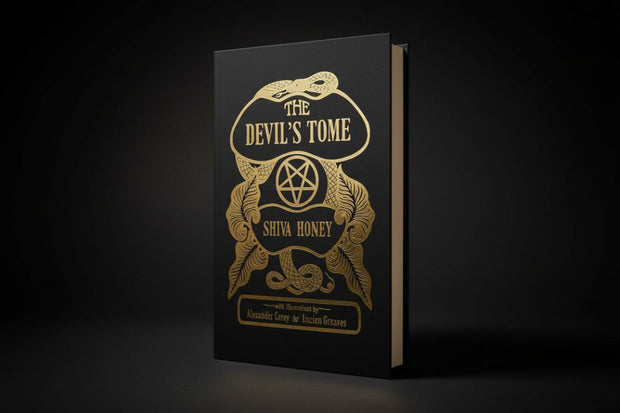
Readers who want to move from comparison into practice can use The Devil’s Tome as one modern Satanic ritual perspective, not as a universal definition of the Left-Hand Path.
Are the Two Paths a Spectrum?
Many practitioners combine ideas from both categories. Someone may value personal sovereignty while practicing devotion, or follow an established tradition while rejecting some of its inherited rules. The labels are most useful as analytical tools rather than rigid identities.
Common Misconceptions
“Right-Hand Path means good and Left-Hand Path means evil.”
No. The labels describe approaches to authority, identity, and spiritual goals rather than a simple moral ranking.
“Every practitioner must choose one side.”
No. Many traditions and individuals contain elements associated with both.
“Left-Hand Path means unrestricted behavior.”
No. Personal sovereignty still requires consent, accountability, legality, and responsibility for consequences.
Frequently Asked Questions
Where did the terms come from?
The modern Western occult use was influenced by interpretations of South Asian tantric terminology and later esoteric writers.
Is Wicca always Right-Hand Path?
It is often classified that way because of its devotional and ethical structures, but individual Wiccans may reject the label.
Can someone change paths?
Yes. A person’s philosophy and practice may change through study and experience.
Books for Further Study
If you want to continue beyond an online overview, browse Occult Studies Books for longer-form works on esotericism, religious history, Satanism, magic, symbolism, and related subjects. A book appearing in the collection does not make every author or interpretation authoritative; compare editions, sources, and scholarly context.
Related Reading
Tools for this practice
Explore the products selected for this guide. Review each listing for what is included and how to use it.
Shop this guide · 1 item Collapse
Keep exploring the shop
You made it to the end of the guide. Keep exploring through related products, major departments, or the full catalog.


Leave a comment