


A Liminal Ritual for Life Transitions: Separation, Threshold & Return

A liminal ritual for life transition should do three things: acknowledge what has ended, create a bounded interval for uncertainty, and mark a return to ordinary life with one practical next action. It cannot guarantee emotional closure or control the future, but it can give change a clear shape.
This source-first ritual follows the classic rite-of-passage pattern of separation, transition, and incorporation. Adapt the words to a move, graduation, career change, recovery milestone, relationship ending, retirement, identity change, or another transition that is actually yours to mark.
Before beginning: define the transition
Complete these sentences in plain language:
- The condition or role ending is…
- The new condition beginning is…
- What remains uncertain is…
- The practical action I can take next is…
If the “new condition” is not yet known, say so. Liminality often includes uncertainty. The rite does not need to invent certainty to be complete.
Simple materials
- Two pieces of paper or two pages in a ritual journal
- A pen
- A cord, removable strip of tape, doorway, or other safe line to cross
- A glass of drinking water
- Optional bell, candle, or ritual oil used according to its label
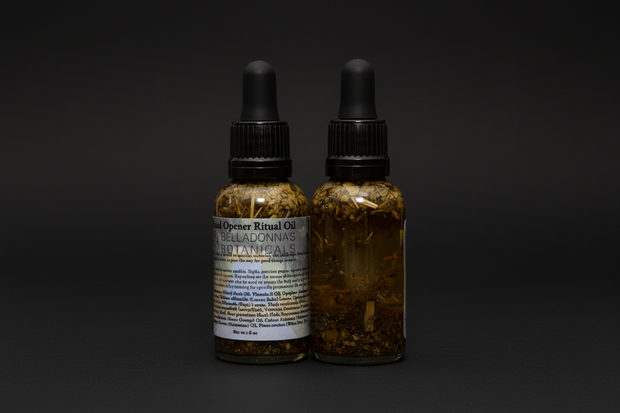
A Road Opener Ritual Oil is relevant when the transition concerns access, opportunity, or forward movement. Use it as a contemporary symbolic aid—for example, on a compatible ritual object or according to the product directions—not as a promise that a job, relationship, legal result, or financial outcome will appear.
Stage one: separation
- Place the cord or marker on the floor where nobody will trip.
- Stand on the side representing the earlier condition.
- On the first page, write three headings: What ended, What I learned, and What I will not carry forward.
- Read only what feels appropriate aloud. Silence is also valid.
- Fold the page and place it behind you. Do not burn it; keeping, recycling, shredding, or discarding it later are all sufficient.
Separation is acknowledgment, not erasure. A former home, role, relationship, or identity can remain meaningful even when its structure has ended.
Stage two: the liminal interval
Stand at the line without crossing it yet. Set a timer for three to ten minutes. During that bounded interval, consider:
- What is no longer true?
- What is not true yet?
- What choice belongs to me?
- What outcome does not belong to me?
- Who or what provides real support during the transition?
The point is not to summon an altered state. It is to tolerate the honest middle without rushing to a dramatic answer. If uncertainty becomes overwhelming, shorten the interval, sit down, drink water, and stop.
Stage three: crossing and incorporation
- On the second page, write: I am entering…, I choose to carry…, and Within 24 hours I will….
- Name one small action that can actually be completed: pack one box, update one document, make one appointment, send one application, change one routine, or ask one person for support.
- Cross the line slowly and safely.
- Ring a bell once, switch on a light, open a curtain, or speak a short closing sentence.
- Remove the line immediately. Drink the water and return the room to ordinary use.
If using a bell, our guide to ritual bells for opening and closing sacred space explains why a sound cue can create a clean procedural boundary. The ritual is not finished until ordinary space and activity have resumed.
Examples for different transitions
Moving house
Separate from the former home by naming what it held. Cross with a key or address card representing the new residence. Incorporate by completing one safety or settling task.
Graduation or career change
Separate from the old schedule and role. Cross with a written skill or value you intend to retain. Incorporate by updating a résumé, calendar, budget, or training plan.
Relationship ending
Focus on your own boundaries and choices, not controlling or psychically monitoring the other person. Incorporate with a practical act such as changing contact routines, retrieving property through safe channels, or reaching out to support.
Bereavement
Grief does not have a deadline and a rite does not “complete” it. A memorial can acknowledge changed relationship and continuing memory without demanding emotional resolution. Use cultural and family customs respectfully, and seek grief support when helpful.
When ritual is not enough
Ritual can accompany practical care; it does not replace it. Immediate danger, abuse, eviction, legal deadlines, severe financial problems, medical symptoms, or mental-health crises require appropriate real-world assistance. Use the ritual after safety steps, not instead of them.
Our broader guide to crafting Pagan rituals covers purpose, opening, sacred space, central work, gratitude, closing, and grounding. The present ritual is narrower: it organizes one specific change using the separation–transition–incorporation pattern.
Frequently asked questions
Must I cross a doorway?
No. A cord, strip of removable tape, two chairs, a change in lighting, or a sound cue can mark the transition. Avoid stairs, roads, open flame, and anything likely to cause a fall.
What if I do not feel different afterward?
The ritual records a decision or condition; it does not manufacture an emotion. Complete the practical action and let meaning develop without forcing catharsis.
Can I repeat the ritual?
Yes, if the transition has distinct stages or new information appears. Repetition should support action, not become a requirement you fear breaking.
Can another person witness it?
Yes. A trusted witness can acknowledge the transition and help with incorporation. Obtain consent, protect private information, and do not assign someone a new identity or status against their wishes.
What should I do with the written pages?
Keep them for reflection, seal them in an envelope, recycle them, or dispose of them normally. Burning, burying, or leaving paper outdoors is unnecessary.
Tools for this practice
Explore the products selected for this guide. Review each listing for what is included and how to use it.

Shop this guide · 2 items Collapse

Keep exploring the shop
You made it to the end of the guide. Keep exploring through related products, major departments, or the full catalog.
 RELATED TO THIS GUIDE
Ritual Supplies & Altar Tools
Shop this topic
RELATED TO THIS GUIDE
Ritual Supplies & Altar Tools
Shop this topic


Leave a comment