


How to Plan a Pagan Ritual: A Beginner Quick-Start Template

A Pagan ritual can be as simple as a few minutes of prayer and reflection or as detailed as a group ceremony with assigned roles, offerings, music, and formal sacred space. This quick-start guide gives beginners a complete structure without requiring every possible tool or tradition.
For a full ritual-writing manual covering sources, accessibility, transitions, interruption plans, group roles, aftercare, cleanup, and recordkeeping, use How to Write a Ritual From Beginning to End.
Begin with one purpose
Write the purpose in one sentence. A Pagan ritual may:
- honor a deity, ancestor, spirit, or place;
- mark a seasonal festival;
- celebrate a transition;
- create time for prayer or meditation;
- support a personal goal and related practical action;
- make an offering or express gratitude;
- perform divination within an established method.
Avoid combining every concern into one rite. A clear purpose makes the opening, central action, and closing easier to choose.
Name the tradition and context
Before copying a circle, quarter call, invocation, offering, or divine name, ask whether it belongs to the path you are practicing. Pagan religions do not all use the same ritual structure.
- Is the ritual Wiccan, reconstructionist, devotional, eclectic, or personal?
- Is it solitary or shared?
- Who or what is being addressed?
- Which practices require community authority or initiation?
- What has been adapted for modern life?
Label a personal modern ritual honestly rather than presenting it as an inherited ancient rite.
A seven-part beginner structure
1. Prepare yourself and the space
Choose a stable location, gather only the needed supplies, remove hazards and distractions, and check fire, smoke, accessibility, privacy, weather, pets, and household consent.
2. Mark the transition
Wash your hands, ring a bell, change the lighting, take several comfortable breaths, or state that the ritual is beginning.
3. Open the sacred or ceremonial space
You may cast a circle, mark a boundary, light a candle, acknowledge the place, or simply speak the purpose. Use only what belongs to your method.
4. Welcome deities, spirits, ancestors, or elements
This step is optional. Use a prayer, reading, song, offering, or silence appropriate to the tradition. Do not include beings merely because a generic template seems incomplete without them.
5. Perform the central action
The central work may be an offering, meditation, seasonal blessing, written petition, divination, vow, devotional reading, symbolic release, or act of creation.
6. Give thanks and close
Acknowledge anyone or anything addressed, release the circle or directions if the tradition requires it, extinguish flame, and state that the rite is complete.
7. Clean up, ground, and record
Cool and store materials, remove food, secure tools, ventilate smoke, drink water, eat if needed, and write one or two observations plus the practical next action.
What tools are actually needed?
A complete first ritual can use:
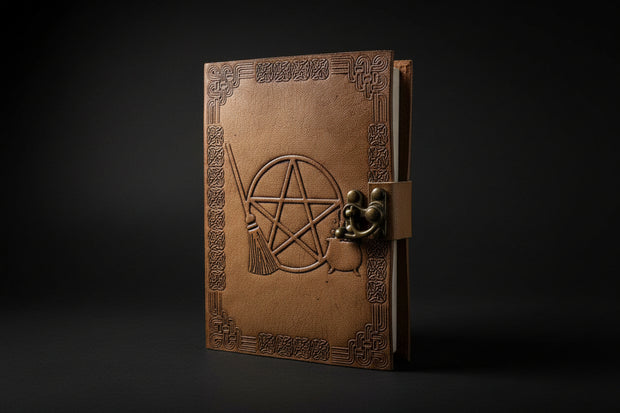
- a journal or printed script;
- a bowl of ordinary water;
- a candle in a stable holder or an LED light;
- one image, seasonal object, or meaningful symbol;
- an offering vessel when appropriate.
Wands, athames, bells, incense, cauldrons, altar cloths, and multiple correspondences are optional. Add a tool only when its function is clear.
A simple beginner Pagan ritual
- Place an LED light or supervised candle beside a bowl of clean water.
- Take three comfortable breaths.
- State the ritual’s purpose in one sentence.
- Read a short prayer, poem, devotional passage, or written intention.
- Spend several minutes in meditation, offering, or journaling.
- Express gratitude and state that the rite is complete.
- Extinguish the light, clean the area, and record one practical action.
Common beginner mistakes
- copying a Wiccan circle into every Pagan tradition;
- using tools with no defined purpose;
- adding too many intentions to one ritual;
- forgetting the closing, cleanup, or disposal plan;
- using unfamiliar languages or divine names only for atmosphere;
- treating strong emotion as the only sign that the rite was successful;
- allowing timing or correspondences to prevent the ritual from being completed safely.
Frequently asked questions
Do Pagan rituals require circle casting?
No. Circle casting is common in Wiccan and some magical traditions, but many Pagan religions use different forms of sacred space.
Can beginners write their own rituals?
Yes. A clear purpose, preparation, central action, closing, and cleanup are enough for a complete personal ritual.
How long should a ritual be?
Long enough to complete its purpose safely. A focused five-minute rite is better than an hour of unnecessary repetition.
What if the ritual is interrupted?
Safety comes first. Use a brief closing when possible and read What to Do When a Ritual Is Interrupted.
Continue building your practice
Tools for this practice
Explore the products selected for this guide. Review each listing for what is included and how to use it.

Shop this guide · 3 items Collapse


Keep exploring the shop
You made it to the end of the guide. Keep exploring through related products, major departments, or the full catalog.


Leave a comment