


The 19 Enochian Calls and 30 Aethyrs: Why the Numbers Do Not Match

Why do Enochian books mention nineteen Calls, thirty Aethyrs, and sometimes forty-eight Keys? Because they are counting different things. The system contains eighteen principal spoken texts plus one repeatable Call whose variable name can be changed for each of thirty Aethyrs. That produces nineteen distinct verbal forms but forty-eight applications in the older counting scheme.
The arithmetic is not an occult secret:
18 earlier Calls + 30 Aethyr versions of one shared Call = 48 Keys.
Modern publishers often count the repeatable Aethyr formula only once, giving nineteen Calls. Both numbers can therefore appear in source-conscious books, provided the author explains what is being counted.
Calls, Keys, Aethyrs, and Aires
| Term | Meaning in this context |
|---|---|
| Call or Key | An invocatory text recorded in Angelical with an English rendering |
| Nineteenth Call | The shared verbal form used for the thirty Aethyrs by changing the appropriate name |
| Aethyr or Aire | One of thirty named regions in the Enochian cosmological system |
| Forty-eight Keys | The first eighteen plus thirty named uses of the final formula |
| Nineteen Calls | The number of substantially distinct spoken texts commonly printed |
What do the first eighteen Calls do?
Later ceremonial summaries organize the early Calls around Spirit, elemental tablets, and their subdivisions. Exact numbering and terminology can differ by edition because some systems acknowledge a silent or divine Call that is not spoken. A chart that shifts every later number by one may be following a different convention rather than making a simple error.
That is why a beginner should compare the title, opening words, and stated source instead of relying only on “Key 1” or “Call 2.” Numbers are useful only after the edition explains whether it counts the unspoken opening.
What are the thirty Aethyrs?
The Aethyrs are thirty named “Aires” or regions associated with the terrestrial and visionary structure of the system. Their names are conventionally listed from LIL through TEX. In later practice they are often approached from the thirtieth toward the first, moving from the outer or more accessible region toward increasingly interior or exalted ones.
Descriptions of what an Aethyr “really is” belong to particular interpretations. Practitioners may describe planes, states of consciousness, spiritual regions, visionary environments, or hierarchical levels. The historical names and the later experiences reported about them should not be collapsed into a single objective map.
Why does one Call work for thirty Aethyrs?
The final formula contains a position where the name of the intended Aethyr is inserted. The surrounding language remains substantially the same. Counting each named version separately gives thirty Keys; counting the common verbal template once gives one nineteenth Call.
Aleister Crowley explained this nineteen-and-thirty structure in the introduction to The Vision and the Voice. That text is important to later Thelemic Enochian practice, but Crowley’s reported visions are his own twentieth-century reception, not part of Dee’s sixteenth-century diary.
Where does “forty-eight Calls” come from?
In the expanded enumeration, the thirty named versions of the Aethyr Call are treated as separate Keys. Add them to the eighteen earlier spoken Calls and the total is forty-eight. Some source-oriented writers retain that count because the angelic instructions spoke of a larger series associated with the tables of Liber Loagaeth.
The phrase “forty-eight entirely different Enochian incantations” is misleading. Thirty share the same essential language and differ through the Aethyr designation.
Is the nineteenth Call Satanic?
Not in origin. It belongs to the Christian angelic Dee–Kelley material. Anton LaVey later adapted nineteen Keys for the Book of Leviathan in The Satanic Bible. Our comparison of Enochian and Satanic Enochian explains what that later setting changes.
Should beginners recite the Calls?
Reading about a Call and performing it are different choices. A beginner can study the manuscript history, compare translations, learn the counting system, and examine pronunciation notes without conducting an invocation. There is no educational requirement to recite unfamiliar ritual language.
If you later choose practice, use one named edition and its complete framework. Do not combine a Dee-derived Angelical text, a LaVeyan English rendering, a Golden Dawn temple procedure, and an unsourced social-media pronunciation as though they formed one traditional method.
Frequently asked questions
Are there nineteen or forty-eight Enochian Keys?
There are nineteen substantially distinct spoken forms in the common presentation. Counting the thirty named variations of the final Aethyr Call separately produces forty-eight Keys.
Are there thirty different Aethyr Calls?
They use one shared formula with the relevant Aethyr name changed. They are thirty applications, not thirty wholly different texts.
Why do some books start with a “Key Zero”?
They are accounting for an unspoken or divine opening Call. This shifts numbering conventions without necessarily changing the later texts.
Is the first Aethyr the easiest?
Later practitioners generally work from the thirtieth toward the first and describe the lower-numbered Aethyrs as more exalted or demanding. That is a lineage-based ritual interpretation, not a measurable difficulty scale.
Did Crowley create the Aethyrs?
No. Their names and the shared Call predate him. Crowley’s Vision and the Voice records his own influential exploration and Thelemic interpretation.
Further reading
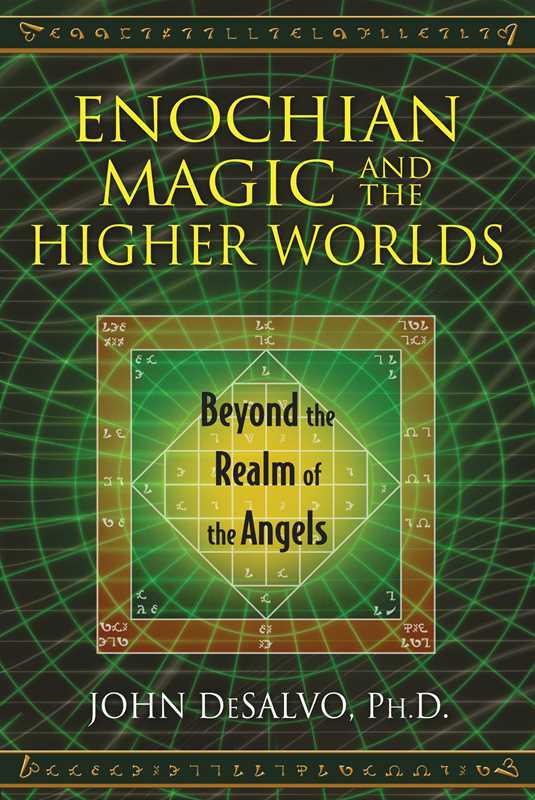
Enochian Magic and the Higher Worlds offers DeSalvo’s contemporary ascent model. Readers should treat its “higher worlds” and Power Magic structure as a modern authored interpretation and compare its counting conventions with the underlying Call-and-Aethyr distinction.
Once the counting method is visible, the apparent contradiction disappears: nineteen describes the distinct spoken forms, thirty describes the named Aethyrs, and forty-eight describes eighteen earlier Calls plus thirty uses of the final one.
Tools for this practice
Explore the products selected for this guide. Review each listing for what is included and how to use it.
Shop this guide · 1 item Collapse
Keep exploring the shop
You made it to the end of the guide. Keep exploring through related products, major departments, or the full catalog.


Leave a comment