


Ritual Roots Compared: Angelica, Orris, Burdock, Elecampane & More

Part 3 of the Ritual Botanical Field Guide.
Roots are often described with one word—grounding—but a root cabinet contains far more variety than that. Angelica, orris, burdock, elecampane, ginger, dandelion, marshmallow, comfrey, and vetiver come from different species and enter ritual practice through different histories. They should not be treated as interchangeable brown pieces in a jar.
Quick Root Comparison
| Root | Common ritual frame | Useful distinction |
|---|---|---|
| Angelica | Blessing, protection, spiritual authority | A boundary or guardian emphasis |
| Orris | Attraction, beauty, personal presence | Derived from iris rhizome; not angelica |
| Burdock | Tenacity, release, boundary clearing | Often framed through its clinging burrs and strong root |
| Elecampane | Spirit lore, love, protection, confidence | Folklore varies substantially by source |
| Ginger | Heat, momentum, speed, activation | More activating than stabilizing in many modern systems |
| Dandelion | Persistence, wishes, communication, resilience | Root and leaf are different products |
| Marshmallow | Gentleness, soothing symbolism, household peace | Physical softness often shapes modern symbolism |
| Comfrey | Travel, protection, holding things together | Ritual jar does not imply internal or body use |
| Vetiver | Grounding, attraction, protection, rooted presence | Often sold as fibrous or braided root |
These summaries describe common modern occult associations, not scientific effects or universal rules. Follow the tradition you are actually studying.
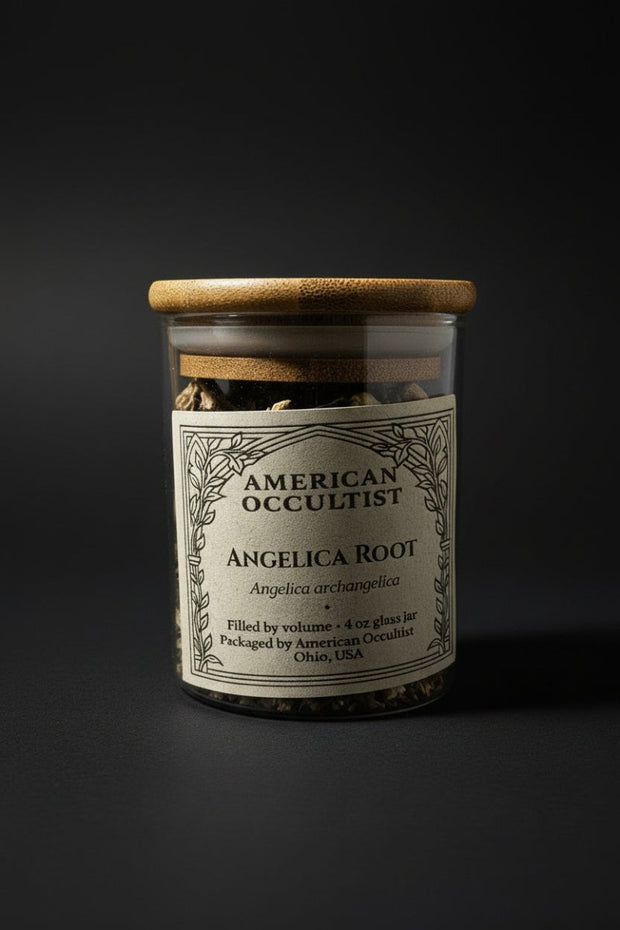
Angelica Root
Angelica Root is commonly positioned in European-derived and modern occult practice as a guardian, blessing, or protective botanical. Its “angelic” common name contributes to that symbolism, but a common name is not proof of a supernatural property.
Choose angelica when the working emphasizes boundaries, blessing, or a protective devotional frame. Keep it contained unless the product supplies another approved method.
Orris Root
Orris Root comes from iris rhizomes and has a long material history in fragrance and perfumery as well as later occult associations. Modern magical sources often frame it around attraction, personal presence, beauty, or love.
Orris is not another name for angelica. If the intention is protection, angelica may be the more direct retail category; if it concerns attraction or presentation, orris may be the closer symbolic match.
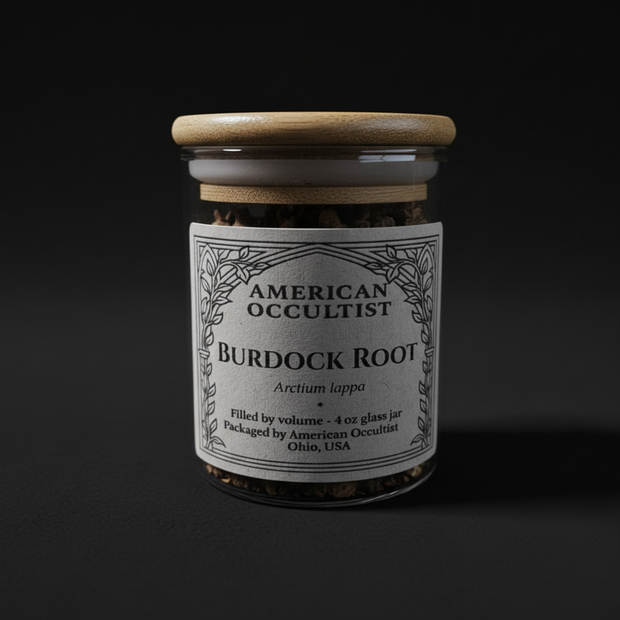
Burdock Root
Burdock Root — Arctium lappa is associated in some folk and modern systems with tenacity, release, protection, and clearing what clings. The familiar burr influences much of its symbolic language, while the root suggests endurance.
Elecampane Root
Elecampane Root appears in varied European folklore and modern magical correspondence lists. Depending on the source, it may be connected with love, protection, spirit work, confidence, or folklore concerning elves. Because the associations are broad, record the source you are following rather than combining all meanings.
Ginger Root
Ginger Root — Zingiber officinale is often framed as warming, quickening, or activating. It fits workings concerned with momentum more naturally than practices centered on quiet containment.
A ritual jar is not automatically a culinary product. Use kitchen ginger for food and a ritual jar for the non-food symbolic method stated on its label.
Dandelion Root
Dandelion Root is frequently associated with persistence, wishes, survival, and communication. Dandelion leaf is stocked separately and should be recorded as a different plant part. Do not substitute one for the other without a source that explains why.
Marshmallow and Comfrey Roots
Marshmallow Root is often given gentle, peaceful, or softening symbolism in modern practice. Comfrey Root is commonly linked with travel protection, stability, or symbolic mending. Those ritual associations are not instructions for medical or cosmetic use.
Keep both products out of drinks, baths, salves, food, and pet areas unless the exact product is manufactured and labeled for that route—which ritual jars generally are not.
Vetiver Root
Braided Vetiver Root is physically distinct from the small cut pieces found in many herb jars. Modern ritual uses commonly emphasize grounding, attraction, boundaries, and a strong sense of place. Its braided form also makes it suitable as a contained altar object without scattering loose material.
Ways to Use Roots Without Burning Them
- Keep the labeled jar beside a written intention.
- Place one contained piece in a sealed charm packet.
- Display a braided or whole root as a symbolic object.
- Trace or draw the root shape in a journal.
- Use the botanical name as the focus of a study or meditation.
Hard roots can spark, char unevenly, or produce irritating smoke. Do not burn them unless sold with explicit incense directions.
Frequently Asked Questions
Are angelica and orris root interchangeable?
No. They come from different plants and carry different material histories and common ritual associations.
Is orris root actually a root?
The commercial material commonly called orris root is prepared from the rhizome of certain iris species. “Root” remains the established trade name.
Can dandelion leaf replace dandelion root?
Not automatically. They are different plant parts and may be assigned different roles.
Can ritual roots be brewed or eaten?
Do not consume a ritual-use product. Purchase an appropriately identified food product and seek individual health guidance when ingestion is involved.
Which root should a beginner choose?
Choose one tied to a clearly defined intention and a source you trust. Angelica for a protection frame, orris for attraction symbolism, ginger for momentum, or vetiver for grounded presence are more coherent than buying every root.
Next in the series: Ritual Barks and Woods.
Tools for this practice
Explore the products selected for this guide. Review each listing for what is included and how to use it.

Shop this guide · 3 items Collapse


Keep exploring the shop
You made it to the end of the guide. Keep exploring through related products, major departments, or the full catalog.
 RELATED TO THIS GUIDE
Ritual Herbs
Shop this topic
RELATED TO THIS GUIDE
Ritual Herbs
Shop this topic


Leave a comment