


Roots vs. Barks vs. Leaves vs. Flowers: Why Plant Part Matters

Part 1 of the Ritual Botanical Field Guide.
A plant name alone does not identify a ritual material. A jar may contain roots, bark, leaves, flowers, seeds, berries, fruit peel, or wood—and those parts differ physically, historically, and symbolically. Dandelion leaf is not the same product as dandelion root. Sassafras root bark is not interchangeable with an unspecified piece of wood. Jasmine flowers should not be treated as jasmine tea simply because both carry the word “jasmine.”
This guide explains why plant part matters and introduces the rest of our botanical series. It does not assign one universal magical meaning to every root or flower. Correspondences vary by culture, lineage, region, author, and individual practice.
The Main Plant-Part Categories
| Plant part | Physical role | Common symbolic logic | Handling question |
|---|---|---|---|
| Root | Anchors the plant and stores or transports resources | Foundation, endurance, ancestry, drawing from below | Is it whole, cut, shredded, or powdered? |
| Bark or wood | Protects or supports woody growth | Boundaries, durability, structure, protection | Is the material bark, inner bark, root bark, or wood? |
| Leaf or aerial herb | Supports photosynthesis, exchange, and above-ground growth | Movement, communication, breath, active expression | Does the jar contain leaves only or mixed aerial parts? |
| Flower | Supports reproduction and attracts pollinators | Visibility, invitation, expression, beauty, transition | Is it a whole flower, blossom, or loose petals? |
| Seed | Contains the potential for new growth | Beginnings, multiplication, plans, future possibility | Can small seeds spill, roll, or attract pests? |
| Berry, fruit, or peel | Protects or disperses seeds and stores plant resources | Completion, abundance, sweetness, boundaries, return | Is it preserved for ritual display rather than food use? |
These are interpretive patterns, not laws of nature. The physical role of a root can inspire symbolic language about foundation, but botany does not scientifically prove a magical correspondence.
Roots: Foundation Is Not One Intention
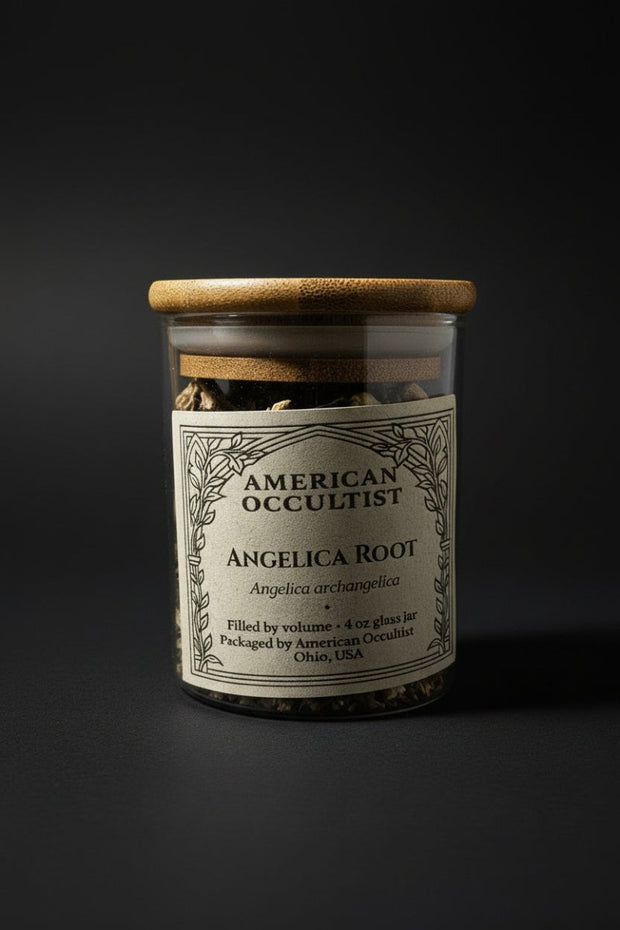
Roots are frequently grouped together as grounding materials, yet individual roots carry very different histories. Angelica Root, orris, burdock, elecampane, ginger, dandelion, marshmallow, comfrey, and vetiver should not be treated as substitutes merely because they all grew below ground.
The botanical identity, tradition, and stated purpose of the product matter more than a generic “root equals grounding” formula. Our ritual-roots comparison separates the major stocked roots by symbolic role and physical form.
Bark and Wood: Protection, Structure, and Specific Species
Bark is the protective outer tissue of woody plants; wood is structural tissue beneath it. Retail names are not always precise, so read the full label. Birch Bark, white willow bark, wild cherry bark, sassafras root bark, and red sandalwood are five different materials from different species.
Do not assume that “tree material” is safe to burn. Bark can spark or smolder, and a ritual jar may contain fine particles or material not prepared as incense. The barks-and-woods guide covers those distinctions.
Leaves and Aerial Herbs: The Broadest Category
“Herb” often refers loosely to dried leaves, but an aerial herb can include stems, flowers, and other above-ground parts. Nettle Leaf, vervain, hyssop, lemon balm, eucalyptus, motherwort, horehound, skullcap, chickweed, raspberry leaf, bilberry leaf, and dandelion leaf do not share one universal ritual purpose.
Leaves are lightweight and can become airborne. Keeping them in a closed jar, sealed packet, or contained offering bowl is often more practical than scattering or burning. Our lesser-known ritual leaves article focuses on products not already central to our beginner herb guide.
Flowers: More Than Color Correspondences
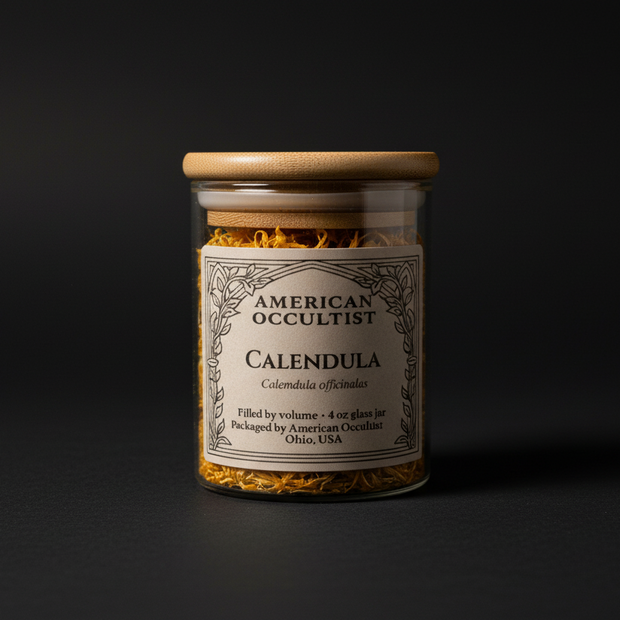
Flowers are often reduced to color charts—red for passion, white for purification, yellow for success—but color is only one possible layer. Species, cultural history, scent, blooming season, shape, and the part sold all matter. Calendula is not interchangeable with any other orange flower.
Dried blossoms are fragile, and some are dyed, fragranced, or processed for display rather than body use. The uncommon ritual flowers guide compares stocked flowers beyond the rose-and-lavender basics.
Seeds, Berries, Peels, and Spices
These materials are sometimes placed together in jars even though they come from different plant structures. A Fennel Seed is physically and symbolically different from a rosehip, elderberry, orange peel, or star anise fruit. Whole spices can also be hard, sharp, rolling, or attractive to pantry pests.
Our seeds, berries, peels, and spices guide covers this varied group without repeating the common kitchen spices already discussed in our spice-rack article.
Can One Plant Part Substitute for Another?
Not automatically. Leaf and root from the same species can differ in chemistry, texture, history, harvesting, and symbolic use. A recipe that names a plant part should be read literally until a reliable source from the same tradition explains otherwise.
When substitution is necessary, first ask what role the material serves. Is it present for species-specific history, plant-part symbolism, color, scent, texture, or simply as a visual token? A written name, drawing, photograph, or empty labeled jar may be more honest than silently substituting a different substance.
Choosing a Botanical Without Buying Everything
- Name the intention. Use a concrete phrase rather than “general magic.”
- Identify the tradition or source. Different sources may assign conflicting meanings.
- Confirm species and plant part. Read the botanical name when provided.
- Choose a safe method. Closed jars and packets work when smoke, skin contact, or scattering is unsuitable.
- Buy the narrowest relevant material. A clear practice does not require a sixty-jar cabinet.
For handling methods, consult How to Use Herbs in Witchcraft Safely. For research notes, use our Materia Magica guide.
Frequently Asked Questions
Does the plant part change a magical correspondence?
It can change the symbolism and traditional use, but there is no universal rule. Follow sources from the practice you are studying and record the exact species and part.
Is bark the same as wood?
No. They are different tissues. Retail labels may use loose language, so verify what the product actually contains.
Can leaf replace root from the same plant?
Not by default. Treat them as different ingredients unless a reliable tradition-specific source supports the substitution.
Are flowers safer than roots or bark?
No plant-part category is automatically safe. Species, preparation, contamination, allergies, dose, and handling method matter.
Do ritual botanicals need to be burned?
No. Closed jars, sealed packets, written labels, photographs, and nearby symbolic placement avoid smoke and airborne particles.
Ritual Botanical Field Guide
Tools for this practice
Explore the products selected for this guide. Review each listing for what is included and how to use it.


Shop this guide · 4 items Collapse


Keep exploring the shop
You made it to the end of the guide. Keep exploring through related products, major departments, or the full catalog.
 RELATED TO THIS GUIDE
Ritual Herbs
Shop this topic
RELATED TO THIS GUIDE
Ritual Herbs
Shop this topic


Leave a comment