


Visitation Dreams or Grief Dreams? A Grounded Guide to Dreams of the Dead

Dreams of deceased loved ones can feel unusually vivid, coherent, and emotionally powerful. Some people understand them as visitations. Others see them as grief dreams shaped by memory, attachment, and the sleeping mind. A grounded approach does not require you to mock either interpretation—or to declare certainty where certainty is impossible.
This guide offers a framework for reflection. It does not attempt to prove or disprove spiritual contact. The goal is to help you interpret the experience without allowing fear, wishful thinking, or outside pressure to make the decision for you.
What Is a Visitation Dream?
“Visitation dream” is a spiritual or cultural label for a dream in which a deceased person seems to appear with unusual clarity or purpose. People commonly describe direct conversation, a calm presence, a short message, physical warmth, a sense of recognition, or an emotional shift after waking.
Those features may be meaningful, but none of them alone proves external contact. Vividness can also occur in ordinary dreaming, lucid dreaming, bereavement, trauma processing, and the transition between sleep and waking.
What Is a Grief Dream?
A grief dream is a dream influenced by loss, memory, longing, conflict, or adaptation after someone dies. It may be comforting, distressing, confusing, or mundane. You might relive a hospital room, argue with the person, see them healthy again, or simply perform an everyday task together.
Calling a dream grief-related does not make it “just meaningless.” Dreams can help the mind revisit a relationship, express unfinished emotion, and integrate a changed reality. Psychological meaning and spiritual meaning do not have to be treated as enemies.
Common Features People Associate With Visitations
- The deceased person appears healthy, recognizable, or more peaceful than near the end of life.
- The dream is shorter and less chaotic than surrounding dreams.
- Communication feels direct, even when few words are spoken.
- The dream leaves a durable sense of comfort, closure, or urgency.
- The dreamer remembers it in unusual detail.
- The experience feels different from their normal dream pattern.
Use these as observation points, not a checklist that forces a supernatural conclusion.
A Grounded Discernment Test
1. Record Before Interpreting
Write the dream down immediately. Separate what happened from what you think it meant. Note the setting, words, emotions, sensory details, and what occurred before sleep.
2. Check the Context
Were you recently looking at photographs, discussing the person, approaching an anniversary, sleeping poorly, taking a new medication, or experiencing intense stress? Context does not invalidate the dream. It helps you understand what may have shaped it.
3. Evaluate the Message
Does the message encourage care, reconciliation, remembrance, or a practical action that is safe? Or does it demand secrecy, money, danger, punishment, or total obedience? A frightening dream should not be treated as an unquestionable command.
4. Look for Independent Information Carefully
Sometimes people believe a dream contained information they did not consciously know. Before treating that as proof, write down the exact detail and verify it without changing the memory to fit what you later discover. Human memory is reconstructive, especially after emotional experiences.
5. Allow Uncertainty
“I do not know exactly what this was, but it mattered to me” is a valid conclusion. Discernment is not a contest to produce certainty.
Signs That Interpretation Is Becoming Unhealthy
- You are afraid to sleep because every dream feels like a warning.
- You make major financial, medical, legal, or relationship decisions solely from dreams.
- You repeatedly pay readers to confirm the same message.
- You believe the deceased is threatening you unless you perform escalating rituals.
- You cannot tolerate any interpretation except literal contact.
- The dreams intensify grief to the point that daily functioning is deteriorating.
In these cases, pause interpretation and speak with a qualified mental-health or grief professional. Seeking support does not betray the person who died or deny your spiritual beliefs.
How to Respond Without Claiming Certainty
You can honor the experience in ways that are emotionally and physically safe:
- Write a letter to the deceased.
- Light a candle safely or use an LED candle.
- Place a photograph or meaningful object on a remembrance altar.
- Donate, cook, garden, or volunteer in their memory.
- Speak the message aloud and decide which part is useful.
- Record the dream and revisit it after several weeks.
Dreams, Signs, and Pattern Recognition
After an intense dream, it is easy to interpret every song, number, bird, or coincidence as confirmation. Use the same patience described in our guide, Is It a Sign, Synchronicity, or Coincidence? A meaningful experience does not need an endless chain of proof.
Can You Invite a Deceased Loved One Into a Dream?
You can create a gentle remembrance practice before sleep, but you cannot guarantee a particular dream. Set a photograph nearby, write a question, recall a peaceful memory, and state that only calm and welcome experiences are invited. Then release the expectation. Trying too hard can increase insomnia and disappointment.
Avoid sleep deprivation, intoxicants, or unsafe substances in an attempt to force contact. The quality of your sleep and health matters more than producing an extraordinary experience.
What About Nightmares Involving the Dead?
A nightmare may reflect trauma, guilt, fear, unresolved conflict, or ordinary dream distortion. It is not automatically a threat, curse, or prediction. Ground yourself after waking, write down what occurred, and ask what emotion the dream amplified. If nightmares are frequent, traumatic, or disruptive, seek professional support.
Frequently Asked Questions
Why did the dream feel more real than normal life?
Dreams can carry strong sensory and emotional intensity, especially during grief, lucid dreaming, and sleep-wake transitions. Intensity describes the experience; it does not by itself establish its source.
What if the person said goodbye?
You may receive it as a meaningful moment of closure without needing to prove whether it came from memory, psyche, spirit, or some combination of meanings.
What if I never dream about the person?
Absence of a remembered dream does not mean the relationship was less important or that the deceased is angry. Many people rarely remember dreams.
Should I ask a psychic to verify it?
You may choose a reading, but do not surrender your judgment. Avoid anyone who uses the dream to frighten you, claims a curse, or demands repeated payments to “release” the deceased.
Meaning Without Forced Certainty
A dream can be psychologically significant, spiritually meaningful, both, or neither. Record it accurately, examine it patiently, and keep the interpretation proportionate. The most grounded question is often not “Can I prove who sent this?” but “What healthy meaning can I carry forward?”
Gentle Remembrance Supplies
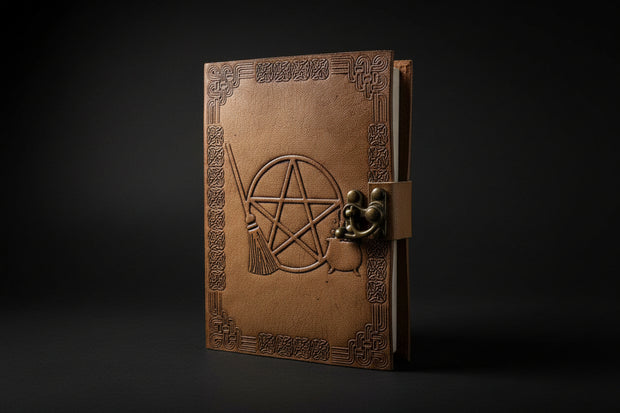
For a simple memorial space, explore our Altar Supplies and Candles collection. These items can support remembrance and journaling; they do not prove contact with the deceased or replace grief counseling when support is needed.
Tools for this practice
Explore the products selected for this guide. Review each listing for what is included and how to use it.


Shop this guide · 3 items Collapse


Keep exploring the shop
You made it to the end of the guide. Keep exploring through related products, major departments, or the full catalog.
 RELATED TO THIS GUIDE
Ritual Supplies & Altar Tools
Shop this topic
RELATED TO THIS GUIDE
Ritual Supplies & Altar Tools
Shop this topic


Leave a comment