


Is It a Sign, Synchronicity, or Coincidence? A Guide to Spiritual Discernment

A repeated number appears after you ask for guidance. A bird crosses your path three days in a row. A song answers the exact question you were thinking about. Is it a sign, a synchronicity, an omen, intuition—or simply a coincidence that became meaningful because you noticed it?
Spiritual discernment does not require you to dismiss every unusual pattern. It also does not require you to treat every pattern as an instruction. The goal is to stay open without surrendering judgment.
Four Different Things People Call a “Sign”
- Coincidence: Events occur together without evidence that one caused or intentionally communicated through the other.
- Synchronicity: A personally meaningful coincidence that feels connected even when no physical cause is apparent.
- Traditional omen: A sign interpreted through a specific cultural, religious, folkloric, or divinatory system.
- Personal sign: A symbol you have defined through experience, prayer, ritual, or a prior agreement within your practice.
These categories can overlap, but they should not be treated as identical. A crow in one tradition may carry a different meaning in another. A song associated with your grandmother may be personally significant without becoming a universal omen for everyone who hears it.
The First Question: Did You Define the Sign Before It Happened?
A pre-defined sign is easier to evaluate than a symbol interpreted after the fact. Compare:
- “Show me anything unusual if I should accept the offer.”
- “Within the next seven days, let me encounter a naturally occurring image of a red key in a context connected to this decision.”
The second request is more specific, but even specificity does not create certainty. It simply reduces the number of events that can be retrofitted into an answer.
Before asking for a sign, write down:
- the exact question;
- the symbol or event;
- the time window;
- what would count and what would not;
- what low-risk action you would take afterward.
The Four-Filter Discernment Test
1. Specificity
How narrowly does the event match what was asked? “I saw a number” is broad. “The same uncommon phrase appeared independently in three relevant places” is more specific.
2. Repetition
Did the pattern repeat across genuinely independent contexts, or did one source influence the others? Seeing the same topic repeatedly after searching for it online may reflect algorithms rather than an external message.
3. Relevance
Does the event relate directly to the question, or are you stretching the interpretation because you want an answer? Relevance should be explainable in one or two clear sentences.
4. Actionability
Does the interpretation suggest a reasonable next step, or only create urgency, fear, or grandiosity? Useful guidance usually supports observation, preparation, conversation, or a reversible experiment. It rarely demands immediate high-stakes action without evidence.
A Fifth Filter: Your Emotional State
Fear, grief, infatuation, sleep loss, isolation, and loss of control can all intensify pattern-seeking. That does not make your experience meaningless. It means you should slow the interpretation process.
Research on illusory pattern perception has found that reduced feelings of control can increase the tendency to detect meaningful relationships in random or unrelated information. This is one reason grounding and outside perspective belong inside spiritual discernment rather than outside it.
Use grounding and centering before deciding what an emotionally charged pattern means.
The Sign Journal Method
| Record | What to write |
|---|---|
| Question | The exact question you asked, without rewriting it later. |
| Requested sign | The symbol, phrase, event, or condition defined in advance. |
| Time window | When the request began and ended. |
| Observation | What happened in plain language before interpreting it. |
| Ordinary explanations | Algorithms, recent exposure, local frequency, memory, recommendation systems, or chance. |
| Possible spiritual interpretation | One or more meanings, including uncertainty. |
| Action | A low-risk next step. |
| Outcome | What happened after a week, month, or relevant period. |
The outcome column is crucial. Without it, a journal becomes a collection of striking moments rather than a record that can improve your discernment.
Use a Traffic-Light Rule for Decisions
Green: Low stakes
It is generally safe to let a meaningful coincidence inspire journaling, art, prayer, a walk, a harmless ritual, further research, or a small reversible experiment.
Yellow: Medium stakes
For choices involving money, relationships, employment, travel, or significant commitments, treat the sign as one data point. Verify facts, ask questions, compare options, and allow time.
Red: High stakes
Do not rely on signs alone for medical treatment, mental-health crises, legal decisions, personal safety, major financial risk, or claims that another person is secretly communicating, targeting, or destined for you. Use qualified professional help and direct evidence.
Intuition Versus Anxiety
There is no perfect sensation-based test, but the following contrast can help:
| Intuitive impression often feels like | Anxiety often feels like |
|---|---|
| Brief, simple, and specific | Repetitive, escalating, and difficult to satisfy |
| Compatible with waiting and checking | Demanding immediate certainty or action |
| Open to being wrong | Threatened by alternative explanations |
| Connected to one next step | Generating endless interpretation |
| Grounded in the present | Driven by catastrophic future scenarios |
This is not a diagnostic tool. Intuition can be wrong, and anxiety can point toward a real problem. The practical test is whether the impression survives rest, evidence, and outside perspective.
Can Tarot or Divination Confirm a Sign?
Divination can help you explore meaning, but it cannot transform uncertainty into objective proof. Repeatedly pulling cards until you receive the answer you want usually increases confusion.
A better approach is to ask structured questions:
- What am I overlooking?
- What assumption am I making?
- What practical factor needs attention?
- What happens if I wait?
- What boundary would protect me while I learn more?
Review Divination for Beginners for methods that use recordkeeping and bias reduction.
When a Sign Becomes a Fear Loop
Pause the practice when you feel compelled to:
- scan constantly for numbers, animals, songs, or hidden messages;
- repeat divination until the anxiety stops;
- avoid ordinary responsibilities because of an omen;
- believe neutral events are personally directed at you;
- spend beyond your means to “fix” a spiritual warning;
- isolate from people who question the interpretation.
Ground, stop asking for signs temporarily, reduce divination, sleep, eat, reconnect with trusted people, and seek professional support when distress or functioning is affected. The guide When Protection Becomes Fear applies to omen and sign practices as well.
A Responsible Way to Respond to a Possible Sign
- Write the observation before interpreting it.
- List at least two ordinary explanations.
- List at least two possible symbolic meanings.
- Wait through one sleep cycle when the choice is not urgent.
- Choose a reversible, evidence-friendly action.
- Review the outcome later.
You do not lose spiritual openness by checking your interpretation. Discernment is the practice that keeps openness usable.
Frequently Asked Questions
Are repeating numbers always signs?
No. Repeating numbers are common in clocks, receipts, addresses, and digital systems, and attention makes them easier to notice. They may still become a useful personal prompt, but repetition alone does not prove a message.
What if I asked for a sign and immediately received one?
Record it, check how specifically it matched, consider recent exposure and probability, and avoid making a high-stakes decision from timing alone. Immediate experiences can feel powerful without being conclusive.
Can a sign be negative?
Some traditions interpret warnings and unfavorable omens, but a responsible interpretation should point toward observation, caution, preparation, or a boundary—not panic or harmful action.
How many times must something repeat before it counts?
There is no universal number. Independence, specificity, relevance, and outcome matter more than an arbitrary count.
Can I ask for a different sign if the first one is unclear?
You can, but repeatedly changing criteria can make almost anything count. First review whether the question is answerable through direct evidence, conversation, research, or waiting.
Final Principle: Meaning Is Not the Same as Command
A coincidence can be meaningful without being supernatural. A synchronicity can inspire reflection without dictating your future. An omen can belong to a tradition without removing your responsibility to evaluate evidence. Stay open, write it down, check the pattern, and let important decisions rest on more than one mysterious moment.
Research note: Studies on control and illusory pattern perception and pattern perception in supernatural belief help explain why discernment practices should include grounding, alternative explanations, and outcome tracking.
Tools for Structured Discernment
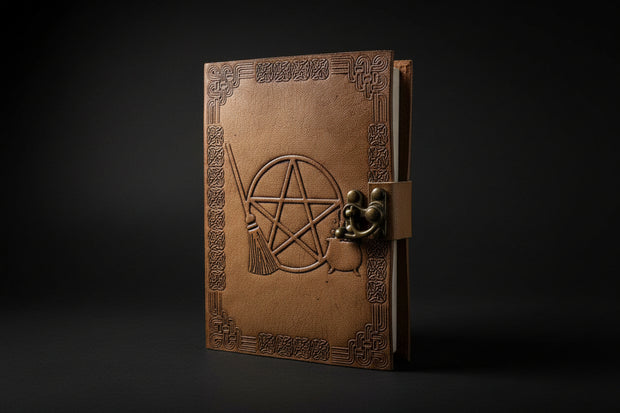
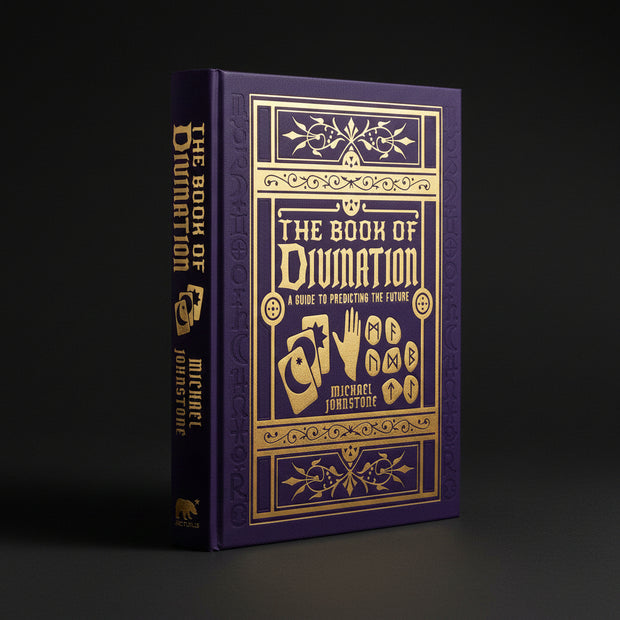
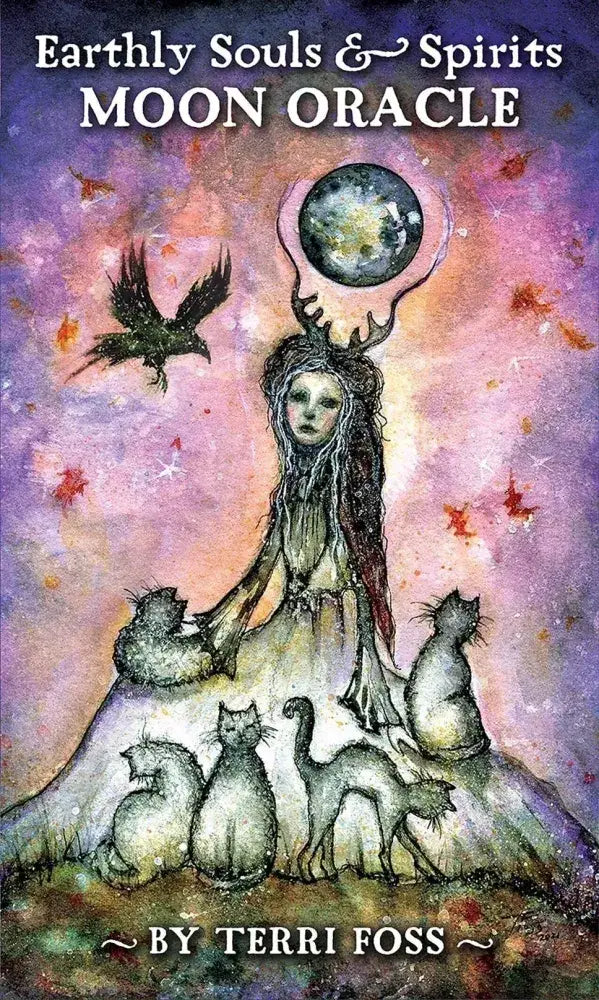
For readers who want to record patterns without turning them into commands, explore the Book of Divination and our Divination Tools collection. These tools support reflection and recordkeeping; they do not convert coincidence into proof or replace direct evidence.
Tools for this practice
Explore the products selected for this guide. Review each listing for what is included and how to use it.
Shop this guide · 3 items Collapse


Keep exploring the shop
You made it to the end of the guide. Keep exploring through related products, major departments, or the full catalog.
 RELATED TO THIS GUIDE
Ritual Supplies & Altar Tools
Shop this topic
RELATED TO THIS GUIDE
Ritual Supplies & Altar Tools
Shop this topic


Leave a comment