


Sand, Salt, Ash, or Pebbles: What Goes Under Incense Charcoal?

The material beneath an incense charcoal disc is not decorative filler. It may stabilize the tablet, create distance from the bottom of the vessel, catch ash, and reduce direct heat transfer. The correct choice depends on the burner's design. A bowl burner may need a dry insulating bed, while a purpose-built charcoal screen may need no filler at all.
The Short Answer
Clean, completely dry sand is the most straightforward general-purpose base for a heat-safe bowl when its manufacturer permits it. Clean ash is another traditional option. Coarse salt can work in some vessels but may attract moisture or contribute to corrosion. Random stones and crystals are the least predictable choice because some crack, pop, discolor, or conduct heat unexpectedly.
If the burner has a metal charcoal screen, follow its directions rather than covering the screen with filler.
Sand Under Incense Charcoal
Dry sand creates a level bed, catches ash, and separates the glowing tablet from the bottom of the vessel. Add enough to hold the disc securely and create the insulation called for by the burner's instructions; there is no universal fill depth for every bowl.
Use clean sand reserved for incense work. Damp sand can release steam when heated. Sand contaminated with wax, oil, perfume, plant matter, or unknown residue should not be placed under charcoal.
The Silver Ritual Sand can be used as a dry burner base when the vessel manufacturer permits sand.
Ash Under Incense Charcoal
Fine ash has a long history as an incense-bed material because it supports a tablet while allowing the surface to remain exposed. Use only clean, dry, fully cold ash from known untreated aromatic material. Do not use ash from a grill, fireplace, painted wood, pressure-treated lumber, trash fire, or material that may contain chemicals.
Repeated use can mix melted resin and debris into the ash. Replace the bed when it becomes oily, clumped, strongly scented, or difficult to level.
Salt Under Incense Charcoal
Dry coarse salt is sometimes used as a noncombustible bed, but it is not the best choice for every burner. Salt attracts moisture from the air and can contribute to corrosion in some metals. Fine salt can also compact tightly around a disc.
Use salt only when the burner maker permits it, keep it completely dry, and remove it after the vessel has cooled. Do not assume a food-safe bowl is automatically suitable for direct charcoal heat.
Pebbles, Gravel, and Stones
Only use stones sold or specified as heat-safe burner media. Random river stones, decorative glass, porous pebbles, and crystals may hold moisture, fracture under thermal stress, or transfer heat directly to the vessel. Gemstone meaning does not establish heat safety.
Do not place a favorite crystal beneath a charcoal tablet. Many minerals can crack, change color, release inclusions, or become too hot to handle.
When Nothing Goes Under the Disc
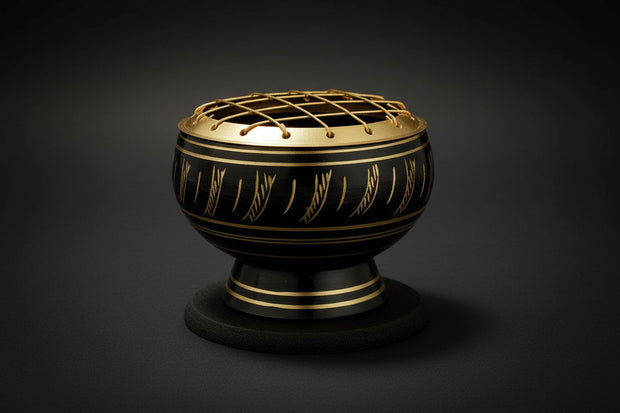
Some charcoal burners use a removable metal mesh or perforated plate that supports the disc and provides airflow. The Black Brass Incense Burner with Charcoal Screen is one example. Filling or covering that screen could defeat the feature it was designed to provide.
What Should Go Beneath the Burner?
The material inside the vessel does not make the outside cool. Metal and ceramic burners can become hot enough to damage wood, cloth, plastic, finishes, and heat-sensitive glass. Place the entire burner on a stable, noncombustible trivet or tile rated for heat. Keep it off altar cloths and away from edges.
A purpose-designed burner and heat-safe support are the first decisions. The resin incense equipment collection shows charcoal discs, tongs and burners; verify the maker's heat instructions for each vessel.
How to Prepare a Sand or Ash Bed
- Confirm that the vessel is made and labeled for incense charcoal.
- Make sure the vessel and base material are completely dry.
- Add a level layer sufficient to stabilize and insulate according to the burner's instructions.
- Set the charcoal on top rather than burying it.
- Keep the depression facing upward when the tablet maker specifies that orientation.
- Let the disc, media, and vessel cool completely before cleaning.
For the full ignition method, see How to Use Charcoal Discs for Resin Incense.
Frequently Asked Questions
How much sand should I put in an incense burner?
Use enough to create the stable insulating bed specified by the burner manufacturer. A shallow metal bowl and a deep ceramic censer do not require the same amount.
Can I use table salt?
Coarse dry salt may be permitted in some vessels, but table salt compacts easily and salt may encourage corrosion. Dry sand or the burner's purpose-built screen is usually easier to manage.
Can I use cat litter?
No. Cat litter may contain fragrance, binders, dust-control chemicals, or minerals not intended for high heat.
Can I use rice?
No. Rice and other foods are combustible and are not heat-insulating media for glowing charcoal.
Can I reuse burner sand?
Yes, if it remains dry and free of melted resin, oil, and combustible debris. Replace it when it clumps or becomes contaminated.
Compare Burners and Incense Supplies
Browse the Incense collection for current burners, charcoal accessories, resins, and related supplies. Match the heat setup to the manufacturer’s instructions for the specific vessel.
Related Reading
Tools for this practice
Explore the products selected for this guide. Review each listing for what is included and how to use it.
Shop this guide · 1 item Collapse

Keep exploring the shop
You made it to the end of the guide. Keep exploring through related products, major departments, or the full catalog.
 RELATED TO THIS GUIDE
Ritual Supplies & Altar Tools
Shop this topic
RELATED TO THIS GUIDE
Ritual Supplies & Altar Tools
Shop this topic


Leave a comment