


What Is an Altar Broom? How to Use a Besom for Cleansing, Protection, and Ritual

An altar broom may look like a miniature household broom, but its purpose is usually symbolic rather than domestic. In many forms of modern witchcraft, folk practice, and Pagan ritual, the broom—often called a besom—is used to prepare sacred space, move stagnant energy, reinforce boundaries, and mark the transition from ordinary activity into intentional ritual.
The tool does not need to be elaborate, antique, or made from a particular wood to be useful. A well-chosen altar broom should fit the space where it will be used, feel comfortable in the hand, and support a clear ritual purpose. This guide explains what an altar broom is, how it differs from a household broom, and how to work with one without turning a simple tool into unnecessary superstition.
What Is an Altar Broom?
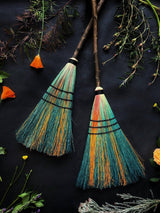
An altar broom is a small ritual broom kept near an altar, shrine, hearth, doorway, or other working space. It may be made from natural twigs, grasses, fibers, wood, cord, charms, stones, or decorative symbols. Some are only a few inches long and are intended for an altar surface. Others are hand-broom size and can be used around doorways, rooms, or ritual circles.
The word besom traditionally refers to a broom made by binding twigs or brush around a handle. In contemporary witchcraft, the word is often used more broadly for a broom reserved for spiritual or ritual work.
There is no universal rule that every witch must own one. An altar broom is useful when its symbolism and function support the practitioner’s method. It is not a requirement for witchcraft, and simply displaying one does not make a space spiritually protected.
Altar Broom Versus Household Broom
A household broom removes physical dirt. An altar broom is generally used to represent the removal of unwanted influence, emotional residue, disorder, or ritual remnants. Some practitioners let the bristles lightly touch the floor or altar. Others sweep a few inches above the surface to emphasize that the action is symbolic.
Keeping the tools separate can help preserve ritual focus. A broom used to clean spilled wax, dust, pet hair, or kitchen debris may still be physically useful, but it no longer carries the same clear association as a tool reserved for sacred-space preparation.
A practical division is simple:
- Household broom: physical cleaning and ordinary maintenance.
- Altar broom: ritual preparation, symbolic cleansing, boundary work, and intentional closure.
Physical cleaning should come first. Ritual sweeping is not a substitute for removing dust, spoiled offerings, ash, wax, or clutter.
How an Altar Broom Is Used in Witchcraft
Preparing an Altar Before Ritual
After physically cleaning the altar, move the broom slowly across or just above the surface. The purpose is to signal that previous work is complete and that the space is being prepared for a new intention. This can be done silently or with a brief statement such as, “This space is cleared and made ready.”
For a broader overview of altar tools and their roles, read Tools of the Craft: 10 Essential Pagan Altar Tools and Supplies.
Clearing a Room or Working Area
A hand-sized besom can be moved through a room in deliberate strokes, usually guiding the symbolic debris toward an exit. Some practitioners begin at the farthest point of the room and work toward the main door. Others begin at the center and move outward. The exact direction is less important than choosing a method and using it consistently.
Open a door or window when practical so the ritual has a clear point of release. The action may be paired with sound, prayer, incense, or another cleansing method, but more tools do not automatically produce a stronger result. Use only what supports the work.
Threshold and Doorway Work
Doorways represent entry, exit, permission, and control. A broom can be used to sweep the threshold before placing a ward, protective symbol, salt line, charm, or spoken boundary. The sweeping removes the symbolic remnants of earlier work and creates a clean foundation for the new boundary.
For a deeper treatment of doorways and household boundaries, read Threshold Magic and Boundary Wards in Folk Practice.
Opening a Ritual Circle
In traditions that use a ritual circle, the besom may be carried around the perimeter before the circle is formally established. This is a preparatory act, not necessarily the act that creates the circle itself. The broom marks the area as distinct and clears distraction before invocation, spellwork, meditation, or devotional practice begins.
Closing and Resetting the Space
An altar broom is equally useful after ritual. Sweep away scattered herbs, extinguished-match remnants, or other physical debris only after everything is fully cool and safe to handle. Then make a final symbolic pass to mark the work as closed.
This can be especially helpful after emotionally intense divination, protection work, shadow work, spirit work, or conflict-related spellcraft. The closing action creates a deliberate endpoint instead of leaving the practitioner psychologically suspended in the ritual.
How to Choose the Right Altar Broom
Choose the Size by Function
A tiny broom is ideal for an altar, shelf, travel kit, or reading table. A medium hand broom works better for doorways and small rooms. A full-size besom makes sense when the broom will be used around a large ritual area or kept near a hearth or entrance.
Do not buy the largest broom simply because it appears more dramatic. A tool that is awkward in the intended space is less likely to be used.
Examine the Bristles and Binding
Bristles should be secure enough to withstand gentle sweeping. Natural twigs and grasses create a traditional appearance but may shed over time. Tampico and similar fibers tend to be tidy and practical for altar surfaces. Decorative brooms with stones, charms, ribbons, horns, or sculptural handles may be better suited to light ritual movement and display than repeated physical sweeping.
Select Symbols Deliberately
A pentacle, triquetra, goddess figure, Tree of Life, moon, dragon, crystal, or protective eye changes the symbolic emphasis of the broom. Choose a symbol because it belongs in the practice—not merely because it looks occult.
- Tree of Life: rootedness, connection, growth, and continuity.
- Triquetra: interconnection, cycles, or threefold symbolism.
- Pentacle: elemental balance, protection, or ritual identity.
- Goddess imagery: devotion, sacred embodiment, fertility symbolism, or divine feminine traditions.
- Gemstones: an added symbolic correspondence based on the stone selected.
A charm does not replace the practitioner’s intention or the actual work of maintaining a boundary.
Decide Whether It Is a Working Tool or Display Piece
Some brooms are built for use. Others are ornate ritual art. Both are valid, but the distinction matters. A heavily decorated broom may catch on altar cloths, shed delicate materials, or be difficult to clean. A plain broom may be more dependable for frequent practice.
A Simple Altar-Broom Cleansing Method
- Physically clean the altar or room first.
- Open a door or window when appropriate.
- Stand quietly and name what is being cleared: distraction, residue, conflict, or the remnants of previous work.
- Sweep slowly toward the selected point of release.
- Keep the motion controlled. There is no need for violent or frantic sweeping.
- At the doorway, pause and state that the unwanted influence has left the working space.
- Close the door or window and establish the desired boundary, blessing, or intention.
For spaces where smoke is safe and appropriate, the broom can be paired with the methods described in How to Use Incense in Witchcraft. Smoke should never be treated as mandatory, especially around respiratory conditions, sensitive animals, children, or restricted housing.
How to Dedicate an Altar Broom
Dedication does not require a complex consecration. The purpose is to establish what the tool will be used for and what it will not be used for.
- Inspect the broom and remove any loose packaging, dust, or debris.
- Clean it according to its materials. Avoid soaking wood, glued charms, natural fibers, leather, or stones unless the maker confirms that water is safe.
- Hold the broom and state its purpose clearly.
- Pass it through a safe cleansing method such as sound, breath, prayer, moonlight, or a small amount of appropriate smoke.
- Use it immediately for a brief altar or threshold cleansing.
- Store it in its designated place.
A simple dedication may be: “This broom is set apart for the cleansing and protection of my working space. It carries away what does not belong and prepares the way for deliberate work.”
Where to Keep an Altar Broom
Store the broom where its purpose makes sense. A miniature broom may rest beside the altar, hang above it, or remain in a ritual-tool box. A threshold broom may hang near the main entrance. A travel broom should be protected from crushing and loose bristles.
Avoid placing the bristles directly against candle flames, incense ash, heaters, damp walls, or surfaces where oils can stain them. Do not hang a heavy broom by fragile decorative cord unless the cord is designed to support its weight.
Can an Altar Broom Be Used for Protection?
Yes, but its protective role is usually preparatory and symbolic. A broom can clear the threshold, define a boundary, and reinforce the rule that unwanted influence is not welcome. It does not replace locks, alarms, medical care, legal action, or other practical safety measures.
Some practitioners place a small broom above or beside a door as a household protection symbol. Others position the bristles upward to retain blessing or downward to direct unwanted influence away. These customs vary by tradition; there is no single position that is universally correct.
Common Altar-Broom Mistakes
- Skipping physical cleaning: spiritual symbolism works better in a maintained space.
- Using the broom without a defined endpoint: decide where the symbolic debris is being directed.
- Treating every decoration as an automatic correspondence: research symbols and materials before assigning meaning.
- Using delicate brooms too aggressively: ornate pieces may be intended for light ritual motion.
- Leaving loose bristles near flame: natural fibers can ignite.
- Assuming a broom creates permanent protection: boundaries require practical maintenance and repeated reinforcement.
- Copying directional rules without understanding them: methods differ between traditions, regions, and individual practices.
Choosing an Altar Broom from The American Occultist
The right broom depends on how it will be used. For compact altar work, consider the Mini Tampico Altar Broom. For symbolic designs, explore the Tree of Life Altar Broom, Triquetra Altar Broom, or Goddess Charm Altar Broom.
For broader hand-sweeping and threshold work, the Black Streaked Hand Brooms provide a larger working surface, while the Big Boss Witch Besom Broom offers a more substantial ritual presence.
Browse the complete Besom Brooms collection to compare altar-sized, hand-sized, decorative, and full-size options in one place.
Choose the broom that fits the work, establish its purpose, and put it into practice. A ritual tool gains meaning through deliberate, repeated use—not through appearance alone.
Frequently Asked Questions
Does an altar broom have to touch the floor?
No. Some practitioners sweep lightly across the surface, while others keep the bristles above it. Both methods can be used intentionally.
Can I make my own besom?
Yes. A handmade broom can be created from safe, legally gathered materials and securely bound fibers. Make sure the plants are correctly identified, free from mold or pests, and appropriate for indoor handling.
Can I use the same broom for physical and spiritual cleaning?
You can, but many practitioners keep them separate to preserve a clear ritual association and avoid bringing physical dirt onto an altar.
Is a besom only a Wiccan tool?
No. Broom symbolism appears in multiple folk, Pagan, and witchcraft contexts. Its exact meaning and use depend on the tradition.
Should the broom be stored bristles up or down?
There is no universal requirement. Choose a position based on the broom’s construction, your tradition, and whether the bristles need protection from bending.
Tools for this practice
Explore the products selected for this guide. Review each listing for what is included and how to use it.


Shop this guide · 2 items Collapse

Keep exploring the shop
You made it to the end of the guide. Keep exploring through related products, major departments, or the full catalog.


Leave a comment