


Are There Bad Astrology Placements? Difficult Aspects, Fear, and Constructive Interpretation

Astrology discussions often describe certain placements as cursed, doomed, toxic, unlucky, or proof that someone will fail in love, money, family, or mental health. This language is dramatic, memorable, and usually misleading.
Astrology is an interpretive spiritual and cultural system, not a scientifically proven diagnostic or predictive method. A chart can be used as a framework for reflection, but it should not be used to condemn a person, excuse abuse, or treat hardship as unavoidable.
What People Usually Mean by a “Bad Placement”
The phrase may refer to several different ideas:
- A planet in a sign where traditional astrology considers it weakened or uncomfortable.
- A square, opposition, or difficult conjunction.
- A planet in the sixth, eighth, or twelfth house.
- Saturn, Mars, or Pluto strongly placed.
- A feared degree, retrograde planet, intercepted sign, or lunar node.
- A placement associated online with trauma, betrayal, poverty, or conflict.
These categories are not interchangeable, and none should be interpreted without the rest of the chart.
Dignity Does Not Mean Moral Worth
Traditional astrology uses terms such as domicile, exaltation, detriment, and fall to describe how comfortably a planet expresses its nature in a sign. These are technical relationships, not grades for the person.
A planet in detriment or fall is not “evil.” It may operate indirectly, require adaptation, conflict with the sign’s style, or become especially noticeable. Context matters: house position, aspects, reception, sect, condition of the ruler, and the chart as a whole can change the interpretation.
Even astrologers who use dignity do not all weigh it in the same way.
Hard Aspects Are Not Life Sentences
Squares and oppositions describe tension, competing needs, or pressure that demands awareness. They can correlate symbolically with struggle, but they can also describe motivation, endurance, skill-building, and productive conflict.
For example:
- Mercury square Saturn may be interpreted through self-doubt, careful speech, disciplined study, or fear of being misunderstood.
- Venus opposite Pluto may raise themes of intensity, attachment, power, honesty, and transformation in relationships.
- Mars square Uranus may symbolize impatience, independence, sudden action, ingenuity, or difficulty tolerating restriction.
The same configuration can be lived differently depending on family, culture, opportunity, health, age, choices, and support.
Easy Aspects Are Not Automatically Beneficial
Trines and sextiles are commonly described as harmonious, but ease is not the same as wisdom. A trine may show a talent that is underused, an assumption that goes unchallenged, or a pattern that operates so smoothly the person barely notices it.
A chart filled with flowing aspects is not guaranteed an easy life. A chart filled with hard aspects is not doomed to misery. Astrology cannot measure the full reality of privilege, adversity, discrimination, illness, resources, or personal agency.
Why Certain Houses Frighten Beginners
The Sixth House
Often associated with work, service, illness, routine, and maintenance. It can describe daily responsibilities, practical skill, labor conditions, and the systems that keep life functioning.
The Eighth House
Associated with shared resources, debt, inheritance, vulnerability, intimacy, crisis, and transformation. It does not automatically predict death or catastrophe.
The Twelfth House
Associated with retreat, isolation, hidden processes, surrender, institutions, and the unconscious. It can be challenging, but it is not proof of madness, imprisonment, enemies, or spiritual attack.
House meanings are symbolic fields, not guaranteed events.
Saturn, Mars, and Pluto Without Fear
Some planets describe experiences that are difficult to romanticize:
- Saturn: limits, fear, delay, discipline, accountability, endurance, and mastery.
- Mars: conflict, anger, cutting, assertion, desire, effort, and courage.
- Pluto: compulsion, power, loss, secrecy, extremity, and regeneration.
These themes can become destructive, constructive, or mixed. A responsible reading asks how the energy is handled rather than declaring what must happen.
A Better Method for Reading Difficult Placements
- Name the symbolism neutrally. Replace “terrible love life” with “relationships may involve themes of caution, intensity, or delayed trust.”
- Read the whole configuration. Include the planet, sign, house, aspects, ruler, and repeated chart themes.
- Offer a range. Describe lower, ordinary, and more developed expressions.
- Separate pattern from event. A symbolic tendency is not a promised occurrence.
- Preserve choice. Identify habits, supports, and skills that can change how the symbolism is lived.
- Do not diagnose. A chart cannot establish trauma, mental illness, abuse, infertility, addiction, or medical conditions.
- Check the evidence. Do not force a client’s life to match an interpretation.
Example: Reframing a Difficult Placement
Fear-based version: “Saturn in the seventh house means you will marry late or be alone.”
Constructive version: “Saturn in the seventh may place emphasis on responsibility, boundaries, caution, commitment, or fear within partnership. Some people take relationships seriously from a young age; others develop trust slowly. The condition of Saturn, the seventh-house ruler, Venus, and the rest of the chart all matter.”
The second version still acknowledges difficulty without pretending to know the person’s fate.
Astrology Should Not Excuse Harm
“I am a Scorpio,” “my Mars made me do it,” or “we are karmically bound” does not excuse manipulation, violence, stalking, dishonesty, or boundary violations. Synastry does not create consent. A supposedly destined connection is not more important than safety.
Likewise, do not remain in a harmful situation because an astrologer says suffering is part of a transit or soul contract.
When an Astrology Reading Becomes Irresponsible
Be cautious when a reader:
- Predicts death, assault, disease, miscarriage, or disaster as certain.
- Claims only an expensive remedy can neutralize a placement.
- Uses fear to create repeat appointments.
- Diagnoses mental or physical illness from a chart.
- Declares someone inherently evil or incapable of change.
- Discourages medical, legal, financial, or mental-health support.
Fear-based spiritual sales tactics overlap with broader patterns covered in Fake Psychics and Spiritual Scams.
How to Study Your Own Difficult Placements
Choose one configuration and keep a three-column journal:
- Traditional meanings: what established sources say.
- Observed patterns: what is actually present in your life.
- Constructive responses: boundaries, skills, conversations, or habits that help.
Review the notes over time. This prevents one emotional moment from becoming proof of an entire astrological theory.
For the basic structure needed to interpret any placement in context, begin with How to Read a Birth Chart for Beginners.
Frequently Asked Questions
Is there any placement that guarantees a bad life?
No. No single placement can account for an entire life, and astrology has not been scientifically established as a deterministic forecasting system.
Does Saturn always delay marriage?
No. Saturn can symbolize seriousness, fear, responsibility, boundaries, endurance, or delay, but the outcome depends on the wider chart and lived circumstances.
Are retrograde natal planets damaged?
Not automatically. Many astrologers interpret retrograde planets as internalized, revised, nonlinear, or differently expressed rather than broken.
Can a chart prove someone is abusive or narcissistic?
No. Astrology cannot diagnose personality disorders or prove behavior. Evaluate people through their actions and respect for boundaries.
Can difficult placements become strengths?
They can symbolize areas where effort, adaptation, accountability, and experience create substantial skill. That possibility should not romanticize real suffering, but it prevents difficulty from being mistaken for doom.
Final Perspective
A chart may contain tension, contradiction, vulnerability, and struggle. That is not the same as a curse. Responsible astrology interprets complexity without removing dignity or choice. The goal is not to make every symbol cheerful; it is to speak about difficulty accurately enough that a person can still act.
Study Astrology Without Fear
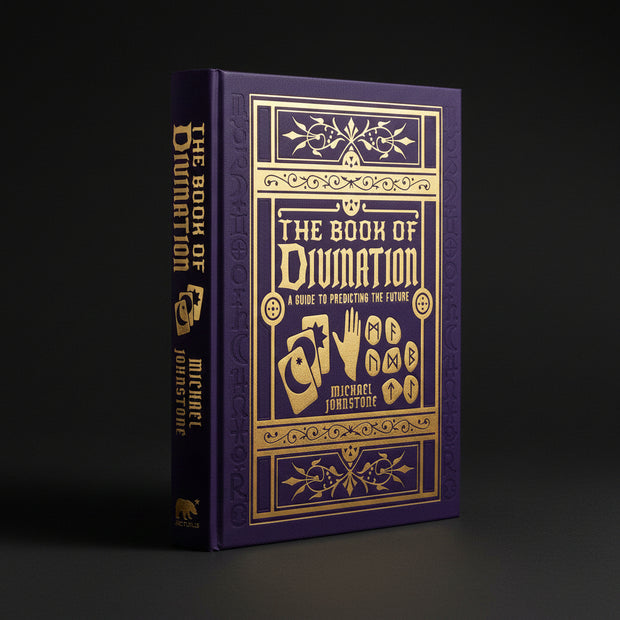
Use the Book of Divination and our Divination Tools collection for comparative study and recordkeeping. No product, chart, or paid remedy is required to “neutralize” a placement, and astrology should never be used to diagnose or condemn a person.
Tools for this practice
Explore the products selected for this guide. Review each listing for what is included and how to use it.
Shop this guide · 1 item Collapse

Keep exploring the shop
You made it to the end of the guide. Keep exploring through related products, major departments, or the full catalog.


Leave a comment