


Best Incense for Satanic Ritual: Traditional Resins & Modern Blends

Incense used in Satanic ritual may support atmosphere, sensory focus, devotional offering, symbolic transition, or psychodramatic intensity. No resin or fragrance is universally required, and the strongest choice depends on the ritual’s purpose, ventilation, and the people and animals sharing the space.
Traditional Resins Used in Ritual
Myrrh
Myrrh has a bitter, resinous scent associated historically with temple offerings, funerary practice, purification, and solemn ceremony. Modern Satanic practitioners may use it for gravity, contemplation, boundary work, or devotional atmosphere.
Frankincense
Frankincense has a long religious history across several cultures. In modern ritual, it may symbolize consecration, elevation, attention, or the deliberate creation of sacred space.
Copal
Copal refers to several plant resins with important Mesoamerican ritual histories. Modern practitioners should acknowledge that context rather than treating copal as a generic “occult ingredient.” Its bright scent is often used for offering, meditation, and altar preparation.
Dragon’s Blood
Dragon’s blood is a red plant resin obtained from several species. It is widely used in contemporary occult blends for color, intensity, protection symbolism, and dramatic atmosphere.
Other Aromatic Materials
Cinnamon, clove, cedar, patchouli, and other materials appear in modern blends, but their safety and cultural associations vary. Concentrated powders and oils should not be placed directly on hot charcoal or open flame without appropriate knowledge and equipment.
Building a Balanced Ritual Incense Blend
A coherent blend usually has a clear aromatic structure rather than as many ingredients as possible:
- Base: A dominant resin such as myrrh or frankincense
- Accent: A smaller amount of dragon’s blood, copal, or another contrasting resin
- Theme: One material chosen for the ritual’s emotional or devotional purpose
- Restraint: Enough space between notes for the blend to remain recognizable
Test a very small amount before committing to a full ritual. Dense smoke is not evidence of greater spiritual effectiveness.
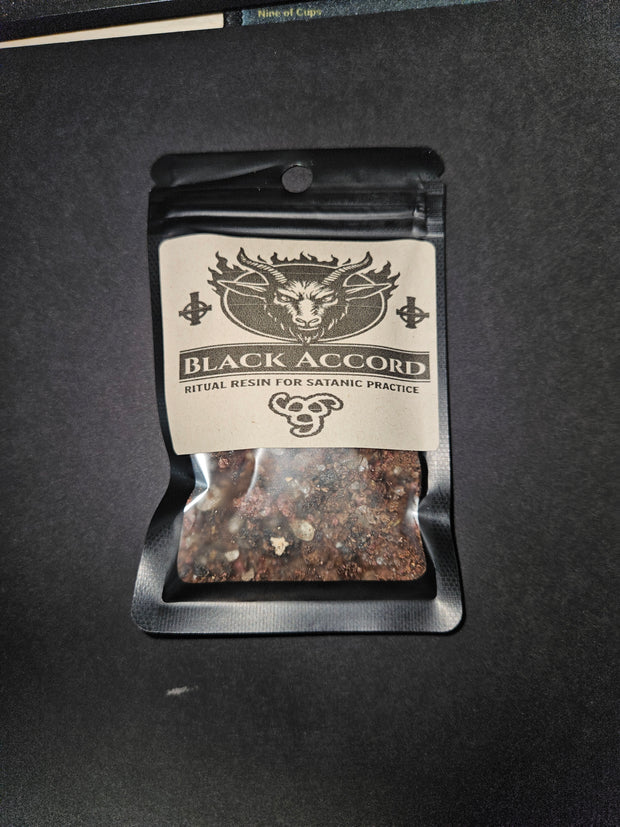
Black Accord Ritual Resin Blend
Black Accord combines black myrrh, dragon’s blood, copal, and a restrained cinnamon note. Its resin-forward profile is designed for a darker ceremonial atmosphere rather than a sweet perfume effect.
It may be used for:
- Invocation or devotional ritual
- Symbolic inversion
- Altar preparation
- Focused meditation
- Psychodramatic or identity-based ceremony
How to Choose Incense for a Satanic Ritual
- Define the ritual. Is it devotional, reflective, celebratory, adversarial, or focused on release?
- Choose the desired atmosphere. Myrrh feels heavier; copal and frankincense can feel brighter; dragon’s blood adds intensity.
- Consider the room. Small spaces require less material and better ventilation.
- Check sensitivities. Avoid smoke around asthma, migraines, respiratory illness, birds, and smoke-sensitive pets.
- Use a smoke-free alternative when needed. A candle, bell, music, fragrance-free ritual, or visual symbol can perform the same structural role.
Resin, Stick, Cone, or Loose Blend?
- Loose resin: Strong aroma and flexible blending, but requires suitable charcoal and a heat-safe burner.
- Sticks: Convenient and predictable, though fragrance quality varies.
- Cones: Compact and often produce concentrated smoke.
- Electric resin warmers: Reduce open-flame risk and can produce less smoke than charcoal.
- Smoke-free ritual: Appropriate whenever health, lease rules, pets, or ventilation make incense unsuitable.
Incense and Charcoal Safety
- Use a stable heat-resistant burner on a clear nonflammable surface.
- Charcoal discs become extremely hot and remain hot after they stop glowing.
- Use tongs and allow ash and charcoal to cool completely before disposal.
- Never leave incense, charcoal, candles, or burners unattended.
- Ventilate the room and use the smallest amount needed.
- Keep smoke and hot equipment away from children, pets, curtains, books, and shelves.
- Do not inhale directly over the burner.
Frequently Asked Questions
What incense is best for Satanic ritual?
Myrrh, frankincense, copal, and dragon’s blood are common choices, but the best option depends on ritual purpose, fragrance preference, and safety.
Is resin incense more authentic than sticks?
Resins have long ritual histories, but authenticity depends on cultural context and practice rather than the physical form alone.
Does a ritual require smoke?
No. Bells, music, candles, LED lights, spoken invocation, and visual symbols can create ritual transition without smoke.
Related Reading
Tools for this practice
Explore the products selected for this guide. Review each listing for what is included and how to use it.
Shop this guide · 1 item Collapse

Keep exploring the shop
You made it to the end of the guide. Keep exploring through related products, major departments, or the full catalog.
 RELATED TO THIS GUIDE
Candles & Incense
Shop this topic
RELATED TO THIS GUIDE
Candles & Incense
Shop this topic


Leave a comment