


Crystal Jewelry Care: Water, Sunlight, Sweat, Metal Settings, and Safe Storage

Crystal jewelry combines several materials that may need different care: a stone, metal setting, elastic cord, wire, adhesive, plating, coating, bead finish, or chain. A cleaning method that is safe for quartz may still damage glue, tarnish silver, strip plating, or weaken elastic.
When the exact stone or construction is unknown, use the gentlest method: a dry soft cloth, minimal handling, and separate storage.
Start with the whole piece, not only the stone
| Component | Common vulnerability |
|---|---|
| Elastic cord | Heat, oils, stretching, chlorine, and repeated soaking. |
| Plated metal | Abrasion, sweat, perfume, cleaners, and polishing compounds. |
| Sterling silver | Tarnish, chlorine, sulfur, and harsh dips. |
| Copper or brass | Patina, skin oils, moisture, and chemical cleaners. |
| Adhesive-set stones | Water, heat, solvents, and ultrasonic vibration. |
| Dyed or coated stones | Fading, scratching, solvents, and prolonged sun. |
| Porous or soft stones | Water absorption, scratching, acids, and cleaners. |
Is water safe?
Do not assume every crystal can be soaked. Calcite, selenite or gypsum, halite, malachite, turquoise, lapis lazuli, opal, pearl, amber, and many treated or composite materials require caution for different reasons. Even water-tolerant quartz may be mounted with water-sensitive glue or strung on elastic.
For routine care, wipe the jewelry with a barely damp cloth only when you know the materials permit it, then dry immediately. Avoid soaking unless the maker’s care instructions explicitly approve it.
Never use saltwater as a default cleansing method. Salt can corrode metal, abrade polished surfaces, collect in settings, and pull moisture into porous materials.
Sunlight and heat
Prolonged direct sunlight can fade some stones, dyed beads, resins, and coatings. Amethyst, rose quartz, fluorite, kunzite, and many colored materials are often kept away from strong extended sunlight. Heat can also weaken adhesives and elastic.
Store jewelry in a cool, dry place rather than on a sunny windowsill or in a hot vehicle. A brief period of normal wear outdoors is different from days of concentrated display in direct sun.
Sweat, lotion, perfume, and household chemicals
Remove crystal jewelry before swimming, bathing, cleaning, exercising heavily, or applying perfume, hairspray, lotion, sunscreen, and essential oils. Chlorine and cleaning agents may harm metals, cords, coatings, and stones. Sweat can accelerate tarnish and collect around settings.
Use the rule “last on, first off”: put jewelry on after cosmetics and fragrance, then remove it before changing clothes, washing, or sleeping.
How to clean safely
- Identify the stone, metal, cord, and any visible coating or adhesive.
- Photograph the piece before cleaning so changes are easier to notice.
- Wipe it with a clean, dry microfiber cloth.
- Use a soft dry brush for crevices if the setting is secure.
- If permitted, use a cloth lightly dampened with plain water and dry immediately.
- Stop if color transfers, plating changes, a stone moves, or cord fibers appear.
- For valuable or delicate jewelry, use a jeweler experienced with the specific materials.
Avoid ultrasonic and steam cleaners unless a qualified jeweler confirms that every component can tolerate them.
Bracelets on elastic cord
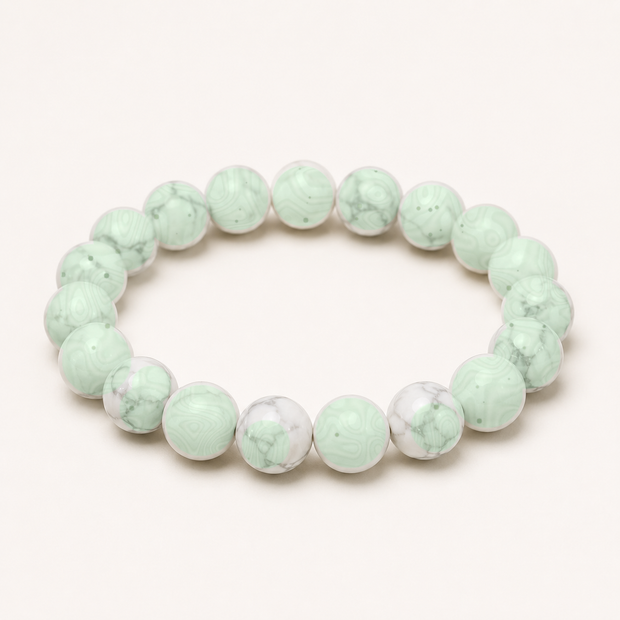
- Roll the bracelet over the hand instead of pulling it wide.
- Keep it away from oils, solvents, chlorine, and heat.
- Do not hang it under tension.
- Inspect for whitening, fraying, looseness, or exposed knots.
- Restring before the cord fails, especially on heavy beads.
See How to Choose a Crystal Bracelet for bead size, fit, cord, and wear considerations.
Safe storage
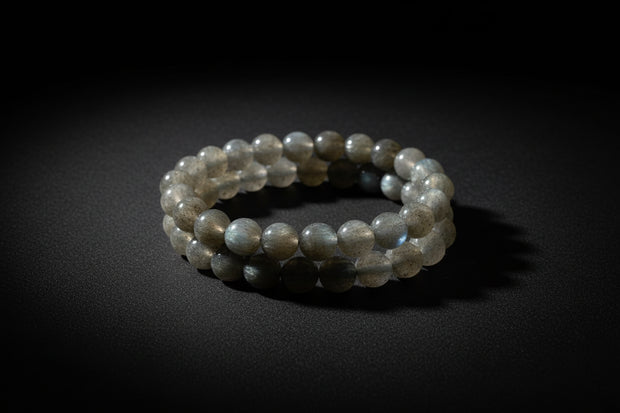
Store pieces separately so harder stones and metal edges do not scratch softer materials. Use fabric pouches, lined compartments, or acid-free tissue. Close chains before storing to reduce tangles. Keep elastic bracelets flat and relaxed.
Anti-tarnish strips can help with silver and some metals, but do not let chemical products touch porous stones without confirming compatibility. Keep jewelry away from bathrooms, basements, and other humid areas.
Spiritual cleansing without material damage
Many popular crystal-cleansing methods are risky for jewelry. Instead of water, salt, smoke, oils, or direct sunlight, consider sound, prayer, visualization, breath, a written intention, or placing the piece beside—not under—a smooth stable object.
Our guide to cleansing and charging crystals safely explains why the mineral and the setting both matter.
When to stop wearing a piece
Stop if a setting is loose, wire has a sharp end, beads are cracked, a coating flakes, metal causes a rash, or elastic shows wear. Skin irritation can come from nickel, copper, cleaners, fragrances, or trapped moisture. Remove the item and seek medical advice for a significant reaction.
Browse crystals and stones while checking each product’s material and care information.
Frequently asked questions
Can I shower with a crystal bracelet?
It is safer to remove it. Water, soap, heat, and repeated stretching shorten the life of elastic and may damage treatments or metals.
Can I sleep in crystal jewelry?
Removing it reduces snagging, broken cords, bent settings, and skin irritation.
Can I polish every stone?
No. Abrasive cloths and compounds may scratch soft stones or strip coatings and plating.
How often should I clean it?
Wipe after wear when needed and perform deeper cleaning only according to the identified materials.
What if I do not know the stone?
Use a dry cloth and separate storage until a qualified seller, jeweler, mineralogist, or gemologist can help identify it.
Tools for this practice
Explore the products selected for this guide. Review each listing for what is included and how to use it.
Shop this guide · 2 items Collapse

Keep exploring the shop
You made it to the end of the guide. Keep exploring through related products, major departments, or the full catalog.
 RELATED TO THIS GUIDE
Occult Jewelry & Symbolic Adornments
Shop this topic
RELATED TO THIS GUIDE
Occult Jewelry & Symbolic Adornments
Shop this topic


Leave a comment