


Cultural Appropriation vs. Cultural Appreciation in Spiritual Practice

Spiritual traditions have always met, influenced one another, changed through migration, and developed through contact. That history does not make every modern use of a cultural practice automatically respectful—or automatically harmful. The useful question is not simply, “Did this come from somewhere else?” It is, “How am I relating to the people, history, authority, and boundaries connected to it?”
Cultural appreciation generally involves learning with context, naming sources, respecting boundaries, and avoiding false claims of ownership or authority. Cultural appropriation becomes a concern when a practice, symbol, title, ceremony, or piece of knowledge is removed from its community context and used in ways that misrepresent, exploit, trivialize, or commercially replace the people who maintain it.
This distinction is not a personality test or a permanent label placed on a person. It is a way to evaluate choices and correct course when necessary.
Why source communities matter
A ritual, song, symbol, medicine, story, or ceremonial object may be more than an interesting technique. It can be part of a community’s religious identity, historical survival, family relationships, political rights, or responsibility to future generations. Some knowledge is publicly taught. Some is reserved for initiated members, particular families, ceremonial offices, or specific occasions.
Because traditions differ, no universal internet list can decide every case. The people with the strongest standing to describe a tradition’s boundaries are the communities, institutions, and recognized practitioners who actually carry it—not outsiders who have built a business around repackaging it.
Influence is not the same as entitlement
Studying another religion, attending a public ceremony, reading translated texts, visiting a museum, or appreciating sacred art does not automatically make someone an appropriator. Learning across cultures can be thoughtful and valuable. Problems begin when access is treated as ownership.
For example, reading about a priesthood does not make the reader a priest. Buying a ceremonial-looking object does not confer the role connected to it. Feeling emotionally moved by a deity, symbol, or practice does not erase the tradition’s expectations for training, membership, or community accountability.
This is similar to the distinction discussed in syncretism, eclecticism, and reconstructionism: combining influences honestly is different from claiming that a modern personal synthesis is identical to an inherited or historically continuous tradition.
Common warning signs
- Erasing the source: presenting a named cultural practice as a generic discovery, personal invention, or universal ancient secret.
- Claiming authority without relationship: adopting titles such as priest, medicine person, elder, initiate, or lineage holder without recognition from the relevant community.
- Commercial replacement: selling instruction, ceremonies, or objects while excluding, undercutting, or misrepresenting practitioners from the source community.
- Ignoring stated boundaries: publishing restricted material or recreating ceremonies after community members have explained that they are not public.
- Flattening distinct cultures: combining unrelated Indigenous, African diasporic, Asian, European, or Middle Eastern traditions into one supposedly universal system.
- Using identity as decoration: treating living religious clothing, sacred names, regalia, or ceremonial objects as an aesthetic costume.
What respectful appreciation looks like
Name the tradition accurately
Use the community’s preferred name when it is known. Avoid calling every old symbol “Celtic,” every smoke practice “smudging,” or every spirit tradition “shamanism.” Accurate naming improves both respect and research.
Learn from accountable sources
Look for authors and teachers who identify where their knowledge comes from, distinguish public information from restricted instruction, and remain accountable to living communities. Our guides to evaluating occult books and primary and secondary sources can help you examine historical and spiritual claims.
Distinguish study from practice
You may be able to study a tradition without performing its ceremonies. You may be welcome at public events without being authorized to teach them. Respecting that distinction is not exclusion from knowledge; it is recognition that religions include relationships and responsibilities, not only information.
Use public, invited, or clearly shared material
When community members publish a practice for broad use, offer public classes, invite visitors, or sell work intended for outsiders, that context matters. Participation should still follow the terms they establish.
Give credit and material support
Attribution is not a complete solution, but it is a minimum. Cite the people and traditions that informed your work. Purchase books, art, tools, and instruction from community members when possible. Do not use a source community as branding while directing all attention and income elsewhere.
Describe personal adaptations honestly
If you build something new from several influences, call it a personal, eclectic, or modern adaptation. Honest description protects both the original traditions and your own creative work.
A practical decision framework
Before adopting or teaching a practice, ask:
- What is the practice’s documented name and cultural setting?
- Is it public, private, initiatory, familial, or ceremonial?
- Who says it is available for outsiders to use, and what authority do they have?
- Am I studying, participating, adapting, teaching, or selling it? Those are different levels of involvement.
- Would my description make a community member recognize their tradition, or would it sound like I invented or universalized it?
- Am I claiming a title, lineage, or level of expertise I have not earned?
- Who benefits materially and reputationally from my use?
- What would I change if knowledgeable community members raised a concern?
Symbols require context too
A symbol can have religious, political, ethnic, protective, decorative, or personal meanings depending on who uses it and where. The fact that an image is sold publicly does not mean every interpretation of it is accurate. Before wearing or displaying unfamiliar imagery, learn its name, history, and present-day associations. See our guide to wearing occult symbols with context.
Respect does not require pretending cultures are sealed boxes
Cultures are not motionless. Communities borrow, adapt, debate, revive, and innovate. Acknowledging cultural exchange does not eliminate power differences, historical suppression, or community rights. At the same time, respect should not become a demand that people prove a perfectly isolated ancestry before learning anything outside their childhood religion.
A balanced approach recognizes both realities: human cultures influence one another, and living communities retain meaningful authority over how their identities, sacred knowledge, and ceremonial roles are represented.
Frequently asked questions
Is using anything from another culture appropriation?
No. Study, exchange, invited participation, and respectfully credited influence are normal parts of cultural life. Context, authority, misrepresentation, commercialization, and community boundaries determine whether a particular use is responsible.
Does buying an item make it acceptable to use?
Buying an object gives you the object, not necessarily the religious office, ceremonial permission, or expertise associated with it. Ask how the maker describes its intended use.
What should I do if I learn that I used something inaccurately?
Correct the name or description, stop making unsupported claims, credit the source, remove restricted material when appropriate, and listen to specific concerns. Responsible practice includes revision.
Can one person speak for an entire culture?
Usually not. Communities contain disagreement. Look for patterns across recognized organizations, scholars, practitioners, and community voices rather than treating one convenient opinion as universal permission.
Is respectful adaptation possible?
Yes. Explain what was adapted, do not claim false continuity or initiation, avoid restricted elements, and describe the result as your own modern practice rather than an authentic replacement for the source tradition.
The central principle
Appreciation asks, “How can I learn while preserving context and relationship?” Appropriation often asks, “How can I take the part I want without the people, limits, or responsibilities attached to it?” The difference becomes clearer when spiritual curiosity is joined by accuracy, humility, attribution, and a willingness to hear the communities involved.
Buying With Context
When exploring public-facing religious art and ritual objects, begin with accurate names and intended uses. Our Deity Statues, Idols & Talismans collection and Pagan Path collection are retail resources—not substitutes for community permission, initiation, or living-tradition guidance.
Tools for this practice
Explore the products selected for this guide. Review each listing for what is included and how to use it.
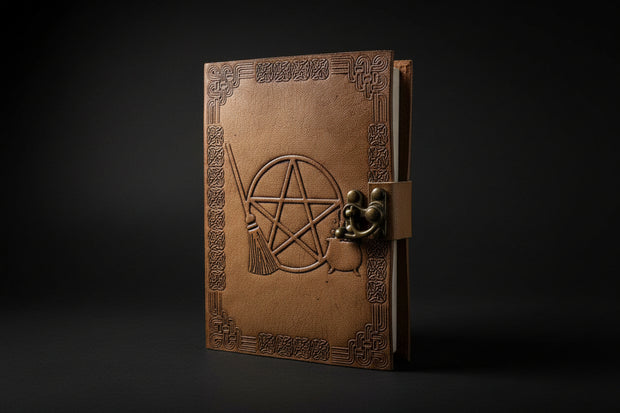
Shop this guide · 1 item Collapse

Keep exploring the shop
You made it to the end of the guide. Keep exploring through related products, major departments, or the full catalog.


Leave a comment