


Primary vs. Secondary Sources in Occult Study: How to Read Historical Claims

Occult history is often repeated through chains of summaries: one modern book cites another, a website condenses the claim, and the shortened version eventually becomes “common knowledge.” Learning how sources work gives you a way to trace those claims back to evidence.
Choose Your Occult Research Path
- Evaluate a book: Use How to Evaluate an Occult Book to examine authors, sources, editions, citations, and red flags.
- Test claims of antiquity: Read Is This Tradition Really Ancient?.
- Verify lineage and initiation claims: Continue with How to Recognize False Lineage and Initiation Claims.
- Build a beginner library: Use Witchcraft Books for Beginners.
- Study Satanism responsibly: Follow Satanism Books for Beginners.
- Study difficult primary texts: Use Aleister Crowley and Thelema for Beginners as an example of separating primary texts, later systems, and reading order.
- Compare reconstruction and modern synthesis: Read Syncretism vs. Eclecticism vs. Reconstructionism.
What Is a Primary Source?
A primary source was produced during the period being studied or by someone directly involved in the event, community, or practice. Depending on the question, primary sources can include manuscripts, letters, diaries, legal records, newspapers, ritual texts, objects, photographs, interviews, oral histories, or archaeological contexts.
Primary does not mean objective, complete, or true. A witch-trial record may tell us what an accuser, clerk, magistrate, or defendant said under pressure. It does not provide an uncomplicated transcript of private belief. A magical manuscript may document what someone copied or prescribed, not what every person in the region practiced.
What Is a Secondary Source?
A secondary source analyzes primary evidence. Scholarly books, peer-reviewed articles, critical editions, archaeological reports, and many serious histories are secondary sources. Their value comes from comparison, context, methodology, and engagement with other scholarship.
Secondary authors still make choices. They decide which evidence to emphasize, which terms to use, and how to interpret disagreement. Reading more than one reputable analysis helps you see where specialists agree and where debate remains open.
What Is a Tertiary Source?
Encyclopedias, introductory textbooks, overview websites, timelines, and many beginner guides are tertiary sources. They summarize established information and are excellent for orientation, vocabulary, and locating better sources. They are usually not the strongest foundation for a disputed historical claim.
Our own witchcraft study-library guide is an orientation tool. It can help organize a reading path, but deeper research still requires following claims into the sources behind them.
The Same Object Can Be Primary for One Question and Secondary for Another
A twentieth-century occult book is a primary source for understanding what its author taught in the twentieth century. It may be a secondary—or weak tertiary—source when it describes medieval religion. Source categories depend on the question you are asking.
Translations and Editions Are Part of the Evidence
Most readers encounter ancient or early-modern texts through an editor and translator. Word choice, manuscript selection, missing passages, normalization of spelling, supplied punctuation, and explanatory notes can shape meaning.
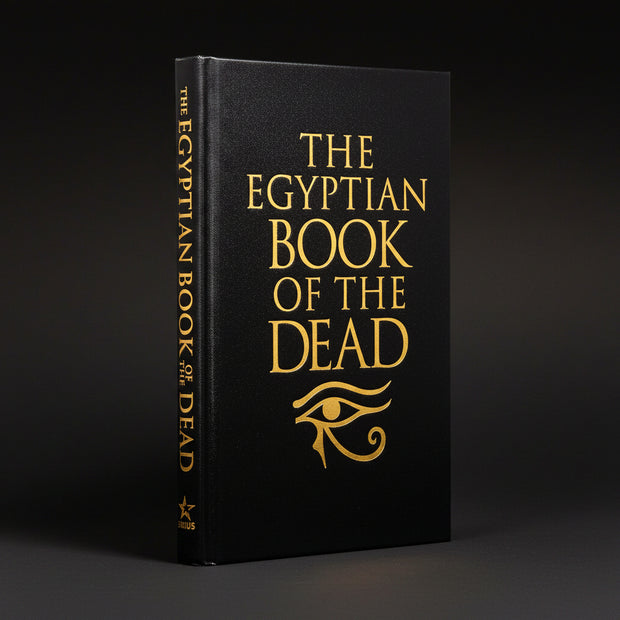
Record the translator, editor, publisher, and edition. When two translations disagree at an important point, consult the introductions and notes instead of choosing whichever wording sounds more mystical. A historical text such as the material commonly called the Egyptian Book of the Dead is not one fixed modern book; surviving compositions, papyri, arrangements, and translations require context.
Ask What the Source Can Actually Prove
- A recipe in a manuscript proves that the recipe was recorded, not that everyone used it.
- An object in a building may support a protective interpretation when placement and associated materials align, but form alone may remain ambiguous.
- A folklorist’s account preserves testimony while also reflecting the collector’s questions, editing, and social position.
- A practitioner memoir gives direct testimony about that person’s life, not an entire tradition.
- A trial record documents legal process and accusation as much as belief or practice.
Beware of Citation Loops
A citation loop occurs when several recent books repeat the same claim but all trace back to one weak source—or to no identifiable evidence at all. Follow footnotes backward. When the trail ends in a popular overview making the same unsupported statement, the number of repetitions has not strengthened the claim.
Absence of Evidence Requires Care
Lack of surviving documentation does not prove that something never happened. Many practices were oral, domestic, private, poorly preserved, or recorded only by hostile observers. At the same time, missing evidence cannot be replaced with certainty. The responsible phrasing is often: “No evidence has yet been identified,” not “This definitely existed in secret.”
Historical Description Is Not a Ritual Instruction
Evidence that people once used a substance, performed an ordeal, handled human remains, or acted under different laws does not make the practice safe, ethical, legal, or appropriate now. Historical research explains what sources report. Modern practice still requires present-day judgment.
A Simple Verification Method
- Write the exact claim in one sentence.
- Identify the earliest source cited for it.
- Determine whether that source is primary, secondary, or tertiary for your question.
- Check date, place, author, translator, and context.
- Look for at least one independent scholarly discussion.
- Record what is known, inferred, disputed, and unknown.
This method is especially useful for regional traditions. Our article on Appalachian folk magic demonstrates why local history, religion, healing, migration, and modern labels should not be collapsed into a single timeless system.
Frequently Asked Questions
Is a primary source always better than a secondary source?
No. A difficult primary source without context can be easily misunderstood. A strong secondary study may compare dozens of primary sources and explain their limits.
Can oral history be a primary source?
Yes, when the research question concerns the narrator’s memory, community, period, or experience. It should still be documented and interpreted in context.
Is Wikipedia a source?
It is usually a tertiary starting point. Use its citations to locate stronger material rather than treating the summary as the end of the research.
How many sources are enough?
There is no universal number. A narrow factual question may need only a few strong sources; a disputed claim requires broader comparison.
Compare Source Types in Practice
Use public editions such as The Egyptian Book of the Dead or The Book of the Law and Liber 777 as case studies: identify the original material, translator or editor, introductory scholarship, and modern commentary before treating the volume as one undivided source.
Tools for this practice
Explore the products selected for this guide. Review each listing for what is included and how to use it.

Shop this guide · 2 items Collapse


Keep exploring the shop
You made it to the end of the guide. Keep exploring through related products, major departments, or the full catalog.


Leave a comment