


How to Read Runes for Beginners: Elder Futhark, Casting, and Interpretation

If you are learning the method in this guide, the simplest first choice is a clearly labeled Elder Futhark rune set, a stable surface for drawing or casting, and one consistent reference system. You do not need the most elaborate set, a special board, or a historically required blank rune before you begin.
Runes are often sold and discussed as divination tools, but their history begins with writing. Runic alphabets were used by Germanic-speaking peoples for inscriptions, names, ownership, memorials, short messages, and other written purposes. Some surviving objects also appear in symbolic, sacred, protective, or magical contexts. What the historical record does not give us is one complete ancient handbook for modern rune casting.
That distinction matters. A grounded rune practice can respect runes as historical scripts while acknowledging that many familiar reading methods, including single-rune pulls, three-rune layouts, gemstone sets, reversals, and the so-called blank rune, belong largely to modern divinatory systems or practitioner traditions.
What Runes Are Before They Are Divination Tools
Runes are characters from related writing systems, not a single timeless oracle deck. The earliest widely studied rune-row for many modern beginners is the Elder Futhark, named for the sounds represented by its first six characters: F, U, Th, A, R, and K. Elder Futhark contains 24 runes.
Later rune traditions are different systems. Younger Futhark is a later 16-character rune row associated with the Viking Age. Old English or Anglo-Saxon futhorc is an expanded English rune tradition represented in evidence such as the Old English Rune Poem. These should not be treated as interchangeable with Elder Futhark.
This article uses Elder Futhark because that is the system being taught here. If you choose another rune tradition later, study that tradition on its own terms instead of mixing alphabets and meanings at random. For broader religious context around Heathen and Norse Pagan practice, see our Norse Paganism guide.
Historical Evidence and Modern Rune Reading
Runic inscriptions survive on stone, metal, bone, wood, jewelry, weapons, tools, and personal objects. Their contents range from ordinary writing to memorial statements and inscriptions that may have had protective, commemorative, sacred, or magical force.
There is also a well-known passage in Tacitus describing Germanic lot divination using marked pieces or twigs placed on a white garment, with three pieces drawn. That passage is useful historical context, but it does not name Elder Futhark runes, modern rune stones, fixed three-rune spreads, or casting-board layouts.
For modern readers, the responsible distinction is:
- Documented historical ground: runes functioned as letters and inscriptions, and runic writing could appear in ordinary, sacred, symbolic, and magical contexts.
- Scholarly interpretation: the exact origin of runic writing remains debated, with Mediterranean alphabets and especially Latin often treated as probable models, while some museum summaries describe Roman-letter inspiration more directly.
- Modern practice or practitioner tradition: fixed divinatory keywords, reversals, gemstone correspondences, blank-rune meanings, journaling systems, and most step-by-step casting layouts.
This does not make modern rune reading invalid. It means the practice should be named honestly: a modern interpretive discipline informed by historical symbols, scholarship, reconstructed meanings, later traditions, and personal practice. If you are comparing runes with other symbolic tools, our tarot cards vs. oracle cards guide explains another way divination systems can differ in structure and learning curve.
Choosing Your First Rune Set Without Overcomplicating It
A beginner rune set should be easy to identify, comfortable to handle, and suited to the way you plan to use it. Material matters less than clarity and consistency. Choose a set because you can read the symbols, draw the pieces without confusion, and care for the material responsibly.
For the method in this article, start with an Elder Futhark set. The historical Elder Futhark row has 24 marked runes. Do not buy a decorative set with mixed alphabets or unclear symbols and assume it will match a 24-rune Elder Futhark guide.
Before your first reading, decide:
- Which rune row you are studying
- Whether you will use only the 24 marked Elder Futhark runes
- Whether you will include or remove any blank tile if your set has one
- Whether you will read reversals
- Which casting method you will use
- Which reference system or guide you will consult
Making those choices before you draw prevents the reading from becoming a search for the answer you already wanted.
Do You Need 24 Runes or 25?
For Elder Futhark, the core answer is 24 marked runes. A 25th blank tile, sometimes called a blank rune, WYRD tile, or Odin tile, is a modern optional oracle convention. It is not one of the historical 24 Elder Futhark characters.
A 25-piece modern set is not automatically wrong to use. The important point is method. If your set includes a blank tile, decide what you will do with it before reading:
- Remove it and read only the 24 marked runes
- Keep it aside as a spare or replacement piece
- Use it as a modern oracle symbol within a clearly defined personal system
Do not change the rule after seeing the result. Treating the blank tile as optional keeps the historical Elder Futhark count clear while leaving room for modern practice if you deliberately choose it.
Wood, Stone, Crystal, or Metal: Choose by Use, Not Superiority Claims
No rune material is objectively more spiritually accurate than another. A beginner should compare materials by handling, legibility, durability, weight, sound, care, cost, and casting style rather than by claims that one substance guarantees a better reading.
| Material | Practical strengths | Beginner cautions |
|---|---|---|
| Wood | Lightweight, quiet in use, easy to handle, practical for drawing from a pouch or bowl | Keep away from soaking, humidity swings, and prolonged harsh light because wood can swell, shrink, split, crack, or suffer cumulative light damage |
| Stone or crystal | Tactile, weighty, visually distinctive, often easy to mix and draw one at a time | Use a soft, stable surface when impact or chipping is a concern; avoid casting polished pieces onto hard tile, glass, concrete, or uneven outdoor surfaces |
| Amethyst | A quartz variety with Mohs hardness 7 and good toughness, useful when the symbols are clear and the pieces are comfortable to handle | Can still be damaged by scratching, abrupt temperature changes, prolonged intense light, steam, or heat |
| Moonstone or moonstone-family material | Can be appealing for readers who prefer a gentler-feeling polished stone set | Moonstone is feldspar with Mohs hardness about 6.0 to 6.5 and is softer than quartz; if a set is true moonstone or moonstone-family feldspar, handle it gently and use a soft casting surface |
| Metal | Durable, weighty, and visually clear when the markings are legible | Store dry, protect from abrasion and unsuitable storage materials, and keep small pieces away from children or pets if size or composition could create a safety concern |
For materials not specifically verified by product records, keep the claims modest. It is safe to discuss general care and handling. It is not safe to promise exact composition, treatment, authenticity, or magical superiority without documentation.
When a Pouch, Cloth, Tray, or Casting Board Helps
A pouch, cloth, tray, or casting board is practical equipment, not a historical requirement for owning or reading runes. It can help by keeping pieces contained, protecting tables, making symbols easier to see, and giving the reading a defined workspace.
You can begin with a simple flat surface if it is clean, stable, and safe for the rune material. A cloth or board becomes more useful when:
- You are casting rather than drawing one piece from a bag
- Your rune pieces are polished stone or crystal and could chip on a hard surface
- You want a visible boundary for an open cast
- You need to protect a table or altar surface
- You want to photograph or sketch the layout before moving pieces
There is no single required modern board size or layout geometry. Use a surface large enough for the method you choose, soft enough for the material, and stable enough that pieces do not roll unpredictably.
A Beginner’s Working Reference for the Elder Futhark
The table below gives common modern study cues, not universal definitions. Rune names, translations, and divinatory associations vary by source. Use this as a starting framework, then refine your understanding through study, practice, and later review.
| Rune | Name | Common modern study cues |
|---|---|---|
| ᚠ | Fehu | Resources, movable wealth, stewardship, circulation |
| ᚢ | Uruz | Strength, vitality, endurance, untamed capacity |
| ᚦ | Thurisaz | Force, defense, friction, a threshold requiring caution |
| ᚨ | Ansuz | Speech, knowledge, counsel, inspired communication |
| ᚱ | Raidho | Journey, rhythm, right order, deliberate movement |
| ᚲ | Kenaz | Illumination, skill, craft, something made visible |
| ᚷ | Gebo | Gift, exchange, reciprocity, obligation and balance |
| ᚹ | Wunjo | Joy, harmony, belonging, shared well-being |
| ᚺ | Hagalaz | Disruption, uncontrollable conditions, necessary adaptation |
| ᚾ | Nauthiz | Need, constraint, pressure, disciplined response |
| ᛁ | Isa | Stillness, concentration, delay, preservation |
| ᛃ | Jera | Cycle, season, harvest, results that require time |
| ᛇ | Eihwaz | Endurance, transition, resilience, an enduring axis |
| ᛈ | Perthro | Mystery, uncertainty, chance, concealed factors |
| ᛉ | Algiz | Protection, alertness, boundaries, connection |
| ᛊ | Sowilo | Sun, vitality, direction, successful integration |
| ᛏ | Tiwaz | Justice, duty, courage, principled sacrifice |
| ᛒ | Berkano | Growth, birth, shelter, patient development |
| ᛖ | Ehwaz | Movement, partnership, trust, coordinated change |
| ᛗ | Mannaz | Humanity, identity, community, the social self |
| ᛚ | Laguz | Water, flow, intuition, changing emotional conditions |
| ᛜ | Ingwaz | Potential, containment, fertility, completion before release |
| ᛞ | Dagaz | Daybreak, breakthrough, clarity, decisive transformation |
| ᛟ | Othala | Inheritance, homeland, ancestry, property and legacy |
Should Runes Be Cleansed or Consecrated?
Cleansing and consecration are optional religious or magical acts, not requirements for the alphabet to function. Some practitioners smoke-clean a set, pass it through sound, keep it on an altar, pray over it, or handle each piece while learning its name. Others inspect the set, arrange the runes in order, define their method, and begin studying.
Choose a practice that fits your tradition and the physical material. Do not soak unknown stones, wood, metal pieces, painted symbols, or pieces with unknown adhesives. Do not use salt, steam, heat, or harsh cleansing as a universal care method. A clean cloth and careful handling are often the safest physical choice.
A useful preparation can be entirely practical: arrange the runes in Futhark order, name each one, check that the symbols are legible, and decide your reading rules before the first draw.
A Safe First Casting Method for Beginners
The safest first method is a one-rune draw. This is a modern beginner recommendation, not a claim about the original ancient Elder Futhark method. It works well because it limits cognitive load, makes journaling easier, and reduces the temptation to force a complicated pattern from too many symbols.
1. The One-Rune Draw
Place the runes in a pouch, bowl, or other container. Mix them without looking and draw one. Use this for a daily theme, a focused question, or a point of reflection.
Interpret the rune through three layers:
- Its name and basic study cue
- The modern associations in your chosen reference system
- The practical meaning created by your question
A one-rune draw is simple, but not necessarily shallow. The same symbol can read differently when the question concerns work, relationships, spiritual practice, boundaries, or timing.
2. The Three-Rune Reading
A three-rune draw is a simple modern next step. Draw three runes from left to right and assign the positions before drawing. Useful structures include:
- Situation — Challenge — Constructive action
- What is known — What is hidden — What requires attention
- Beginning — Development — Likely direction
“Past, present, future” is popular, but it can encourage fatalistic readings. “Likely direction” is often more responsible than claiming a fixed future because it leaves room for choice and changing conditions.
3. The Open Cast
Take a small handful of runes and cast them gently onto a cloth, tray, or board. Read only the pieces that land face up, or establish another rule in advance. Some readers begin with the rune nearest the center and then consider clusters, distance, orientation, and relationships between symbols.
Open casting creates more variables and is harder to reproduce. Record the layout with a photograph or sketch before moving anything. Beginners should start with three to five runes rather than throwing the entire set and inventing a meaning for every piece.
How to Prepare a Rune Question
Rune reading works best when the question is specific enough to guide interpretation but open enough to leave room for insight. Avoid questions that surrender your agency, such as “Tell me exactly what will happen.” Better questions ask about influences, choices, blind spots, and actions.
Examples include:
- What factor am I overlooking in this decision?
- What should I understand before beginning this project?
- What pattern is shaping this conflict?
- What action would help me work with the present conditions?
Before casting, write the question exactly as asked. Decide which method and positions you will use. Do not change the spread after seeing an uncomfortable rune. For a wider beginner framework on modern Pagan practice, start with Paganism 101 before adding specialized divination work.
How to Interpret a Rune Reading Without Forcing It
A disciplined interpretation moves from observation to meaning. Use the following order:
- Name what is physically present. Record the rune, position, orientation, and nearby symbols if relevant.
- State the base association. Write the shortest neutral keyword or concept from your chosen reference system.
- Apply it to the assigned position. A rune in “challenge” should not be interpreted exactly as it would be in “available resource.”
- Return to the question. Remove meanings that have no reasonable connection to what was asked.
- Identify one practical implication. A useful reading should produce a question, observation, or possible action, not only dramatic language.
Suppose the question is, “What should I consider before expanding my business project?” and the positions are Situation — Constraint — Constructive Action.
- Fehu in Situation: resources, money, inventory, and stewardship are central.
- Nauthiz in Constraint: there may be a genuine limitation in cash, time, labor, or supply.
- Raidho in Constructive Action: create an orderly plan, sequence the next steps, and move according to a workable process.
This reading does not promise profit or predict failure. It directs attention toward resources, constraints, and planning. Rune readings should not replace professional medical, legal, financial, or mental-health advice.
Do Reversed Runes Have Different Meanings?
Reversals are optional modern practice. Some readers assign a blocked, internal, delayed, or contrary expression when a rune appears upside down. Others read every rune upright and allow the spread position and surrounding symbols to provide tension.
Several rune shapes look the same when reversed, while others can land sideways during a cast. This makes reversal systems less uniform than tarot reversals. Choose one policy before the session:
- No reversed meanings
- Reversals only when a clear top and bottom exist
- Merkstave or obstructed meanings based on orientation
- Orientation interpreted only in an open cast
No option is automatically more advanced. The strongest system is one you can define, record, and use consistently.
How to Record Your First Readings
A journal turns impressions into a practice that can be reviewed. Record:
- Date and time
- Exact question
- Casting method and position meanings
- Runes drawn and their orientation
- Your first interpretation before consulting a book
- Reference meanings you checked afterward
- One practical action or observation
- A later review of what proved useful, vague, or incorrect
The later review is essential. Without it, practitioners tend to remember striking coincidences and forget weak or inaccurate readings. A written record makes your interpretation more accountable and helps you discover which associations are genuinely useful in your practice.
Common Beginner Mistakes to Avoid
Buying a Mixed or Decorative Set by Accident
If you are studying Elder Futhark, choose symbols that match Elder Futhark. Younger Futhark and Old English futhorc are different rune traditions, not alternate spellings of the same beginner set.
Assuming a Blank Rune Is Required
The blank tile is a modern optional oracle convention. It may be meaningful in a personal system, but it is not one of the 24 historical Elder Futhark runes.
Casting Fragile Pieces on Hard Surfaces
Do not cast polished stone or crystal pieces onto hard tile, glass, concrete, or uneven outdoor surfaces when impact or chipping is a concern. Use a soft, stable cloth, tray, or board.
Reading Every Rune as a Prediction
A rune may describe a condition, responsibility, tension, resource, or perspective. Not every symbol announces an external event, and no reading guarantees a fixed outcome.
Mixing Reference Systems Mid-Reading
Consulting several books until one gives the desired answer is answer-shopping. Select a primary system, note disagreements, and study alternatives outside the active reading.
Claiming Ancient Authority for Every Modern Custom
Blank runes, fixed spreads, gemstone correspondences, reversals, and many detailed keywords are modern or practitioner-developed. A practice can be meaningful without being mislabeled as unchanged ancient tradition.
When to Add a Practical Rune Guide
A rune guidebook is optional support, not required equipment. It can be useful if you want help with meanings, layouts, journaling prompts, and first-casting instruction. It should not be treated as automatic historical authority or as a substitute for learning what rune tradition you are using.
If you are overwhelmed, begin with the 24 Elder Futhark names, one-rune draws, and a short journal entry. Add a practical guide when you want more structure, more examples, or a consistent reference to check after you write your first interpretation.
Care and Storage After Casting
Care depends on the physical material. Because many commercial sets vary in composition, finish, and treatment, avoid universal cleansing instructions that could damage the pieces.
- Stone and crystal: handle gently, avoid unnecessary impact, and use a soft surface when casting. Amethyst can be damaged by scratching, abrupt temperature changes, prolonged intense light, steam, or heat.
- Moonstone or moonstone-family material: if the material is true moonstone or related feldspar, treat it as softer than quartz and use gentler handling.
- Wood: keep away from soaking, humidity swings, and prolonged harsh light.
- Metal: store dry, protect from abrasion, and avoid unsuitable storage materials. Keep small pieces away from children and pets when size or composition could create risk.
For unknown materials, the safest care is usually simple: clean hands, dry storage, a soft cloth, and no soaking, salt, steam, heat, or harsh chemicals.
Where American Occultist Rune Sets Fit
Once you understand the difference between Elder Futhark, optional blank-rune practice, material care, and casting surfaces, choosing a first set becomes easier. Look for a set that matches the system you are learning, has legible markings, feels comfortable to handle, and suits the surface you plan to use.
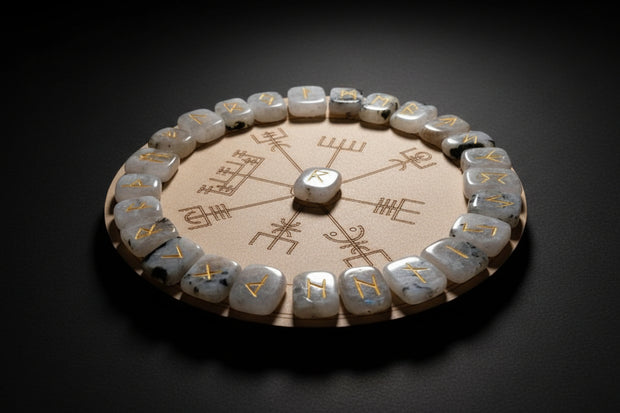
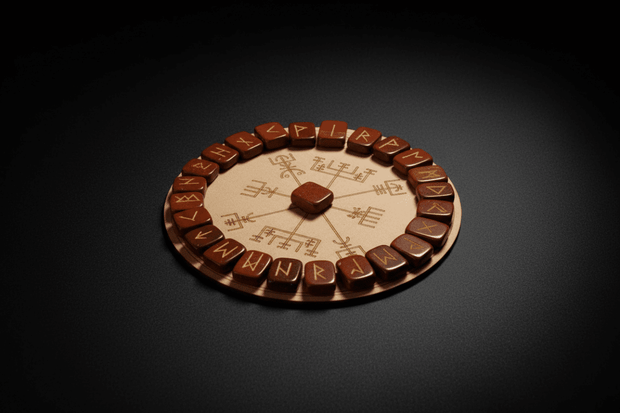
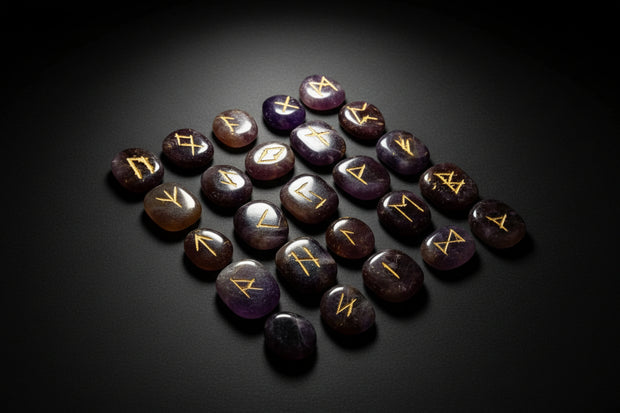
For readers comparing stone or crystal rune sets with a casting board, American Occultist carries the Rainbow Moonstone Elder Futhark Rune Set with Casting Board, the Red Jasper Rune Set with Casting Board, and the Amethyst Rune Set with Casting Board. Choose among them by legibility, handling preference, care needs, and the way you intend to draw or cast.
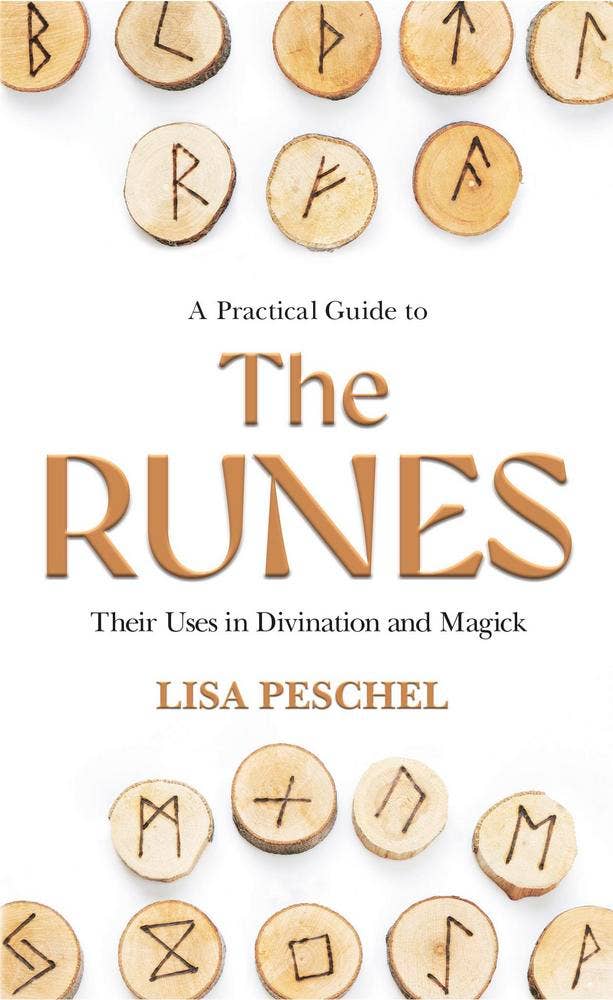
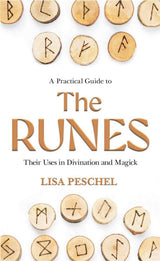
If you want a reference beside you while learning meanings, layouts, and journaling habits, A Practical Guide to the Runes can serve as an optional companion. You do not need a guidebook to own runes, but a consistent reference can help beginners avoid changing systems every time a reading feels unclear.
Frequently Asked Questions
Can anyone learn to read runes?
Yes. Rune study requires patience, historical curiosity, symbolic thinking, and consistent practice, not a special bloodline or guaranteed psychic ability. Practitioners who approach runes within a living religious tradition should also respect that tradition’s community standards and historical context.
How many runes should be in an Elder Futhark set?
Elder Futhark has 24 marked characters. Some modern sets may include a 25th blank tile, but the blank is a modern optional oracle convention rather than a historical Elder Futhark rune.
Are gemstone runes better than wood runes?
No material is inherently more accurate. Choose by legibility, durability, handling, care, and personal fit. Material symbolism belongs to practitioner tradition, not guaranteed results.
Do I need a cloth or board to read runes?
No. A cloth, tray, or board is practical, not mandatory. It helps with containment, visibility, and surface protection, especially when casting stone or crystal pieces.
Should I memorize all 24 meanings before reading?
No. Learn the order and names, keep a consistent reference nearby, and begin with one-rune or three-rune readings. Memorization becomes more reliable when attached to repeated use and later review.
Sources and Further Reading
- National Museum of Denmark, “Runer i jernalderen”
- University of Copenhagen, Runology research overview
- Tacitus, Agricola and Germania, digitized translation
- British Library catalogue record for Cotton MS Otho B X
- Gemological Institute of America, Amethyst Care and Cleaning Guide
- Gemological Institute of America, Moonstone gem profile
- Canadian Conservation Institute, basic care for wooden objects
- Canadian Conservation Institute, storage of metals
Choose a Set You Will Actually Study
The best first rune set is not the most elaborate one. It is the set you can read clearly, handle comfortably, care for responsibly, and return to often. Start with Elder Futhark if that is the system you are learning, treat any blank tile as optional modern practice, use a stable surface, and begin with one written question and one rune. When you are ready, choose the Elder Futhark set you will actually practice with, add a practical guide only if you want structured instruction, and let consistency, not spectacle, build the practice.
Tools for this practice
Explore the products selected for this guide. Review each listing for what is included and how to use it.
Shop this guide · 4 items Collapse


Keep exploring the shop
You made it to the end of the guide. Keep exploring through related products, major departments, or the full catalog.
 RELATED TO THIS GUIDE
Divination Tools
Shop this topic
RELATED TO THIS GUIDE
Divination Tools
Shop this topic


Leave a comment