


How to Transport Crystals and Mineral Specimens Safely

Mineral specimens are often stronger in some directions than others. A dense stone may survive pressure but chip at a point. A hard crystal may split along cleavage. A delicate cluster can be damaged by its own weight when packed incorrectly. Safe transport begins with the specimen’s structure, not with the assumption that every crystal can be wrapped the same way.
Document Condition Before Moving Anything
Photograph the front, back, sides, base, labels, repaired areas, and prominent terminations. Record loose crystals, old chips, unstable matrix, and existing adhesive. For valuable pieces, include the catalog number in the photograph.
This creates a condition reference and helps you plan where support is needed. Review How to Catalog a Personal Crystal and Mineral Collection for recordkeeping.
Classify the Specimen by Risk
- Dense and compact: massive stones, sturdy tumbles, and solid carvings.
- Pointed: towers, natural terminations, and clusters.
- Cleavable: minerals that may split along structural planes.
- Bladed or fibrous: thin crystals that can snap, shed, or puncture packing.
- Flaky or friable: matrix or coatings that release particles.
- Mounted or repaired: specimens with bases, putty, glue, or reattached parts.
- Heavy and irregular: pieces whose weight can shift suddenly.
Use Crystal Hardness vs. Toughness vs. Cleavage to understand why scratch resistance does not guarantee impact resistance.
Keep Every Specimen Separate
Do not allow stones to touch inside a bag or box. During transport, repeated vibration turns neighboring specimens into impact tools. Wrap each item independently and prevent movement inside its container.
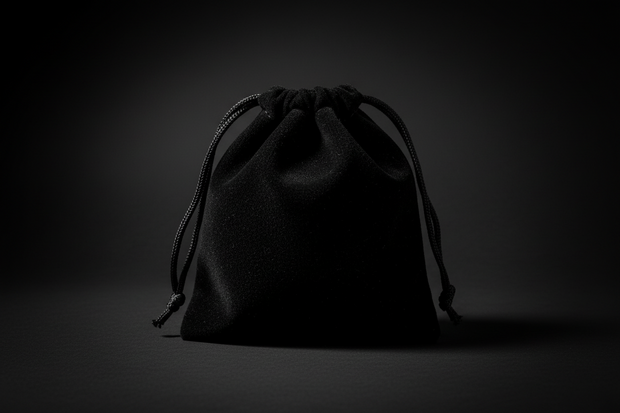
A soft pouch can protect a small durable polished stone from surface scratches, but it is not sufficient protection for a fragile cluster, a heavy sphere, or a specimen with protruding points. For small sturdy items, a plush velvet pouch may be one layer inside a rigid container.
Support the Base, Not the Delicate Crystals
When a specimen rests on matrix, build support around the strongest lower portion. Do not compress foam or wrap tightly against thin points. The goal is to immobilize the piece without transferring pressure to its most fragile features.
For a cluster, create a padded cavity that supports the matrix while leaving space around terminations. Mark the top of the inner box so the orientation remains clear.
Use Clean, Inert Wrapping Materials
Suitable layers may include acid-free tissue, soft polyethylene foam, clean bubble cushioning, and a rigid inner box. Avoid direct contact with:
- newspaper ink;
- adhesive tape;
- sticky labels;
- loose fibers that catch on crystals;
- powdery foam that enters fractures;
- damp cloth;
- strongly scented or chemically treated material.
Do not tape wrapping directly to the specimen. Tape only the packing material to itself.
Immobilize the Inner Box
After the specimen is protected, place it in a rigid inner box with enough void fill that it cannot slide, rotate, or strike the walls. Test gently by tilting the closed box. You should not feel movement.
For fragile, valuable, or shipped specimens, place the inner box inside a larger outer box with cushioning on every side. Double boxing separates the specimen from external impact and crushing.
Special Handling by Form
Spheres
Remove the sphere from its stand and wrap each separately. A sphere can roll with considerable force. Use a fitted cavity and keep it away from the edge of the box.
Towers and polished points
Protect the tip without putting a hard cap directly against it. Transport the tower horizontally when that position distributes weight more safely, and prevent rolling.
Natural clusters
Support the matrix and create open space around protruding crystals. Never stack another box on an unprotected cluster container.
Mounted specimens
Determine whether the mount is permanent and stable. Do not lift the specimen by the crystal or by a decorative base unless the attachment is known to support the weight.
Slabs and thin plates
Keep them upright like records when appropriate, with rigid support on both faces. Flat stacking can concentrate weight and cause cracking.
Keep Labels With the Correct Object
Place a duplicate catalog number inside the inner box and the primary number outside. Store original locality and provenance labels in a protective sleeve with the specimen unless moisture or pressure could damage them.
Read How to Read a Mineral Label before reorganizing old labels.
Load the Vehicle Carefully
- Place heavy boxes low and toward the center of the vehicle.
- Do not put mineral boxes beneath furniture or loose cargo.
- Prevent sliding during braking and turns.
- Avoid the hottest part of a parked vehicle.
- Keep moisture-sensitive material away from coolers and wet equipment.
- Do not leave valuable specimens visible in an unattended vehicle.
Carry especially fragile pieces yourself rather than placing them in an unmonitored moving truck.
Control Temperature and Moisture
Rapid temperature changes can create condensation. Water can affect soluble minerals, metallic minerals, labels, adhesives, and matrix. Allow sealed containers to reach room temperature before opening when moving between extreme conditions.
Do not add desiccant automatically. Some specimens, labels, or mounts may respond poorly to extremely dry conditions. Use environmental control according to the material.
Air Travel and Security
Dense stones can add weight quickly, and sharp specimens may attract security attention. Check current airline and security rules before travel. Keep documentation for valuable specimens and avoid packing an object so tightly that inspection cannot occur without damage.
Carry-on transport gives you more control, but weight and sharpness restrictions may make checked baggage or professional shipping necessary.
Unpack in a Controlled Area
- Clear a stable table.
- Open one specimen at a time.
- Keep its label and packing together until identification is confirmed.
- Lift from the supported base.
- Compare the piece with pre-move photographs.
- Set aside anything loose or damaged.
- Update the catalog location.
If a repair or mount failed, do not immediately glue it. Preserve the fragments and review Repaired, Stabilized, and Mounted Mineral Specimens.
Build a Reusable Transport System
Small specimen boxes, dividers, padded cases, and labeled storage can reduce risk for shows, classes, and repeated travel. Browse Storage & Chests, Bags, and Crystals & Stones when planning the physical collection.
Frequently Asked Questions
Can I wrap several tumbled stones together?
Separate valuable or highly polished stones to prevent scratching. Inexpensive durable tumbles may travel in divided compartments, but they should not strike fragile specimens.
Is bubble wrap safe?
It can be an effective outer cushioning layer. Avoid pressing bubbles directly into delicate points or surfaces that may catch, flake, or react.
Should crystal points face up?
Orientation depends on the specimen. Choose the position that supports the strongest area and avoids pressure on the termination.
Can I leave a crystal on its display stand?
Usually separate them. A loose stand can strike the specimen, and an attached stand may place leverage on adhesive.
How do I move a very heavy specimen?
Use a rigid container, mechanical assistance, and enough people to lift safely. Support the whole base and never lift by a protruding crystal.
What do I do with the original packing?
Keep proven successful packing for valuable specimens, labeled by catalog number, if it remains clean and structurally sound.
Immobilization Matters More Than Excess Wrapping
Safe packing supports strong areas, protects fragile projections, prevents every item from moving, and preserves its labels. More material is not automatically better when it transfers pressure to the wrong place.
Tools for this practice
Explore the products selected for this guide. Review each listing for what is included and how to use it.
Shop this guide · 1 item Collapse

Keep exploring the shop
You made it to the end of the guide. Keep exploring through related products, major departments, or the full catalog.


Leave a comment