


Luciferianism vs Satanism: Understanding the Differences and Similarities

Luciferianism and Satanism are related but distinct currents within modern alternative religion and Left-Hand Path philosophy. Both may emphasize autonomy, opposition to imposed dogma, and personal development, but they often differ in symbolism, theology, tone, and practical focus.
Luciferianism and Satanism Defined
Luciferianism
Luciferianism commonly centers on Lucifer as a symbol, archetype, spirit, or deity associated with knowledge, illumination, independence, and self-directed development.
Satanism
Satanism includes both non-theistic and theistic traditions. Satan may represent the adversary, material existence, individual liberty, rebellion, or a real spiritual being.
Luciferianism vs. Satanism: Key Differences
- Primary symbol: Lucifer as light-bringer versus Satan as adversary
- Common emphasis: Illumination and self-development versus liberty, carnality, opposition, or devotion
- Theology: Both may be theistic or non-theistic, although organizations define the labels differently
- Tone: Luciferian writing often uses philosophical and initiatory language; Satanic writing may use adversarial, materialist, devotional, or activist language
- Relationship to Christianity: Some Luciferians attempt to move beyond Christian categories, while Satanism often deliberately reclaims the Christian adversary
- Ritual: Luciferian practice often emphasizes illumination and self-initiation; Satanic ritual may emphasize psychodrama, devotion, celebration, or opposition
Shared Themes and Overlap
- Personal sovereignty and individual responsibility
- Questioning inherited religious authority
- Adversarial or rebellious symbolism
- Interest in occult philosophy and ritual
- Reinterpretation of figures traditionally described as evil
- Independent, eclectic, and changing personal identities
Are Lucifer and Satan the Same?
Historical, biblical, literary, and occult sources use the names in different ways. Some practitioners treat them as the same figure or as different aspects of one principle. Others consider them entirely separate beings or symbols.
Choosing a Label or Path
A person drawn primarily to illumination, study, balanced self-development, and light-bringer symbolism may prefer Luciferianism. Someone drawn to the adversary, Satanic philosophy, materialism, activism, or devotional Satanism may prefer Satanism. Some practitioners use both labels or neither.
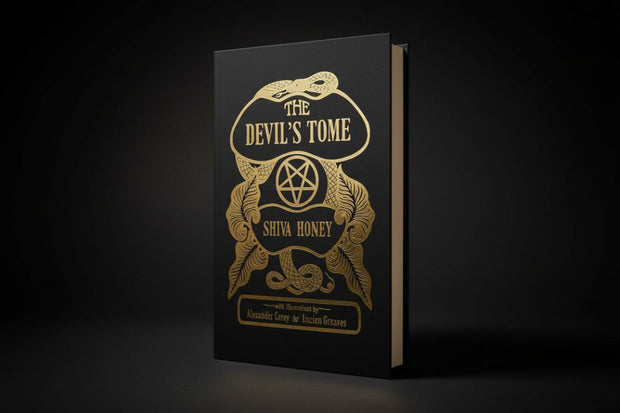
For readers moving from comparison into practice, choose tools according to the practice rather than assuming each label has one required symbol. A Luciferian devotional practice centered specifically on Lucifer may use a Lucifer ritual oil as an optional anointing tool. Someone exploring modern non-theistic Satanic ritual may find The Devil’s Tome more relevant because it focuses on ritual structure, symbolism, and personal agency. These are examples of different practices, not universal requirements or definitions of either path.
Common Misconceptions
“Luciferianism is only another name for Satanism.”
No. The two overlap, but many practitioners and organizations distinguish them.
“All Luciferians and Satanists worship a literal Devil.”
No. Both labels include symbolic, atheistic, agnostic, and theistic interpretations.
“There is one official definition of either path.”
No. Definitions vary by organization, author, and practitioner.
Frequently Asked Questions
Can someone identify as both Luciferian and Satanist?
Yes. Some people use combined identities because they find value in both light-bringer and adversarial symbolism.
Which path is more spiritual?
Neither label guarantees a specific level of spirituality. Both contain philosophical, ritual, devotional, and non-theistic approaches.
Are the paths part of the Left-Hand Path?
They are commonly discussed within that category, although individual practitioners may reject it.
Related Reading
Tools for this practice
Explore the products selected for this guide. Review each listing for what is included and how to use it.

Shop this guide · 2 items Collapse

Keep exploring the shop
You made it to the end of the guide. Keep exploring through related products, major departments, or the full catalog.
 RELATED TO THIS GUIDE
Ritual Supplies & Altar Tools
Shop this topic
RELATED TO THIS GUIDE
Ritual Supplies & Altar Tools
Shop this topic


Leave a comment