


Ritual Dirt Explained: Cemetery, Graveyard, Crossroads & Bank Dirt

Ritual dirt is not one interchangeable ingredient. In folk-magic and occult practice, soil may be valued because of where it came from, what happened at that place, the people or spirits associated with it, or the intention assigned to a prepared blend. Cemetery dirt, graveyard dirt, crossroads dirt, bank dirt, and deity-aligned ritual dirt therefore carry different associations—even when two products look nearly identical in a jar.
This guide explains those distinctions without treating every tradition as if it follows one universal rule. It also addresses the questions that product descriptions often leave unanswered: whether cemetery and graveyard dirt are actually different, whether dirt must come from a particular grave, when collecting soil is inappropriate, and how to store or dispose of a purchased blend.
What Does “Ritual Dirt” Mean?
Ritual dirt is soil or a soil-like prepared material used symbolically within a spiritual working. Its meaning usually comes from one or more of four sources:
- Place: a crossroads, threshold, cemetery, bank, courthouse, home, garden, or other location.
- Association: an ancestor, profession, event, deity, spirit, or remembered quality.
- Preparation: a maker may combine earth with herbs, minerals, ash, resins, or other materials.
- Purpose: the blend may be assigned to prosperity, boundary work, remembrance, transformation, clearing, or another intention.
The label matters. A commercial “ritual dirt” may be a formulated blend rather than literal earth from the place named on the jar. That is not automatically a defect; it is a different kind of product. Read the description and ingredient disclosures that are available, and ask the seller if literal sourcing is important to your practice.
Cemetery Dirt vs. Graveyard Dirt
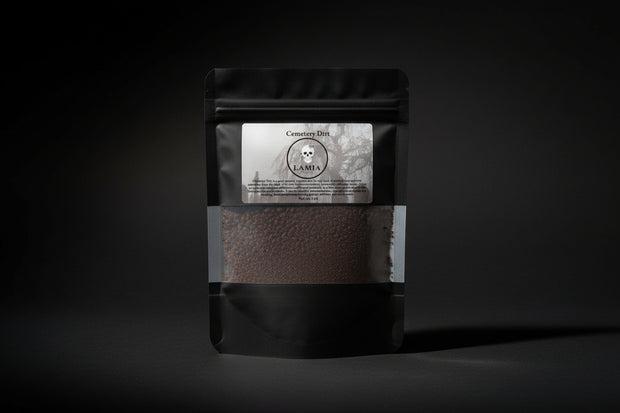
In ordinary modern speech, cemetery and graveyard are often used as synonyms. Historically, “graveyard” commonly referred to a burial ground attached to a church, while “cemetery” could describe a burial ground that was not attached to one. Folk traditions do not apply that distinction consistently. Some practitioners use the terms interchangeably; others distinguish general soil from cemetery grounds, soil from a particular grave, and earth prepared for ancestor or spirit work.
That means a name alone cannot tell you exactly how a product was sourced or intended. Compare the maker’s description of Cemetery Dirt with its description of Graveyard Dirt. If the practical distinction remains unclear, choose according to the stated purpose rather than assuming the words carry a universal technical definition.
Does It Have to Come From a Specific Grave?
Not every practice requires grave-specific earth. In traditions that do, the identity and relationship of the deceased can be central: soil associated with an ancestor is not treated the same as soil associated with a stranger. Other practitioners use general cemetery soil symbolically, and some use a purchased blend precisely because personal collection would be inaccessible, unlawful, unsafe, or disrespectful.
Do not invent a relationship with an unknown deceased person for the sake of an ingredient. Ancestor remembrance can be practiced with photographs, water, names, heirlooms, or other family-sensitive objects. Our guide to building an ancestor altar offers alternatives that do not require cemetery soil.
Crossroads Dirt
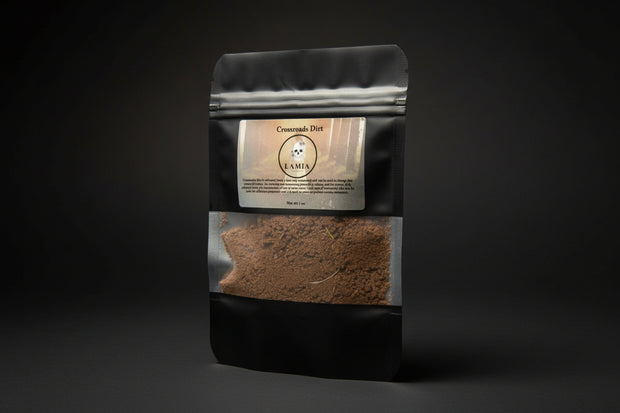
Crossroads are liminal places: locations where routes meet, choices become visible, and movement can change direction. Across different bodies of folklore, they may be associated with travel, communication, fate, exchange, spirits, deities, initiation, or the meeting of worlds. Those meanings are related, but they are not identical across cultures.
For the practical difference between three-way and four-way intersections, see why crossroads are liminal.
Crossroads Dirt is therefore most coherent when the working actually concerns a threshold, decision, transition, or change of direction. It is not simply a dramatic substitute for any other ritual earth. A person choosing between two concrete opportunities has a clearer crossroads intention than someone who has not yet identified what they want to change.
Road-opening work may involve crossroads symbolism, but the two terms are not synonymous. Road opening focuses on obstacles and access to a goal; crossroads imagery emphasizes choice, meeting points, and direction. Keeping those ideas separate makes both more useful.
Bank Dirt and Place-Based Prosperity Work
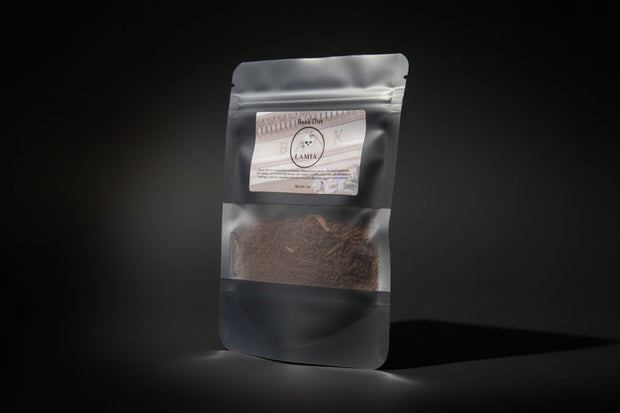
Bank dirt belongs to a larger family of place-based materials associated with commerce, money movement, employment, and institutions. Its symbolism comes from the location’s relationship to financial exchange rather than from the chemical properties of the soil.
A prepared Bank Dirt can serve as a contained symbol in a business altar, money bowl, petition setup, or prosperity-focused workspace. It does not create income by itself and should not replace budgeting, applications, pricing decisions, debt planning, or professional financial guidance. A useful ritual intention names a real-world channel: attracting qualified customers, finding suitable work, completing invoices, or staying attentive to legitimate opportunities.
Deity-Aligned and Purpose-Blended Ritual Dirt
Some ritual dirts are aligned with a deity or mythic figure rather than a literal location. A blend such as Hecate Ritual Dirt draws on Hecate’s modern and historical associations with thresholds, keys, night, spirits, and crossroads. Arachne Ritual Dirt is framed around transformation, creativity, revelation, and the imagery of weaving.
These products should not be mistaken for ancient standardized formulas. They are modern devotional or symbolic blends created by a maker. Before using one, learn enough about the named figure to understand the association, decide whether the product belongs in devotional practice or general symbolism, and avoid claiming that a modern commercial formula is required by an ancient religion.
How Ritual Dirt Can Be Used Without Scattering It
Loose material does not need to be spread across floors, property, doorways, graves, or public land. Contained uses are easier to clean up and reduce exposure to children, pets, wildlife, and shared spaces.
- Keep a closed jar on an altar as a place-symbol.
- Place a small sealed packet beneath a petition or non-food offering bowl.
- Set the closed container beside a candle rather than placing unknown material near the flame.
- Use a labeled vial in a portable altar or study box.
- Photograph or write the name of a meaningful place when physical soil is unnecessary or unavailable.
Do not burn ritual dirt unless the manufacturer explicitly identifies the product as suitable for burning and provides instructions. Soil and prepared blends may contain minerals, organic matter, contaminants, fragrance, or additives that should not become airborne.
Permission, Property, and Ethical Collection
A spiritual custom does not override property rules, cemetery policies, environmental protections, or local law. Cemeteries have owners and caretakers. Graves may also have surviving family members whose wishes deserve consideration. Taking even a small amount without permission can be prohibited, and digging or disturbing a grave is never justified by a content trend or spell recipe.
Ask the property owner or cemetery management before collecting anything. Follow posted rules. Do not remove soil from protected land, archaeological locations, memorials, private businesses, landscaped property, or a grave that you have no right to disturb. When permission is not available, use a lawful symbolic substitute or a clearly described commercial blend.
Storage and Disposal
Keep ritual dirt in a closed, stable container labeled with the product name, maker, intended use, and purchase date. Store it away from food, culinary herbs, children, pets, moisture, and heat. Do not rely on appearance to distinguish one blend from another.
For disposal, begin with the maker’s instructions. Do not scatter a commercial blend outdoors merely because it is called “dirt”; added salt, oils, dyes, minerals, herbs, or resins may be unsuitable for soil and waterways. When ingredients are unknown, containment and ordinary household disposal may be more responsible than ceremonial outdoor disposal. See our guide to disposing of ritual remnants for a fuller decision process.
Frequently Asked Questions
Are cemetery dirt and graveyard dirt the same?
Sometimes. Everyday language and many sellers use the terms interchangeably, while some practitioners distinguish general cemetery soil from grave-specific earth. Read the individual product description rather than assuming a universal definition.
Is purchased ritual dirt “real” ritual dirt?
It can be a valid symbolic or prepared ritual product, but it may not be literal soil from the named place. Authenticity depends on honest labeling and whether the product’s meaning fits your practice—not on pretending a blend has a provenance the maker has not claimed.
Can I take dirt from a cemetery if I leave an offering?
An offering does not replace legal permission from the property owner or cemetery management, nor does it automatically address the wishes of a deceased person’s family. Obtain permission and follow local rules.
Can ritual dirt be burned?
Do not assume so. Only burn a product if its maker explicitly identifies it as burnable and supplies safe directions for the exact formula.
Can I use ritual dirt around pets?
Keep it contained and inaccessible. Unknown minerals, botanicals, fragrance, mold, soil contaminants, and small particles can present ingestion or respiratory risks.
Which ritual dirt should a beginner choose?
Choose the narrowest product that matches a clearly stated purpose. Crossroads dirt fits choice and transition; bank dirt fits commerce-oriented symbolism; cemetery or graveyard dirt belongs to carefully considered ancestor, remembrance, or spirit-related work. A beginner does not need every variety.
A Grounded Way to Choose
Start with the question your working is meant to hold. Then compare the product’s stated source, preparation, purpose, and handling requirements. The most relevant ritual dirt is not the most dramatic name—it is the one whose symbolism you understand, whose sourcing you can accept, and whose use can remain lawful, contained, and respectful.
Tools for this practice
Explore the products selected for this guide. Review each listing for what is included and how to use it.
Shop this guide · 3 items Collapse


Keep exploring the shop
You made it to the end of the guide. Keep exploring through related products, major departments, or the full catalog.
 RELATED TO THIS GUIDE
Ritual Supplies & Altar Tools
Shop this topic
RELATED TO THIS GUIDE
Ritual Supplies & Altar Tools
Shop this topic


Leave a comment