


What Is a Solar Return Chart? Birthday Astrology, Annual Themes, and Common Mistakes

A birthday marks the calendar date of birth, but the Sun does not return to its exact natal zodiac position at precisely the same clock time every year. In astrology, the chart calculated for that exact annual return is called a solar return chart.
Astrologers use solar returns to explore themes that may receive emphasis from one birthday season to the next. The chart is not a replacement for the natal chart, and it cannot guarantee specific events. It is an interpretive tool for organizing questions about the coming year.
Astrology is not scientifically established as a predictive system. A solar return should therefore be used for reflection, planning, and symbolic study—not as a reason to make medical, legal, financial, or safety decisions without real-world evidence.
What Is a Solar Return?
A solar return occurs when the transiting Sun reaches the same zodiac longitude it occupied at birth. This usually happens on the birthday or within roughly a day of it, depending on the year, time zone, and natal position.
The chart for that moment includes the Sun, Moon, planets, angles, and houses. Astrologers then read it as a temporary annual chart. Its symbolic period is usually treated as lasting until the next solar return.
Before studying annual charts, it helps to understand the basic components of a natal chart. Begin with How to Read a Birth Chart for Beginners.
Why the Solar Return Is Not Just Your Birthday Chart
A chart cast for midnight, noon, or a party time on the calendar birthday may not be the solar return. The return is calculated for the exact moment the transiting Sun reaches the natal Sun’s degree, minute, and often second.
This timing can fall before or after the recorded birth time. It can also occur on the date before or after the civil birthday in some locations. Accurate software or an ephemeris is normally used to calculate it.
Does Location Matter?
The planets occupy the same zodiac positions at a given moment regardless of where the observer stands, but the houses and angles depend on location. This creates an ongoing debate among astrologers: should the solar return be cast for the birthplace, the current residence, or the location where the person is physically present at the exact return?
Many contemporary astrologers use the physical location at the moment of return. Others prefer the current residence or compare more than one chart. There is no single universal rule across all schools.
Traveling for the birthday may change the solar return Ascendant and house placements, but it does not erase the natal chart or guarantee a different life outcome. “Relocating” a solar return should not be treated as a way to trick fate.
The Most Important Solar Return Factors
The Solar Return Ascendant
The Ascendant describes the zodiac sign rising at the return moment and is often interpreted as the tone, approach, or outward orientation of the year. Its ruling planet becomes an important chart factor.
For example, a Virgo solar return Ascendant might lead an astrologer to examine themes of organization, skill, service, health routines, and discernment. It does not guarantee illness or a particular job.
The Sun’s House
The Sun always returns to its natal zodiac position, but its solar return house can change each year. Astrologers often read that house as a central area of attention, visibility, purpose, or identity.
A fourth-house Sun may emphasize home, family, roots, or private foundations. A tenth-house Sun may emphasize public responsibility, reputation, career, or leadership. These are broad themes rather than fixed events.
The Moon
The solar return Moon is commonly associated with emotional priorities, habits, care, belonging, and changing circumstances. Its sign, house, and aspects may suggest where emotional responsiveness is heightened.
Planets Near the Angles
Planets close to the Ascendant, Descendant, Midheaven, or Imum Coeli are often given extra weight because angular planets are considered prominent. A planet near an angle may describe a theme that becomes more visible or active during the year.
The Ruler of the Ascendant
The planetary ruler of the solar return Ascendant is often called the chart ruler. Its house, sign, and aspects can help connect the overall tone of the chart with a particular area of life.
Repeated Natal Themes
Solar return symbolism is usually considered stronger when it repeats themes already present in the natal chart or current transits. An annual chart should not be interpreted in isolation.
How to Read a Solar Return Chart Step by Step
- Confirm the calculation. Use accurate birth data and the correct return location.
- Identify the Ascendant and chart ruler. Note the ruler’s house and major aspects.
- Find the Sun’s house. Ask what kind of attention, purpose, or responsibility that house describes.
- Study the Moon. Note its house, sign, phase, and close aspects.
- Look for angular planets. Give priority to planets close to the four angles.
- Notice concentrations. Several planets in one house or hemisphere may describe a major area of emphasis.
- Compare with the natal chart. Overlay the solar return on the natal chart and look for repeated themes.
- Check major transits. The annual chart adds context; it does not replace slower transits and progressions.
Common Solar Return Mistakes
Predicting one literal event from one placement
A seventh-house emphasis does not guarantee marriage. An eighth-house emphasis does not guarantee death or financial loss. A tenth-house emphasis does not guarantee promotion. Houses describe broad areas of experience that can manifest in many ways.
Ignoring the natal chart
The natal chart remains the foundation in most solar-return methods. Annual symbolism is filtered through the person’s existing chart and circumstances.
Treating difficult aspects as disaster
Squares and oppositions may describe friction, competing demands, or the need for adjustment. They are not proof that a bad event will occur. Review Are There Bad Astrology Placements? for a nonfatalistic approach.
Reading every detail with equal weight
Annual charts contain many factors. Prioritizing the Ascendant, chart ruler, Sun, Moon, angular planets, and repeated themes prevents the reading from becoming a list of disconnected symbols.
Trying to engineer a perfect chart through travel
Changing location can alter the houses, but no chart is free of tension. Travel should be chosen for practical and meaningful reasons, not from the belief that a single placement can guarantee a perfect year.
Using a Solar Return for Annual Planning
A solar return can support a birthday review or yearly spiritual practice. Try creating three columns:
- Chart theme: the symbolic topic you observe.
- Current reality: facts already present in your life.
- Practical response: one action, boundary, skill, or question connected to the theme.
For example, a strong sixth-house emphasis might be translated into reviewing routines, workload, maintenance, and daily systems. The practical response could be improving a schedule, arranging preventive care, reducing an unsustainable obligation, or building a manageable practice. The chart does not diagnose health conditions.
Solar Return Journal Questions
- What area of life appears to ask for greater attention this year?
- Which theme repeats between the natal chart, solar return, and current circumstances?
- Where might I need more visibility, and where might I need privacy?
- What emotional need is represented by the return Moon?
- Which annual goal can be translated into a consistent routine?
- What evidence would help me evaluate this interpretation at the end of the year?
Frequently Asked Questions
Is a solar return the same as a birthday?
No. It is the exact astrological moment the transiting Sun reaches its natal zodiac position. It usually occurs near the birthday but not necessarily at the recorded birth time.
How long does a solar return chart last?
Astrologers commonly interpret it from one solar return until the next, although themes may emerge gradually and overlap with other timing techniques.
Can a solar return predict the future?
It can be used within astrology to explore possible annual themes, but it cannot reliably guarantee specific events. Decisions should remain grounded in evidence and circumstances.
Should I use my birthplace or current location?
Many astrologers use the location where the person is physically present at the exact return. Others use residence, birthplace, or compare charts. Choose a method consistently and record results rather than assuming one school is universally correct.
What if I do not know my exact birth time?
The solar return Sun can still be calculated, but accurate natal houses, angles, and some comparison methods may be unavailable. Our guide to why birth time matters explains the limitations.
An Annual Map, Not an Annual Sentence
The best solar return reading does not attempt to name every event of the year. It identifies a few coherent themes, compares them with reality, and turns them into useful questions. Used this way, the chart becomes an annual map for reflection—not a sentence imposed by the sky.
Build an Annual Reflection Record
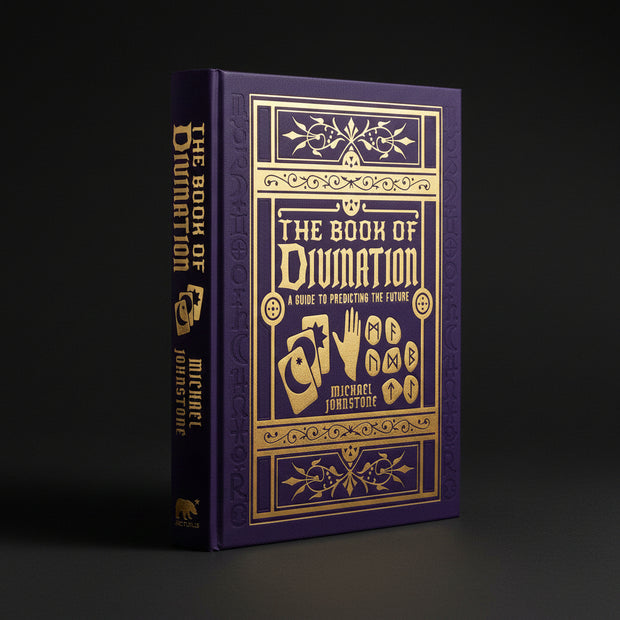
Use the Book of Divination or our Divination Tools collection to compare annual themes with actual events and choices. These resources support journaling; they do not guarantee what the year will bring.
Tools for this practice
Explore the products selected for this guide. Review each listing for what is included and how to use it.
Shop this guide · 1 item Collapse

Keep exploring the shop
You made it to the end of the guide. Keep exploring through related products, major departments, or the full catalog.


Leave a comment