


Why Occult Books Disagree: Translations, Editions, Manuscripts, and Editorial Choices

Readers often assume that two editions of the same occult work should be interchangeable. Then they compare copies and discover different divine names, altered ritual directions, missing diagrams, modernized language, competing spellings, or entire sections present in one version and absent from another.
These differences do not always mean one publisher is dishonest. Historical texts reach modern readers through chains of copying, translation, editing, typesetting, censorship, interpretation, and reconstruction. Understanding that chain helps you choose an edition that fits your purpose.
The title is not the text
A familiar title can refer to several related manuscripts, a family of texts, a later compilation, or a modern editorial name. Historical works were not always produced as standardized books with a single authorized final version. Scribes copied, reorganized, abbreviated, expanded, corrected, and sometimes combined material.
Before comparing two books, examine the title page and introduction. Ask which manuscript, earlier edition, or source-language text each editor used. Two books can share a marketable title while translating different textual witnesses.
Manuscripts develop variants
Before printing, texts were copied by hand. A copyist could skip a line, repeat a phrase, misunderstand an abbreviation, modernize a spelling, correct what seemed wrong, or add an explanatory note that a later copyist treated as part of the main text. Damaged pages and missing folios created additional gaps.
When several manuscripts survive, editors compare their differences. They may choose one manuscript as the base text, combine readings from several copies, or attempt to reconstruct an earlier form. These are editorial decisions, even when they are careful and scholarly.
Translation always involves choices
Languages do not map perfectly word for word. A translator must decide how to handle grammar, technical vocabulary, poetry, divine names, ambiguous terms, puns, titles, and culturally specific concepts.
One translation may preserve the structure of the source at the cost of smooth English. Another may prioritize readability while interpreting difficult passages more aggressively. A third may retain original-language words because no English equivalent is adequate.
Literal does not always mean more accurate
An extremely literal translation can reproduce the words while obscuring the meaning created by syntax, idiom, or genre. A readable translation can communicate the sense well but hide where the original is uncertain. The best edition for study often explains its choices in notes rather than pretending ambiguity does not exist.
Transliteration is not translation
Transliteration represents words from one writing system in another alphabet. Different systems produce different spellings. A Hebrew, Greek, Arabic, Egyptian, Sanskrit, or other term may appear in several Roman-letter forms without representing different entities or concepts.
Names and magical words are especially difficult
Occult texts often contain divine names, spirit names, voces magicae, seals, letter squares, abbreviations, and words whose meanings were already obscure to earlier copyists. A single misread letter can change the printed form. Printers may also have lacked the correct typefaces or reproduced unfamiliar scripts inaccurately.
When exact lettering matters to your study, choose editions that provide manuscript images, diplomatic transcriptions, variant readings, or clear explanations of how names were reconstructed. Do not assume a polished modern font proves textual certainty.
Editors can create a usable text from incomplete evidence
An editor may regularize spelling, supply missing punctuation, repair obvious copying errors, reorder dislocated pages, redraw diagrams, or insert headings. These choices can make a difficult manuscript usable. They can also move the reader farther from the physical source.
A responsible edition tells you what was changed. Look for an editorial statement, list of manuscripts, explanation of notation, footnotes, brackets around supplied words, and discussion of uncertain readings.
Abridgment and modernization change the reading experience
Some editions intentionally shorten a work, omit repetitive material, remove offensive passages, simplify ritual instructions, or modernize measurements and spelling. Abridgment can be useful for general readers, but it should be disclosed.
Older public-domain translations are frequently reprinted with new covers and little editorial work. They can be inexpensive and historically important, yet may contain outdated scholarship, mistranslations, missing notes, or poor reproductions of diagrams. A newer date on the cover does not necessarily mean a new translation.
Introductions and footnotes are not neutral decoration
An introduction can explain historical context, manuscript provenance, religious background, and previous scholarship. It can also impose the editor’s preferred theory on the text. Footnotes may identify parallels and variants, or they may quietly steer the reader toward one interpretation.
Separate the source text from the editor’s commentary. Both can be valuable, but they are different layers of evidence. Our article on primary and secondary sources explains this distinction in greater detail.
Why diagrams and seals differ
Diagrams are vulnerable to copying and printing errors. Lines disappear, labels move, mirror images are introduced, proportions change, and handwritten figures are “cleaned up” by modern designers. Some editors reproduce the manuscript exactly; others redraw figures for clarity; still others copy an earlier printed edition without checking the manuscript.
For close study, compare the figure with a facsimile or edition that identifies its source. For symbolic or artistic use, a clean redraw may be adequate—but it should not be advertised as an exact ancient original unless it is one.
How to compare editions before buying
- Identify the translator and editor. A publisher name alone tells you little about the text.
- Check the publication history. Is this a new translation, a revised edition, a facsimile, or a reprint?
- Find the source text. Which manuscript, language edition, or earlier printing was used?
- Look for completeness. Is the work abridged? Are illustrations, appendices, tables, or notes omitted?
- Examine the apparatus. Does the edition explain variants, uncertain readings, supplied words, and editorial changes?
- Read a sample. Compare a difficult passage across editions when possible.
- Match the edition to your purpose. Historical research, devotional reading, ritual practice, and casual introduction may require different features.
For a broader buying framework, see How to Evaluate an Occult Book and Witchcraft Books for Beginners.
When owning more than one edition helps
Serious study sometimes benefits from several versions: a facsimile to see the source, a scholarly edition for variants and context, and a readable translation for sustained reading. You do not need to collect every printing. Choose editions that perform genuinely different functions.
This can be especially useful with complex bodies of work such as ceremonial magic, grimoires, mystical texts, and authors whose writings were repeatedly revised or posthumously edited. Our beginner guide to Aleister Crowley and Thelema demonstrates why publication context and reading order matter.
Frequently asked questions
Is the newest translation always the best?
No. A newer translation may use better manuscripts and scholarship, but quality depends on the translator, editorial method, intended audience, and transparency.
Is a facsimile the most accurate edition?
A facsimile most accurately reproduces the photographed or scanned source, including its errors and difficulties. It may not be the easiest or most historically complete way to understand the text.
Why are divine names spelled differently?
Differences can come from transliteration systems, manuscript variants, scribal errors, language changes, and editorial conventions. Check whether the edition explains its spelling system.
Can a public-domain reprint be useful?
Yes. It may preserve an influential historical translation at low cost. Verify whether diagrams are legible and whether you also need newer scholarship or notes.
What does “critical edition” mean?
It generally means an editor has compared available textual evidence and documented decisions and variants. The term does not imply criticism in the everyday negative sense.
Which edition should I use for ritual?
Choose one whose source, changes, safety assumptions, and terminology you understand. Historical fidelity and practical usability are separate considerations.
Disagreement can reveal the history of a text
Differences between editions are not merely obstacles. They show how a work traveled, how readers understood it, and where certainty ends. The most trustworthy edition is often not the one that promises a perfect secret original, but the one that clearly shows what survives, what changed, and what the editor had to decide.
Compare Editions Before Choosing
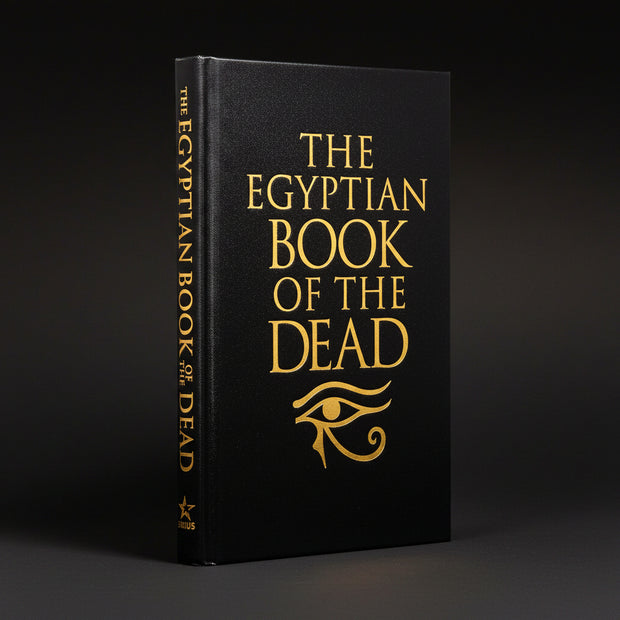
Titles such as The Book of the Law and Liber 777, The Book of Lies, and The Egyptian Book of the Dead make useful comparison points. Check translator, editor, completeness, notes, diagrams, and source text rather than assuming every printing is identical.
Tools for this practice
Explore the products selected for this guide. Review each listing for what is included and how to use it.


Shop this guide · 3 items Collapse


Keep exploring the shop
You made it to the end of the guide. Keep exploring through related products, major departments, or the full catalog.


Leave a comment