Crystals & MineralsStocked in our Ohio store

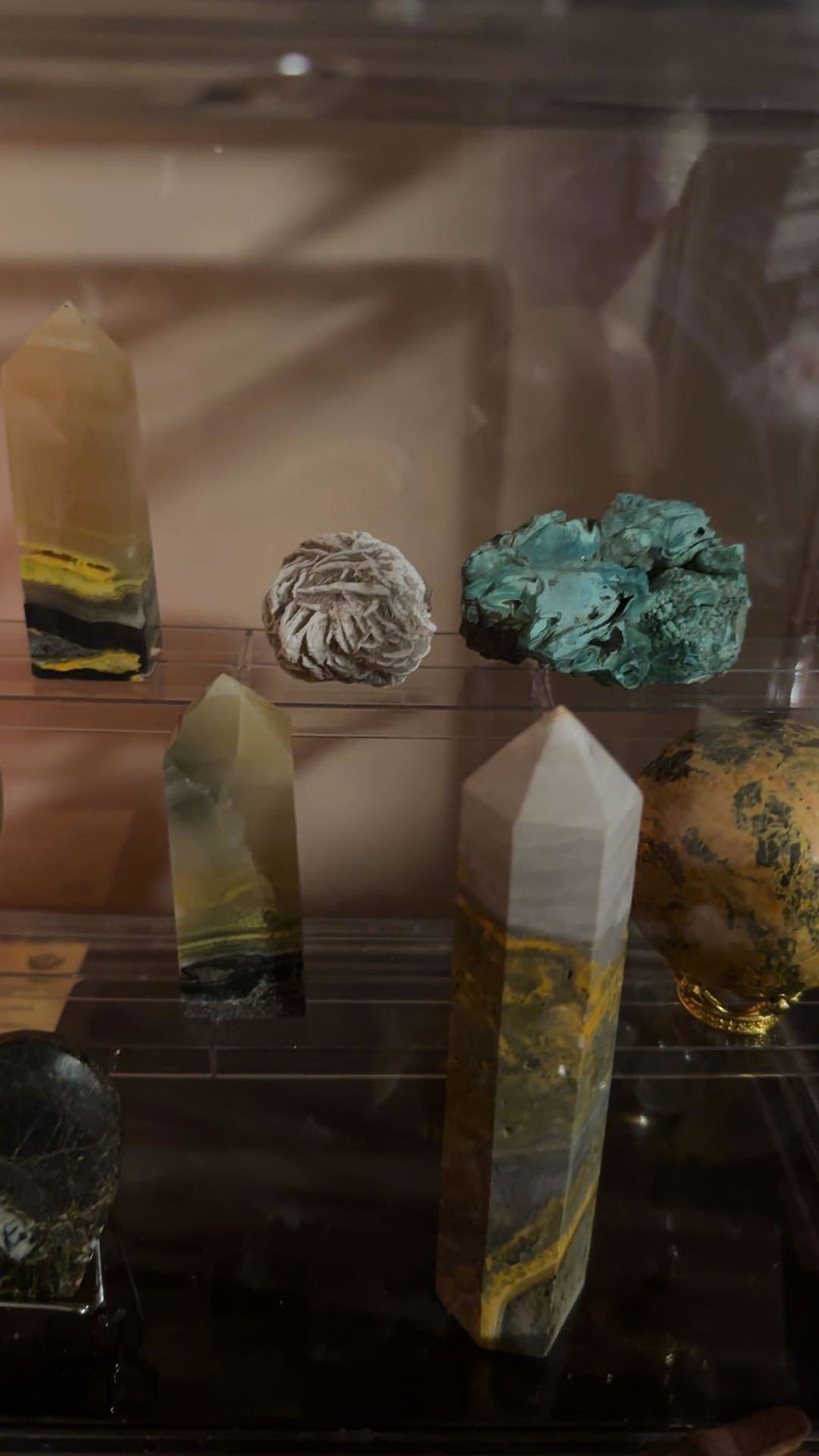
Desert Rose Gypsum Cluster – Size Options

Sand-bearing gypsum rosette available in three listing options

$3.45
  • One desert rose gypsum rosette
  • Options listed as 0.5 Inch, 2.5 Inch, or Big With Stand
  • Stand included only with Big With Stand option
  • Representative image; each cluster varies
  • Exact weight, treatment, locality, and origin not documented
Ritual focusModern symbolic themes of grounding, clarity, gentle protection, and reflection
Size

Pickup available at Main Street

Usually ready in 2 hours

Real inventoryHandled by our Coshocton team
Free U.S. shippingOrders over $75
Secure checkoutPayments processed by Shopify

At a Glance

Material
Gypsum rosette with trapped sand; stand material is not documented for the Big With Stand option
Form
Desert rose gypsum rosette cluster
Size
Selected listing option: 0.5 Inch, 2.5 Inch, or Big With Stand; exact piece and stand dimensions vary
Weight
Not documented
Includes
One selected desert rose gypsum cluster; stand included only with the Big With Stand option
Locality
Not documented
Origin
Not documented
Images
Representative item; natural variation expected

Product Information

About This Stone

Desert Rose Gypsum Cluster – Size Options contains one sand-bearing gypsum rosette in the selected listing option: 0.5 Inch, 2.5 Inch, or Big With Stand. Desert rose is a rosette aggregate of gypsum with trapped sand; “selenite” appears in familiar retail naming but is not the precise label for this opaque sand-included crystal habit. Exact weight, treatment, locality, country of origin, and the stand’s material and dimensions are not documented; blade arrangement, tan-to-brown color, sand content, size, edges, and surface texture vary.

Specimen Details
Material status
Natural mineral or rock
Treatment
Treatment status not documented

Treatment notes

No item-level treatment report is provided. The listing does not document dyeing, coating, stabilization, impregnation, reconstruction, or other treatment.

Observable stone characteristics

Quality is evaluated by intact rosette form, visible blade layering, stable structure, and overall presentation. No standardized grade or item-level locality, treatment, or weight documentation is provided.

Condition notes

Natural layered blades, sand residue, edge irregularities, and minor chips may occur. The Big With Stand option includes a stand, but the stand material and exact dimensions are not documented.

What contributes to this piece’s value

  • Size and rosette symmetry
  • Integrity of layered blades
  • Sand distribution and color
  • Overall condition
  • Stand inclusion for selected option
Mineral Profile

Desert rose gypsum is a rosette-shaped aggregate of gypsum crystals, often with sand incorporated into the formation. It is neither fibrous satin spar nor the transparent crystalline habit traditionally called selenite. ‘Desert Rose Selenite’ remains a familiar retail and search phrase, but Desert Rose Gypsum is the more accurate material name.

Stone or material
Desert Rose Gypsum
Mineral family or group
Gypsum Family
Family classification
Mineral species with multiple named crystal habits and aggregate forms
Mineral species
Gypsum
Variety or trade name
Desert Rose Gypsum (commonly sold as Desert Rose Selenite)
Chemical formula
CaSO₄·2H₂O
Mohs hardness
2
Luster
Pearly, Vitreous
Transparency
Translucent, Opaque
Typical colors
White, Cream, Tan, Brown, Orange
Mineral class
Sulfates
Crystal system
Monoclinic

Geology and formation

Desert roses form as rosette-shaped gypsum aggregates in arid or evaporitic environments, commonly incorporating sand grains as the crystals grow. Layered blades create the characteristic flower-like appearance.

Family context

Gypsum is a soft hydrated calcium sulfate mineral that occurs in several crystal habits and aggregate forms. Selenite, satin spar, alabaster, and desert rose are related gypsum forms, but the names are not interchangeable descriptions of appearance. This family record provides shared gypsum facts while the exact profile identifies the habit or trade form being sold.

Identification note:

The retail crystal trade frequently uses ‘selenite’ as a broad name for white fibrous gypsum objects. Mineralogically, that fibrous material is satin spar gypsum, while selenite generally refers to transparent crystalline gypsum. Desert rose is a separate rosette habit. A familiar trade name may be retained for searchability, but it must not replace the more accurate material identification.

Metaphysical Correspondences

In contemporary Western crystal practice, Desert Rose Gypsum is often associated symbolically with grounding, clarity, patience, resilience, and contemplative focus. These are modern spiritual associations rather than scientific properties, and the specimen does not guarantee protection, emotional balance, mental clarity, healing, or any energetic result.

Traditional themes
Grounding symbolism, Clarity symbolism, Patience, Resilience symbolism, Contemplation
Primary element
Earth
Additional elements
Air
Energy character
Grounding, Contemplative, Balancing

Traditional ritual applications

Practitioners may display Desert Rose Gypsum on an altar, use it as a meditation or journaling focus, or include it in symbolic practices centered on patience, perspective, or grounded reflection. It does not remove obstacles, reveal truth, prevent harm, or guarantee spiritual results.

Traditional pairings

Candle colors
White, Tan, Brown

Tradition and source notes

Modern sources vary widely on planetary, zodiac, and chakra assignments for Desert Rose Gypsum, so those fields are intentionally left blank. Earth and Air are retained as common contemporary symbolic assignments based on the specimen’s desert formation and layered crystalline form.

Family correspondence scope

Contemporary Western crystal culture often assigns the name ‘selenite’ and its correspondences broadly to satin spar objects. American Occultist retains that familiar term as a search alias while identifying the actual gypsum habit. Metaphysical, elemental, planetary, zodiac, chakra, and ritual associations are presented as cultural or spiritual frameworks rather than scientific properties or guaranteed effects.

About traditional correspondences: Metaphysical, astrological, elemental, chakra, and ritual associations vary among traditions and practitioners. They are presented for cultural, symbolic, and spiritual reference and are not scientific or medical claims.

Working With & Caring for This Stone

When practitioners may choose it

Choose this piece when a soft, sand-bearing gypsum rosette suits a dry, stable display, desert-themed arrangement, meditation space, or reflective practice.

Traditional role in practice

The rosette functions as a visual and tactile symbolic focal object. Modern crystal traditions may associate desert rose gypsum with grounding, clarity, protection, and reflection; these associations are cultural or spiritual beliefs rather than measured mineral effects.

Suggested application

Place on a stable dry surface, in a contained altar arrangement, or near a journal or meditation area. Handle gently and avoid arrangements where the layered blades could be crushed or exposed to moisture.

Commonly paired with

Best suited to dry stable display, mineral study, meditation spaces, desert-themed arrangements, and contained altar work. Avoid water-based practices, elixirs, drinking water, or unstable arrangements.

Product care

Keep dry. Remove loose dust with a soft dry brush and handle the layered blades gently. Avoid soaking, running water, steam, ultrasonic cleaning, harsh chemicals, abrasion, and hard impacts. Store separately in a padded container or display on a stable surface.

Safety and handling

Gypsum is soft and the thin rosette blades can chip or break, leaving sharp edges or loose fragments. Small pieces can present a choking hazard. Keep away from young children and pets. Do not ingest, place in drinking water, or use internally. Do not cut, grind, drill, sand, or intentionally create mineral dust.

Natural variation

Blade arrangement, rosette symmetry, tan-to-brown color, sand content, size, thickness, edge condition, and surface texture vary naturally by cluster.

From Ink & Ash

Learn About This Stone

Selected editorial resources that provide additional context beyond the product description.