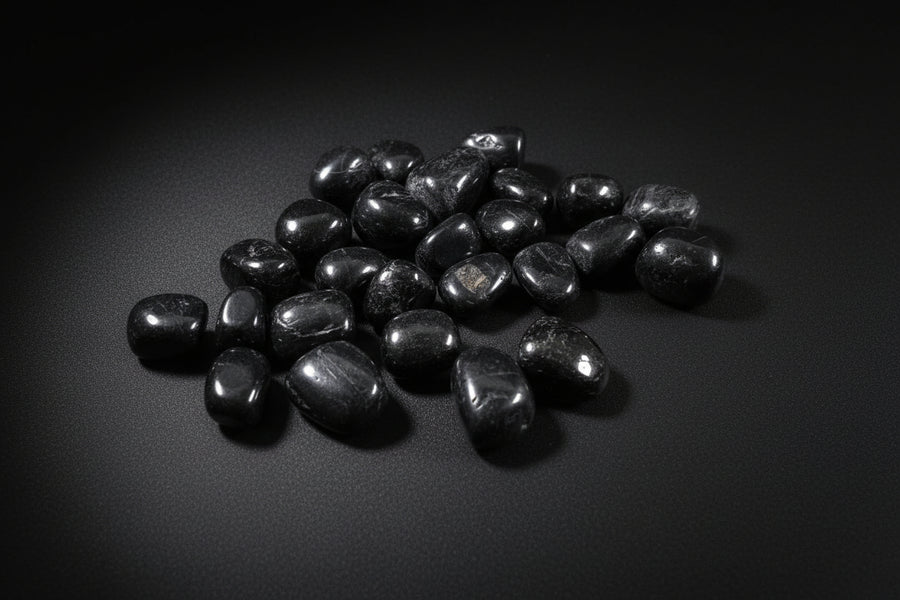
Red Tiger Eye Tumbled Stone

One randomly selected polished natural Red Tiger Eye tumbled stone

$2.95
Shipping calculated at checkout.
5 in stock

Pickup available at Main Street

Usually ready in 2 hours

Ritual focusCourage, persistence, vitality, and deliberate-action symbolism
  • One randomly selected polished Red Tiger Eye stone
  • Natural quartz-rich chatoyant trade material
  • Warm red-brown color
  • Moving chatoyant banding shifts with light and angle
Free U.S. Economy shippingQualifying orders of $75 or more
Shipping destinationsCurrent rates and availability shown at checkout
Secure checkoutPayments processed by Shopify

Product Information

About This Item

This Red Tiger Eye Tumbled Stone is polished natural red-brown chatoyant quartz selected from the current assortment. Its shifting band of light and warm color suit collections, carrying, meditation, or practices centered on courage, persistence, vitality, confidence, and deliberate action.

Specimen Details
Material status
Natural mineral or rock
Mineral Profile

Red Tiger Eye is a red to red-brown chatoyant quartz-rich trade material in the tiger's-eye family. Commercial red material is commonly produced by gentle heating of golden tiger's-eye, but treatment remains product-specific. This profile does not establish that a particular stone is naturally red, heat-treated, untreated, authentic, or from a documented locality.

Stone or material
Red Tiger Eye
Mineral family or group
Tiger’s Eye Material Family
Family classification
Chatoyant quartz material and lapidary trade family
Mineral species
Quartz-rich chatoyant ornamental material; exact phases and treatment not established for the retail product
Variety or trade name
Red Tiger Eye
Chemical formula
Predominantly SiOâ‚‚ with variable iron-bearing and remnant fibrous phases
Mohs hardness
Approximately 7 when quartz-rich
Luster
Vitreous, Silky chatoyant
Transparency
Opaque
Typical colors
Red-brown, Deep red, Brown-red
Mineral class
Silicates — quartz-rich chatoyant aggregate
Crystal system
Trigonal for quartz grains; aggregate material has no single crystal system
General occurrences
South Africa, Western Australia, Other tiger's-eye localities; product-specific source requires documentation

Geology and formation

Tiger's-eye develops where aligned fibrous material is enclosed, replaced, or pseudomorphosed by silica while preserving a parallel texture that produces chatoyancy. Red commercial color is commonly developed through gentle heating, although the treatment of any particular product requires disclosure or testing.

Family context

Tiger’s eye is a chatoyant quartz-rich lapidary material whose moving band of light is produced by aligned fibrous structures. Golden tiger’s eye, blue tiger’s eye or hawk’s eye, and red tiger’s eye must be treated as distinct variety or trade profiles rather than interchangeable colors.

Identification note:

Color alone does not establish treatment or exact material identity. Tiger iron is a related composite rock and should not automatically inherit a standard tiger’s-eye variety profile. Unusually vivid colors require separate disclosure rather than a new natural variety assumption.

Metaphysical Correspondences

In contemporary Western crystal practice, Red Tiger Eye is commonly associated with courage, motivation symbolism, vitality symbolism, persistence, deliberate action, and grounded focus. These associations do not guarantee energy, discipline, protection, success, healing, or supernatural outcomes.

Traditional themes
Courage symbolism, Motivation symbolism, Vitality symbolism, Persistence, Focused action
Primary element
Fire
Additional elements
Earth
Planets
Mars
Chakras
Root, Sacral
Energy character
Activating, Projective, Grounding
Days
Tuesday

Traditional ritual applications

Practitioners may carry, hold, or display Red Tiger Eye during journaling, goal setting, confidence work, or action-oriented symbolic practice. It functions as a visual and tactile prompt and does not create motivation, energy, protection, or guaranteed outcomes.

Traditional pairings

Candle colors
Red, Rust, Brown

Tradition and source notes

Fire, Earth, Mars, Tuesday, Root, and Sacral assignments are common modern interpretations based on color and action-oriented symbolism. They are not universal or measurable mineral properties. Treatment disclosure remains product-specific.

Family correspondence scope

Golden, blue, and red tiger’s-eye traditions often differ. Elemental, planetary, zodiac, chakra, and ritual correspondences belong primarily on the exact variety profile, with sources and tradition labels.

About traditional correspondences: Metaphysical, astrological, elemental, chakra, and ritual associations vary among traditions and practitioners. They are presented for cultural, symbolic, and spiritual reference and are not scientific or medical claims.

Working With & Caring for This Stone

When practitioners may choose it

Choose this stone when building a symbolic practice around courage, persistence, motivation, vitality themes, grounded focus, or deliberate action.

Traditional role in practice

Contemporary crystal practice associates Red Tiger Eye with courage, persistence, motivation, vitality symbolism, grounded focus, and deliberate action.

Suggested application

Carry it in a secure pouch, hold it during planning or goal-setting, or place it on a dry, stable altar or grid.

Commonly paired with

Pairs naturally with courage, persistence, motivation, vitality, grounded-focus, and action-themed symbolic practices.

Product care

Clean briefly with lukewarm water, mild soap, and a soft cloth, then dry promptly. Avoid acids, bleach, abrasives, prolonged soaking, steam, ultrasonic cleaning, high heat, sudden temperature changes, and hard impacts.

Safety and handling

Decorative quartz-rich mineral material; not food or medicine. Do not ingest or place in drinking water. Keep small stones and fragments away from children and pets. Cutting, grinding, drilling, sanding, or crushing can generate hazardous crystalline-silica and mineral dust and requires professional controls.

Natural variation

Each stone varies naturally in red, red-brown, rust, brown, or dark-banded color, chatoyancy, band alignment, contrast, inclusions, shape, size, and polish.