


Beyond Wicca: Exploring Reconstructionist Pagan Paths (Hellenic, Kemetic & More)

Reconstructionist Pagan paths use historical research to revive or rebuild pre-Christian religious traditions for modern practice. Rather than combining many cultures into one system, reconstructionists usually focus on a particular region, language, pantheon, and ritual context.
What Is Reconstructionist Paganism?
Reconstructionist approaches compare archaeology, inscriptions, ancient texts, linguistics, historical calendars, surviving folklore, and academic scholarship. The goal is not to reproduce the ancient world perfectly, but to create informed modern practice without erasing cultural differences.
Common Reconstructionist Principles
- Study primary sources and current scholarship
- Keep gods and practices within their cultural context
- Distinguish historical evidence from modern innovation
- Adapt practices responsibly to contemporary law and ethics
- Use devotional experience without presenting it as historical proof
Hellenic Polytheism
Hellenic polytheism, sometimes called Hellenismos, centers on worship of Greek gods through prayer, offerings, household devotion, festival observance, and concepts such as kharis, or reciprocal relationship.
Commonly Honored Greek Gods
- Zeus: Order, kingship, hospitality, oath, and weather
- Athena: Wisdom, craft, strategy, and civic life
- Apollo: Music, prophecy, healing, purification, and light
- Hestia: Hearth, household continuity, and ritual center
- Hermes, Artemis, Dionysos, Poseidon, and others: Each with distinct cults and relationships
Hellenic Practices
- Prayer, hymns, incense, food offerings, and libations
- Household worship and hearth observance
- Purification before ritual
- Reconstructed or adapted festival calendars
- Study of ancient philosophy, mythology, and civic religion
Kemetic Religion
Kemetic reconstructionism draws from the religions of ancient Egypt, or Kemet. Modern practitioners honor the Netjeru, maintain shrines, offer food, water, and incense, and work with the principle of Ma’at—truth, balance, order, and right relationship.
Commonly Honored Egyptian Gods
- Aset or Isis: Kingship, magic, protection, and devotion
- Anpu or Anubis: Funerary care, protection, and liminal passage
- Wesir or Osiris: Regeneration, kingship, agriculture, and the dead
- Hathor: Joy, music, beauty, love, and celebration
- Sekhmet: Solar force, protection, destruction, and healing
Kemetic Practices
- Daily or regular shrine care
- Purification and orderly ritual preparation
- Offerings that are later respectfully consumed or disposed of
- Prayer, hymns, and festival observance
- Ancestor remembrance and ethical reflection through Ma’at
Other Reconstructionist Pagan Paths
- Religio Romana: Reconstruction and revival of Roman household and civic religion
- Heathenry: Germanic and Norse religious reconstruction based on lore, archaeology, and regional traditions
- Celtic reconstructionism: Regionally specific revival using Irish, Welsh, Gaulish, or other Celtic sources
- Canaanite and Levantine revival paths: Modern devotion informed by ancient Near Eastern texts and archaeology
- Other regional polytheisms: Traditions centered on Slavic, Baltic, Mesopotamian, or additional historical cultures
How to Begin a Reconstructionist Path
- Choose one historical culture or region for focused study.
- Read introductory scholarship before relying on social-media summaries.
- Identify what is documented, debated, missing, or modern.
- Create a simple shrine with a symbol, clean water, and a written prayer.
- Keep a journal of sources, rituals, adaptations, and unanswered questions.
- Participate in communities that welcome correction and reject ethnic supremacy.
Frequently Asked Questions
How is reconstructionist Paganism different from Wicca?
Wicca is a modern religion with its own ritual structures. Reconstructionist paths focus on rebuilding culturally specific ancient religions from available evidence.
Can ancient ritual be recreated exactly?
No. Evidence is incomplete and modern circumstances differ. Reconstruction involves informed adaptation rather than perfect duplication.
Do reconstructionists use modern practices?
Yes, but many label modern additions clearly instead of presenting them as ancient tradition.
Related Reading
Tools for this practice
Explore the products selected for this guide. Review each listing for what is included and how to use it.

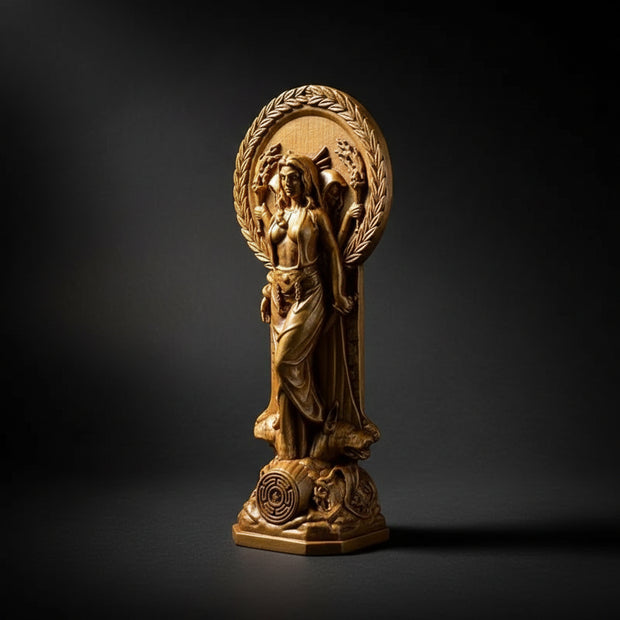
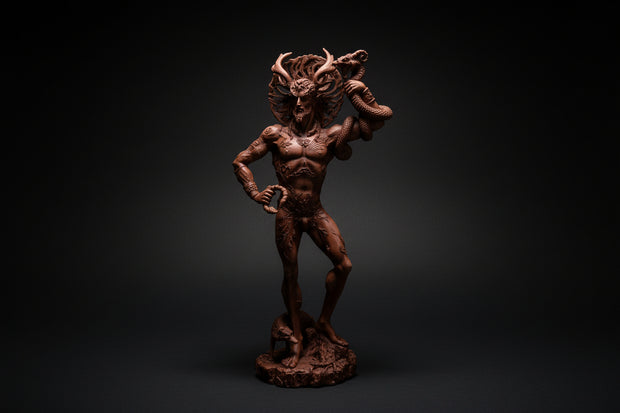
Shop this guide · 3 items Collapse


Keep exploring the shop
You made it to the end of the guide. Keep exploring through related products, major departments, or the full catalog.
 RELATED TO THIS GUIDE
Ritual Supplies & Altar Tools
Shop this topic
RELATED TO THIS GUIDE
Ritual Supplies & Altar Tools
Shop this topic


Leave a comment