


Black Tourmaline vs. Black Obsidian for Protection: Which Stone Should You Choose?

Short answer: choose black tourmaline for boundary, grounding, threshold, pocket, room-corner, and grid symbolism. Choose black obsidian for reflection, release, journaling, altar focus, shadow-work prompts, and scrying-style symbolism. In this guide, “protection” means symbolic, spiritual, or intention-focused practice. It does not mean guaranteed safety, medical benefit, curse removal, EMF protection, or a substitute for practical precautions.
Black Tourmaline vs. Black Obsidian: The Practical Difference
These two black stones are often grouped together in protection work, but they serve different roles in a well-built practice.
| Choose this | When the intention is | Best symbolic uses |
|---|---|---|
| Black tourmaline | Grounding, boundaries, threshold reminders, banishing-style layouts, room or grid placement | Pocket carry, doorway bowl, room corners, altar boundary work, crystal grids, ritual layouts |
| Black obsidian | Reflection, release, journaling, shadow-work prompts, altar focus, scrying-style symbolism | Journaling sessions, reflective altar work, contained pocket carry, palm-stone meditation, wearable intention reminders |
A simple rule: if you want a stone to represent a boundary, choose black tourmaline first. If you want a stone to help focus reflective work, choose black obsidian first.
What Black Tourmaline Is
In retail crystal language, “black tourmaline” usually refers to dark tourmaline-group material, commonly associated with schorl. Schorl is typically black and iron-rich. Exact species identification, however, requires testing, so a shop article should not claim that every piece of retail black tourmaline is definitively schorl unless it has been verified.
Tourmaline also has documented pyroelectric and piezoelectric properties under relevant physical conditions. Those mineral properties are real, but they should not be used as proof of EMF blocking, radiation protection, energetic shielding, health effects, or measurable spiritual protection. They belong in mineral discussion, not in unsupported marketing claims.
In contemporary crystal-practice vocabulary, black tourmaline is commonly framed around grounding, boundaries, banishing symbolism, pocket stones, doorway placement, altar use, and grids. That is practitioner language, not a scientific guarantee.
What Black Obsidian Is
Black obsidian is natural volcanic glass formed by rapid cooling of silica-rich lava. Shoppers often search for “obsidian crystal,” and that wording is understandable in a crystal-shop setting, but technically obsidian is glassy rock or a mineraloid rather than a crystalline mineral.
Obsidian can fracture conchoidally and produce very sharp edges. That matters for handling. A polished obsidian piece may feel smooth when intact, but chipped or broken obsidian should not be carried loose in pockets, bags, beds, cars, or places where children or pets may handle it.
In modern practice, black obsidian is often used for reflection, release, journaling, and shadow-work prompts. It is also associated with scrying-style symbolism because polished obsidian mirrors have documented historical associations with reflective and divinatory contexts. That history should be handled carefully: a modern tumbled stone, palm stone, or bracelet is not the same thing as a specific historical obsidian mirror, and it should not be described as inheriting closed cultural authority or guaranteed power.
Choose by Use Case
The best choice depends less on which stone is “stronger” and more on what job you want the stone to symbolize.
| Use case | Better first choice | Why | Recommended form |
|---|---|---|---|
| Everyday pocket carry | Black tourmaline | Best fit for steady boundary and grounding symbolism | Black Tourmaline Tumbled Stone |
| Reflective pocket carry | Black obsidian | Better fit for release, reflection, and self-inquiry symbolism | Black Obsidian Tumbled Stone in a pouch; check for chips |
| Doorway or threshold | Black tourmaline | Works well as a symbolic boundary marker | Tumbled stone in a bowl or stable placement |
| Room corners or grid layout | Black tourmaline | Fits grounding, boundary, and layout-based practice | Tumbled stones or grid components |
| Altar boundary or banishing symbolism | Black tourmaline | Clear fit for grounding and boundary intention | Tumbled stone or Black Tourmaline Wand |
| Altar reflection or release work | Black obsidian | Clear fit for reflective, release, night, underworld, or shadow-work symbolism | Tumbled stone or Black Obsidian Palm Stone |
| Journaling or shadow-work prompts | Black obsidian | Better fit for self-reflection and release-focused prompts | Palm stone or tumbled stone |
| Wearable reminder | Either, depending on intention | Bracelets work best as reminders of an intention, not as shields | Black Obsidian Beaded Bracelet or a black tourmaline bracelet if available |
| Car reminder | Black tourmaline, secured | Use only as a symbolic reminder, not as accident protection | Small stone in a pouch or fixed compartment; never loose stones, palm stones, spheres, or chipped obsidian |
Choose by Form
Once you know the intention, choose the form that matches how the stone will actually be used. Form matters because a pocket stone, bracelet, wand, and palm stone each invite a different kind of practice.
Tumbled Stones
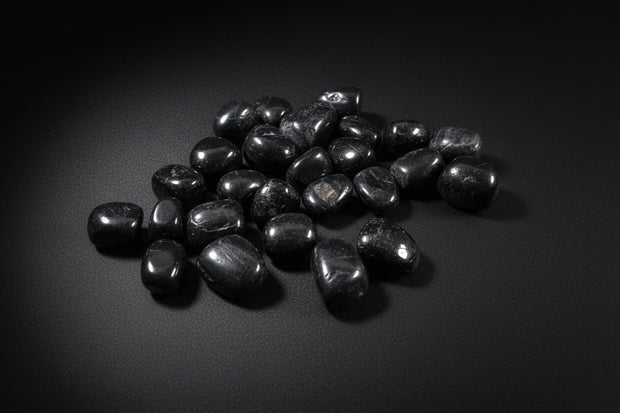
Tumbled stones are the most flexible form for beginners. They are easy to place in a bowl, pouch, pocket, altar dish, or grid. For black tourmaline, a tumbled stone is the strongest first recommendation for everyday boundary and grounding symbolism. For black obsidian, a tumbled stone works well for reflection or release symbolism, but it should be inspected for chips before pocket carry. If you want an obsidian-family option with visible patterning rather than a plain black surface, Snowflake Obsidian Tumbled Stone can sit in the same reflection-and-grounding lane without being treated as a separate guaranteed substitute.
Palm Stones
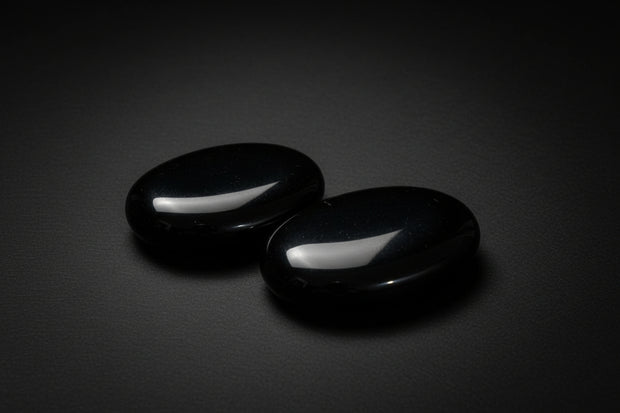
A palm stone is best when the practice involves holding the stone during journaling, reflection, or quiet altar work. Black obsidian palm stones fit reflective and shadow-work prompts especially well. They are not ideal for loose car placement, high-traffic thresholds, or anywhere a polished stone could slide, fall, or chip.
Bracelets
Bracelets should be framed as wearable reminders of an intention. A black obsidian bracelet can represent reflection, release, or boundary intention. A black tourmaline bracelet can represent grounding or boundary intention when available, but it should be treated as secondary or conditional if inventory is low. Do not treat any bracelet as a shield, medical device, safety device, EMF blocker, or guaranteed spiritual protection.
Wands and Ritual Layouts
A black tourmaline double-terminated wand belongs in ritual layout, altar, and directional-symbolism language. It can help give a ritual a clear visual structure. Avoid claiming that the shape measurably directs energy, guarantees banishing, or produces a specific result. For a broader altar context, see our guide to Pagan altar tools and supplies.
Grids and Room Placement
For grids, room corners, and threshold layouts, black tourmaline is the cleaner recommendation. It supports the article’s boundary and grounding lane without turning the practice into a promise that the stone blocks danger, prevents break-ins, or removes harmful people.
Where to Place Black Tourmaline
Use black tourmaline where a boundary reminder makes sense:
- Pocket: carry a tumbled stone as a daily grounding or boundary reminder.
- Doorway: place a tumbled stone in a stable bowl or dish as a threshold symbol.
- Room corners: use stones as a symbolic boundary layout, especially in a meditation, ritual, or work area.
- Altar: place it at the edge of the altar for grounding, boundary, or banishing symbolism.
- Grid: use it as a grid component when the layout is focused on boundary or grounding intention.
- Car: if used at all, keep it secured in a pouch or fixed compartment as a reminder only. Do not leave loose stones where they can roll, distract, or become hazards.
Do not say black tourmaline prevents harm, stops accidents, blocks a person from entering, neutralizes curses with certainty, or replaces practical safety planning. If your focus is household ritual rather than stones specifically, pair this guide with simple protection spells for a safe household and our overview of protection herbs.
Where to Place Black Obsidian
Use black obsidian where reflection and release are the point:
- Journaling space: keep a tumbled stone or palm stone nearby while writing prompts about release, boundaries, or difficult patterns.
- Altar: use it for night, underworld, release, shadow-work, or reflective symbolism.
- Pocket: carry a tumbled stone in a pouch if it is smooth and undamaged.
- Bracelet: wear it as a reminder of reflection or boundary intention.
- Scrying-style practice: use reflective symbolism carefully and avoid claiming that ordinary retail obsidian reveals truth or sends negativity back to someone.
Because obsidian can chip into sharp edges, inspect it before handling or carrying it. Do not carry damaged obsidian loose in a pocket, bag, bed, or vehicle. Keep chipped or broken pieces away from children and pets.
Black Tourmaline or Black Obsidian for Shadow Work?
For shadow-work prompts, black obsidian is usually the better symbolic fit because the practice is reflective. In this article, “shadow work” means journaling and self-inquiry language, not therapy and not a promised psychological treatment.
Use emotional-safety boundaries. If journaling brings up crisis, trauma, panic, depression, or other clinical concerns, a stone is not enough support. Seek appropriate qualified help. The stone can be part of a symbolic practice, but it should not be framed as treatment, diagnosis, crisis care, or a replacement for mental-health support.
Historical Note: Obsidian Mirrors Are Not Ordinary Retail Stones
Obsidian has a documented history in reflective objects, including polished mirrors associated with divinatory contexts. Scholarship also discusses the British Museum obsidian mirror associated with John Dee, while noting that provenance and use details are complex.
That history can help explain why modern practitioners connect obsidian with reflection and scrying-style symbolism. It should not be stretched into a claim that every black obsidian tumbled stone, bracelet, or palm stone is an ancient ritual tool, a direct continuation of specific Indigenous rites, or a guaranteed magical mirror. Keep the distinction clear: historical obsidian mirrors are one thing; modern retail stones are another.
What Not to Claim About Either Stone
Good occult writing can be spiritually useful without pretending to be medical, scientific, legal, or safety advice. Avoid these claims:
- Do not say black tourmaline scientifically absorbs, transmutes, or blocks negative energy.
- Do not say black obsidian reflects negativity back to a sender as a fact or guarantee.
- Do not claim either stone prevents accidents, break-ins, violence, curses, entities, or harm.
- Do not claim tourmaline’s electrical properties prove EMF, 5G, Wi-Fi, phone-radiation, aura, biofield, or health benefits.
- Do not present bracelets as shields, safety devices, medical devices, or guaranteed spiritual protection.
- Do not recommend crystal water, gem elixirs, or putting stones in drinking water.
- Do not imply smoke, moonlight, salt, water, or selenite physically disinfects stones or removes material hazards. For related safety boundaries, see Moon Water: How to Make and Use It Safely.
So Which One Should You Buy?
Buy black tourmaline first if your main goal is a steady symbolic boundary: pocket carry, doorway placement, room corners, grids, altar edges, or grounding reminders. A black tourmaline tumbled stone is the most flexible first form, and a black tourmaline wand belongs in more deliberate altar or ritual-layout work.
Buy black obsidian first if your main goal is reflection: journaling, release work, altar focus, shadow-work prompts, or scrying-style symbolism. A black obsidian tumbled stone is flexible, a palm stone is better for held reflection, and a bracelet works as a wearable reminder when the intention is personal and ongoing.
If you are building a practice around “protection,” let black tourmaline mark the boundary and let black obsidian support the reflection. Start with the form you will actually use: a pocket-friendly tumbled stone, a held palm stone, a bracelet as a reminder, or a wand for altar layout. Keep the claims honest, keep the stones physically safe to handle, and let Shopify show the current availability on each product page.
Sources and Further Reading
- Gemological Institute of America: Tourmaline and Tourmaline Description for gemological context and tourmaline properties.
- Mindat: Schorl for black tourmaline mineral identity and limits of visual identification.
- Mindat: Obsidian, USGS: Yellowstone’s tool-making lava flows, and USGS Volcano Watch: Obsidian for volcanic-glass formation and sharp fracture context.
- British Museum: Dr Dee’s Magical Mirror and Antiquity: The mirror, the magus and more for historical obsidian-mirror context.
- FTC Health Products Compliance Guidance for advertising-claim boundaries around health, safety, and efficacy language.
Tools for this practice
Explore the products selected for this guide. Review each listing for what is included and how to use it.


Shop this guideHide product


Leave a comment